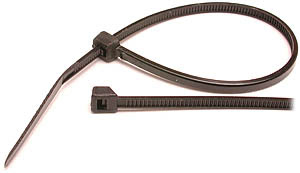
Yesterday I came across a reference to cutting zip ties/ cable ties with “survival cord”. A quick websearch produced a video of a gentleman cutting zip ties with paracord bootlaces.
An important aspect of this to grasp is that it is not necessary to use paracord. The original reference was probably to kevlar line. I had neither paracord or kevlar readily to hand but I did have a soft bootlace that was probably polyester. I tried it and within seconds the zip tie was cut with molten ends. Later I tried some cotton string. I was actually surprised that this worked, but it did! The tie ends looked more broken than melted, but that is still an escape!
Dental floss should work. So might monofilament or braided fishing line. Electrical wires and headphone cables are definitely worth trying when the chips are down. Would belts or strapping work? Failing any of these, rub the tie on a brick edge or stone.
If you secure a prisoner with cable ties and leave them unsupervised there is a real chance they will not be secured when you return. Shoes have laces. Clothing and bags have cords. A compass, ID card or whistle might be on a lanyard. A metre of fishing line can sit in the bottom of a pocket and easily be missed in a search.
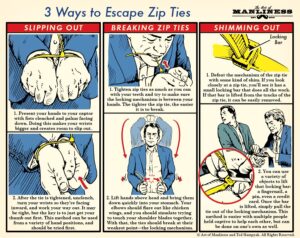
Below is an image from the Art of Manliness blog that shows some other techniques you can use against zip ties.
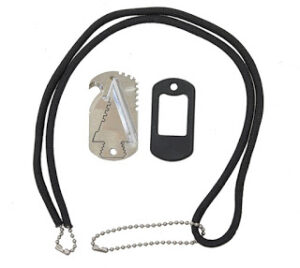
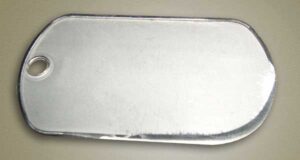
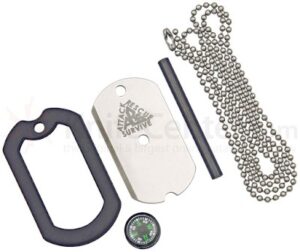
A trick used by magicians and escapologists is to conceal nail clippers on their person. This is often done using a bulldog clip on a safety pin. The clip can be compressed by various body parts to drop its contents into a waiting hand. If you have a lighter or match try and melt the tie. Many military “dog tags” now have rubber bumpers (“silencers”) to stop them rattling. This makes it possible to sharpen or serrate the edge of a metal tag or use the silencer to secure a rectangular blade behind the tag. Such a blade can be made from a tin can lid. A Photon light and whistle are useful additions.
Regular readers will recall that when I became interested in lock sport I brought myself a cheap Chinese set of tools. This let me experiment with various different styles of tools. It also provided me with a plastic see-through practice padlock.
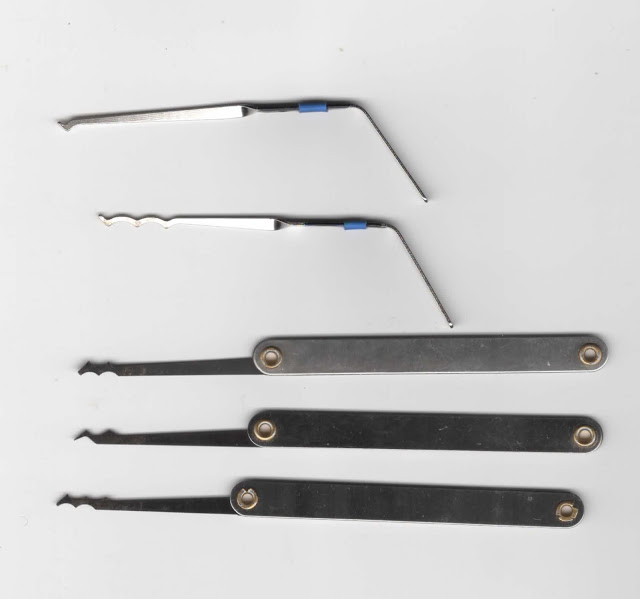
Today’s post is about another set of Chinese-made tools that I own. Like my other kit, these are made by Goso. A very similar kit is marketed under the name “KLOM”. These have different handles, without “GOSO” on them, and I have seen different handle colour options offered. Some of these KLOM sets seem to have an additional turning tool and/or a turning tool different from the Goso model. My other Goso set seems to be a copy of the Majestic brand. I would have assumed this kit is a copy of the KLOM, but the Goso website sells the KLOM set! Comments on quality and finish only apply to the Goso set. I do not know if the KLOM set is the same.
I brought the nine-piece Goso set of since I wanted to develop my SPP (single pin picking) skills and wanted a selection of hooks.
These are not, by any stretch of the imagination, quality tools. They are punched out from thin steel with no attempt to remove any burrs or turned edges. Many of the plastic handles show seams and flash and vary as to which side the handle curves in relation to the tool head. The flaws with the handle are admittedly aesthetic and the handle orientation makes very little effect on the use of the tools. Burrs can be removed with a file and abrasive paper.
When I first examined the hooks I noticed subtle variations in shape and curve and some duplications. I’m no longer sure how much of this is deliberate and how much poor quality control! There are three, possibly four distinct hook forms. On the positive side, I have a fondness for these since I achieve my first ever SPP with one of these! By that criteria the kit has done what I brought it for. One of these hooks sits by my chair so I can fiddle with a lock during the advert breaks.
You get three other tools:
One tool is the most obtuse half-diamond I have ever seen. I have successfully picked locks with this but its general utility seems low. I cannot even think of anything useful to turn this into.
Another tool is a “dimple rake”, an odd inclusion in a kit mainly of tools for conventional cylinders. Oddly, most of the dimple pick kits offered by the same company don’t appear to have this rake included. I have no experience of how effective this rake is, not having any dimple locks available. In BosnianBill’s review of this kit he accidental snaps this while trying to demonstrate how soft the steel in this set is. (Ironically, one of the few tools from Goso kits he considered useful) The hooks all seem relatively soft and bendy. Not necessarily a bad thing when picking a narrow keyway.
The final pick resembles a giant version of a single-hump Bogota. Apparently this works well on wafer locks and some people buy the set just to get this. To my surprise this works well on some of my (non-wafer) locks both as a lifter or as a rocker. Later I noticed the hump is very similar to that of the Princess rake.
The final part of the kit is a turning tool. This resembles a stout bit of wire with flattened ends. This is actually a nice tool. The ends are a bit asymmetrical but it works fine. A little bit of file work could shape and size the ends to the user’s particular requirements so it is ideal for customisation.
Incidentally, I have seen a set of these picks without the handles offered at a higher price as a compact mini-lock pick set. This illustrates the plastic handles could easily be cut down, reshaped or removed. The selection of tool types for this application is a bit limited, however. I would want an half-diamond and some cylinder rakes too, so will stick to my pair of Bogotas.
How useful this kit is very much depends on your expectations and the price you pay. It is not a high quality premium kit and the standard of finish is poor. I brought mine from Withoutakey and consider the price of £2.99 to be reasonable for what you get, being less than that of many quality single picks. Note that many other sources are offering the same kit for several times the price, however. If you get one or two useful tools from the set and was not expecting state of the art, you come out ahead. My kit helped me learn SPP, which was what I wanted. I like the turning tool and may add the giant single-hump to my best kit.
The final part of the lessons on American manual alphabet (AMA) and NATO phonetic alphabet. You will probably have found learning these systems very easy. I learnt all the AMA signs in less than a day. There are various ways you can practice. If you are waiting somewhere or during an advertisement break on TV you can fingerspell the names of things around you. Or you can “recite” the vowels. Accompany this by saying or thinking the phonetic terms.
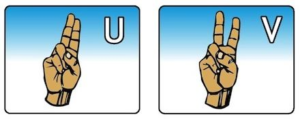
Uniform: Two fingers raised, like the old cub scout salute. Scouts should be in Uniform. Practice signing India-Lima-Uniform to your significant other and you will soon memorize this sign.
Victor: V for Victor(y). Uniform with the fingers apart.
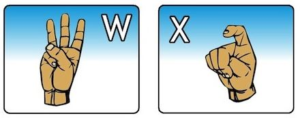
Whiskey: Victor with an extra finger to form a “W”. Mindhacker suggests “three fingers of whiskey”.
X-ray: Crook your finger like it is broken. You should get an X-ray for that.
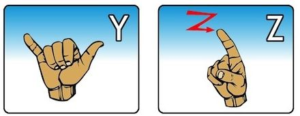
Yankee: Resembles the “hang-loose” gesture so Mindhacker has a memory aid about “Yankee surfers”. In English “y” and “i” are sometimes exchanged so I remember this as being like the India sign. The Yankee or Yankee-Sierra sign can be used to say “yes”, November or November-Oscar, “no”. There are alternate signs to do this.
Zulu: Like Juliet, a symbol you draw in the air, but using your index finger rather than the India sign. Go inward, outward and inward again. Mindhacker likens this to a clock pendulum, the clock set to Zulu time, naturally.
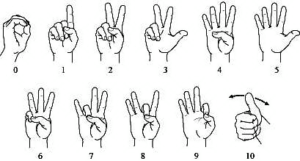
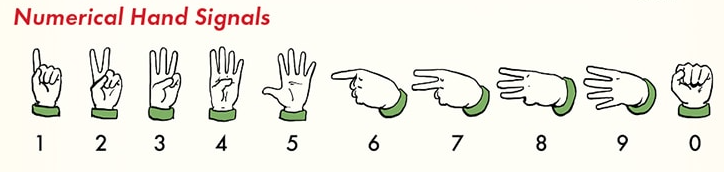
The numbers: You will have already encountered these in my book Survival Weapons: Optimizing Your Arsenal. One to five are simple enough. For six to nine the key thing to remember is that six starts with the little finger. Note the “thumb” wave signal for ten,
An alternate number system is given in TC 3-21.60.
Use a number and Charlie for “hundreds”. There is an ASL sign for “thousands” but it needs two hands. “Mike” or “Kilo” are not really suitable since these are more logically used for “metres”, “minutes” or “kilometres/ klicks”. Tango or Tango-Hotel could be used for thousands.
Oscar: Possibly the easiest sign of them all! The hand looks a bit like it is adjusting a camera lens, which may help you remember the phonetic.
Papa: A first glance this looks like Golf with the palm downwards. Papa is a Pointing gesture. The thumb and second finger pinch together to further distinguish this sign. Mindhacker tells us “Papa snaps his fingers”.
Quebec: Quebec is in Canada and so are Canada geese. This sign uses a bent wrist to make a shape like a goose head.
Romeo: Romeo crosses his fingers hoping true love will prevail.
Sierra: A fully clenched fist. Compare to the signs for Alpha and Echo. The US military uses this hand signal to mean “Stop”, which is another “S” word. Mindhacker uses the concept of “coming to blows over the treasure of the Sierra Madre”. That helps getting the phonetic right.
Tango: Like Sierra but the Thumb is placed between the first and second fingers. Mindhacker has a phrase about a dance judge giving your Tango the evil eye, alluding to the fig sign being used to ward off evil.
Golf: Mindhacker suggests “This way to the links” to remember this, reflecting that it resembles a pointing finger. Personally I just remember it as a single finger version of Hotel, the next letter. Remember the “palm towards the viewer” rule. Your finger should point outward.
Hotel: Like Golf, but with two fingers. Mindhacker observes this looks like a key being presented to a Hotel door. Many Hotels now use cards, but you can think of the two fingers holding a card if you want. Use what helps you remember.
India: “Raise your little finger like drinking a fine tea from India”. This sign actually helps me with remembering the phonetic rather than the reverse.
Juliet: “Juliet made Romeo pinky swear their love”. Make the sign for India and use your little finger to draw a “J” in the air. The hook of the J goes outwards.
Kilo: Mindhacker tells us “a Kilo is about two pounds” reminding the user that this sign uses two fingers. I find it more useful to think of it as the sign where the thumb goes between the Knuckles of two straight fingers.
Lima: A very easy one! The “loser” sign with the thumb inwards. “Losers leave Lima beans.”
Mike: A clenched fist sign, but with the palm downwards. The tip of the thumb is placed between the third and last finger. The three fingers together make a shape resembling an “m”.
November: The same as Mike, but with the thumb tip in the middle. The two pairs of fingers look like elevens, and November is the eleventh month.
Recently I have started dipping into a book called “Mindhacker” by Ron Hale-Evans and Marty Hale-Evans.
The first section I read was a suggestion that the NATO phonetic alphabet and ASL fingerspelling be taught synchronously. As will be seen, learning the two together actually helps with memorizing some of the words or signs.
Learning these systems has obvious advantages if you find yourself in high noise or low noise situations. I cover some useful hand signals in my book Survival Weapons: Optimizing Your Arsenal.
ASL fingerspelling, aka American manual alphabet (AMA) provides a useful compliment to these. Potentially one can create a sort of syllabary where one or two letters stand for longer commands. For example, the sign or command “Lima” or “Lima One” would instruct a unit to adopt a skirmish line formation.
You may already know the phonetic alphabet, or at least some of it. The basic AMA system is very easy to learn.
The 26 basic letters are represented by 22 symbols.
Learning four to six per day is no great feat. Probably you will pick it up at a much faster rate.
The next few blogs will be about learning symbols, with some commentary from Mindhacker or from myself that I hope may help make learning them easier.
Fingerspelling is not sign language. It is a supplemental system useful for when a sign is not known or does not exist.
There is a British fingerspelling system, incidentally, but this needs both hands to make many letters so the AMA system has the edge for our purposes.
The conventions when using AMA are:
Signs are made with the dominant hand at shoulder level.
Palm is directed towards the viewer.
Double letters are made by bouncing the hand, waving it sideways or remaking the sign.
Alpha/ Alfa: This is a clenched fist with the thumb at the side pointing upwards.
There a number of signs based on the clenched fist and the position of the thumb is important. Mindhacker suggests this sign is remembered by thinking of an Alpha male rising their hand in triumph.
Bravo: Bravo is the open palm. Remember is as though you are going to applaud while crying “bravo, bravo!” Folding the thumb across the palm makes it look more like a “b”.
Charlie: Charlie is the hand forming the letter “C” so no complex aide memoir are really necessary. Since the sign is directed towards the viewer the open side of the symbol is inwards.
Delta: Delta is the upraised index finger. Mindhacker suggests you imagine pointing up at a Delta-winged plane above.
Echo: Echo is best thought of as a semi-clenched fist, as though you are holding something. The thumb is under the fingers, which I suppose does somewhat resemble an “e”. This symbol may be easier if you place the tip of the thumb on the fingernail of the little finger.
Foxtrot: The hand form usually shown for Foxtrot seems to resemble the sign for the number “9”.
Mindhacker seems to suggest the symbol resembles the “OK” gesture and that the phrase “The judge in the dance contest thought your Foxtrot was magnifique!” helps.
South African (and Irish) fingerspelling seems to use a modified sign where the Forefinger is bent at 90 degrees to make an “f”-like shape. Personally I think that is a much better symbol and worth wider adoption.
The failure of the Mad Bob Bogotas to open my Abus padlock bothered me. Certainly they worked fine on all other locks I tried, but I had intended these picks for my emergency kits, so they were likely to be the only picks that I had available in certain situations. There was nothing actually wrong with them as picks. Used with the turning tool from my Serenity kit they popped the Abus open. It was as turning tools that they were lacking.
It is a common consensus among lock pickers that the form of turning tool is often more important than the pick used, and here was a fine example.
Constructing turning tools had proved more involved than expected. The usually suggested material is the steel strips found in windscreen wiper inserts. Unfortunately my area has very few locations where I could scrounge these. Yesterday I popped out to the shops and what should I come across lying on the pavement? A damaged wiper blade that yielded two steel strips each nearly a foot long! I would construct some turning tools to carry with my Mad Bob Bogotas and foil any locks that turned out to be as temperamental as the Abus!
It was the work of a few minutes to cut, bend and finish the material. I try one in the Abus, using my Dangerfield Bogota. The lock opens! But being a scientist, I have to refine my experiment. I try a Mad Bob and one of my new tools. Won’t open!
I compare my wiper steel turning tools with the one in the Serenity kit I had modelled them. The only difference is the thickness of the steel! The wiper steel is similar in thickness to that of the Bogotas, the kit tool much thicker. Not much I can do about that, or was there?
The thinner tools were rotating too much in the keyway and not transmitting sufficient torque. I hit upon the idea of slightly bending/bowing the long arm of the wiper turning tool. It sat better in the keyway, but prevented to tool fully inserting. I straightened it out a little and attempted to Bogota the Abus. It worked! Try again with the Mad Bob Bogota. Also worked!
Since the wiper turning tools were of similar thickness to the Mad Bob Bogotas, the next step was obvious. I bent the handles of the single-hump picks to approximate that of the turning tools. This did the trick. The paired tools now open the lock. Later, I will bend the handles of the rakes so they act as better turning tools for the single-humps.
Shown in the image. Wiper steel turning tools made today and Mad Bob Bogotas. Note bending of turning tools and some Bogota handles.
I suspect that the readers of my posts on lock-picking fall into two broad camps. The first are those interested in lock sport, and that, like me, are relatively new to the field. The second are those who are not particularly interested in lock sport as a hobby but wish to add a new capability to their repertoire of survival, self-reliance and preparedness skills.
To both groups, I give the same initial advice: If you only ever buy or carry one set of lock picks, it should be the Bogotas!
Euro-twist Bogotas
Standard-twist Bogota lock picks
As I have mentioned elsewhere, the Bogotas are the invention of a lock sportsman called “Raimondo”. You may see similar picks under other names, which is often an indication that the maker is trying to avoid copyright and IP.
There are number of options when it comes to Bogotas.
In addition to stainless steel, they can also be found in non-magnetic titanium. Interestingly, some of my steel Bogatas are strongly magnetic, others much less so. More of that later.
“Mini-Bogatas” have a shorter handle. The actual pick part is the same, don’t think these are better suited for smaller locks. Mini-Bogatas can be found in either stainless steel or titanium.
Two-hump and four-hump versions of Bogotas can also be found. I have no personal experience of these, so this article will be about the more commonly found triple and single hump set
Another option you will encounter is “standard” or “euro-twist”. This reflects that in the US cylinder locks are usually mounted with the pins uppermost, while in Europe they can be encountered with the pins down or up. A “euro-twist” Bogata has the humps pointing in the same direction as the handle curves. Even if you are in the USA, I suggest you buy “euro-twist” if you can get them. If you are using the other pick as a turning tool, this lets them curve away from each other, giving you a bit more room. There are also flat “no-twist” Bogotas.
Most paired sets of Bogota picks have handles designed to act as a turning tool for the other. And they work very well for this too! I often reach for them before other turning tools when using other picks. It is possible these handles might serve as shims. Regrettably I do not have any handcuffs to experiment with.
The single hump version can serve as a half-diamond or probably as a hook too. This form is sometimes called a “knuckle” or “p-nuckle”. I’ve not made much use of the single-hump as a hook, but have SPP picked locks using it as a half-diamond. The single hump is also good as a skeleton key for small warded locks and can be used to pick dimple locks.
I have seldom actually needed to use the single hump for SPP, since the triple hump rake is the most consistently performing pick I have used. With the right action, some locks pop in seconds. I have some rakes that open certain locks faster than the Bogotas, but if these do not work the Bogotas usually do the job. I use my Bogota rake more than any other pick I have. My other rakes are mainly for locks that are too small for the Bogota or that I know open faster with another design.
The inventor of the Bogota recommends that the rake be used with a jittery action, “like you have had too much coffee”. The Bogota rake actually lends itself to a variety of techniques. I generally start with a see-saw rocking action that becomes a scrubbing action if the lock does not yield. I guess that might qualify as a jiggling or jittery action. You can also use the Bogota with a zipping action. I have even opened some locks with the rake inverted so that the bumps rather than the peaks contact the pins.
I now have a couple of variants of Bogotas. In addition to my original Dangerfield pair, I have a more conventionally handled version from the Dangerfield Serenity set. I also have some pairs from Mad Bob. The Dangerfields have taken up residence in my lock sport kit, while the Mad Bobs I intend to place in an emergency kit.
The Dangerfield pair are not as flexible as some picks out there, which is a good thing since when you are starting out you may get some locks to open with a lateral jiggle. These Bogatas seem unlikely to bend or break with such applications, although as your finesse develops you tend to drop this technique.
The flat-handled Bogota from the Serenity kit seems more flexible than the other Dangerfields. According to UK Bump Keys, all three are 0.022" (0.558mm). Initially, I found the Serenity Bogata easier to use in the narrow twisty keyway of an SKS lock. This has been cured with practice and I now have no trouble using the stiffer Dangerfields in this lock. I actually prefer these Bogotas over the others I currently have.
The Mad Bob Bogotas are offered in both “standard” and “euro-twist” configurations and in both 0.6mm and 0.8mm thicknesss. Mine are 0.6mm euro-twist. They seem a little more flexible than the paired Dangerfield. That is not a bad thing for narrow keyways once you have learnt to be gentle with your picks. Interestingly, the steel used on the Mad Bobs does not seem to be magnetic, while that on the Dangerfields is. I’d not try taking them through a metal detector, but this might be significant if you plan to magnetize your picks to make an emergency compass.
I have seen it said that Mad Bob picks need additional sanding. The picks I have have no detectable rough spots and the finish seems adequate.
The Mad Bobs are somewhat cheaper than the Dangefields, although this is somewhat offset by the shipping and handling charge the former has. Mad Bob also failed to notify me when the picks were back in stock.
I discovered something interesting while trying out my newly arrived Mad Bobs. My stubborn little Abus padlock refused to open. Usually it opens with a Bogota, although the Octo-rake is quicker. The problem seemed to be with which turning tool I used. Using another Mad Bob Bogata pick as a turner seemed to leave insufficient room inside the small keyway for the rake to rock. When using the Dangerfield and Serenity Bogotas stored in my lock sport kit, I must have used the “L” tool in the kit.
My attempted solution was to cut the handle down to about half an inch (12-13mm). I achieved this by cutting a grove with the cut-off disc of a Dremel, then bending it until it sheared. Use something like the stone of a Dremel to re-shape the end then finish with a needle file and abrasive paper. This increases the pick’s capability as a turning tool but makes it more compact, intermediate between the unmodified pick and the often much more expensive 2" mini-Bogota. Bending the handle to a right angle decreases the overall length further and may make them easier to carry in certain locations. On the other hand, the 60 degree bend of the original may be better at reaching recessed locks, and I am not convinced that shortening the handle has that significant an effect on stowage. If your lock pick kits do not contain a Bogota bent as shown, it is worth making a turning tool with a 60 degree bend.
Despite these efforts, the Abus won’t open unless certain turning tools are used on it. Specifically, the Dangerfield Bogotas and Sohos or the Serenity L-tool. The Mad Bobs are either thinner or more flexible. They work fine on other locks I have tried, but the Abus remains a baffling exception. I later hit upon a simple solution.
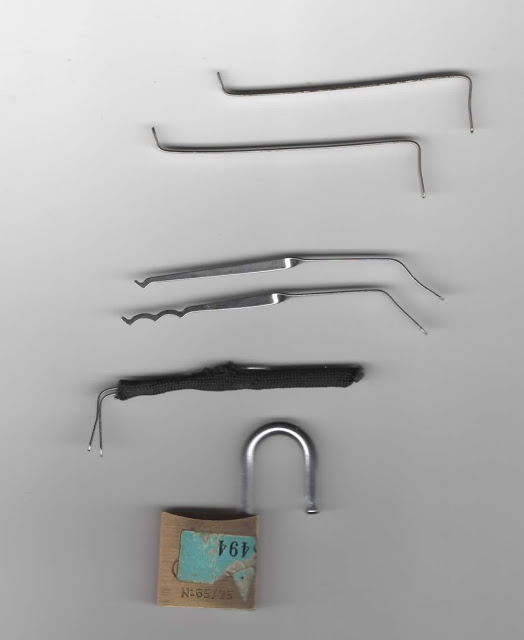
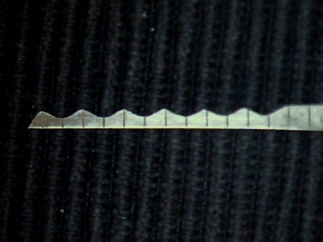
This image shows some “batarang” rakes (aka w-rakes) that at first glance may appear to be Bogotas. These are from one of my Chinese pick kits, which seem to have been “inspired” by an American brand called “Majestic”. Note that some of them lack the undercutting of some peaks: a feature that strengthens the Bogotas. Also note that the “wavelength” of the peaks is less. They do work, I have opened locks with them, but they are not as good as Bogotas. Incidentally, these particular examples have a number of burrs that could be sanded off, but this is likely to remove the nasty black finish that shows up the brass. I have not experience of genuine Majestic picks but expect they are better finished.
The mirror finish of other picks helps them move around inside a lock and does not show up brass marks like some other pick finishes.
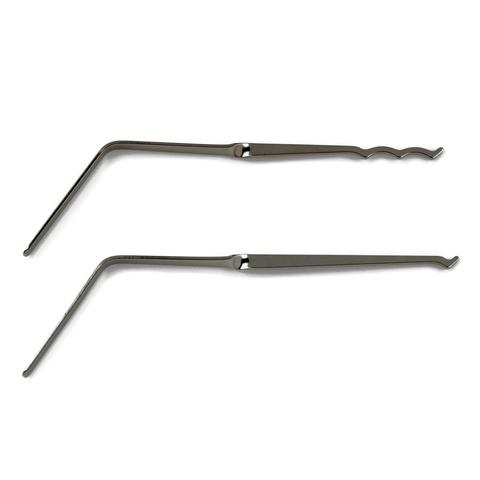
An honourable mention goes to this rake, which is effectively a Bogota without the innovation of the undercuts. The original Bogotas were made from the steel blades from a streetsweeper, illustrating that these are a relatively simple construction project for those with hand tools, material and patience.
A pair of Bogotas constitutes a compact but very capable lock-picking capability. In other posts I have shown how a pair can be carried using the spring from a cheap pen. The safety pin lets the pair be carried where they are concealed or most convenient. An alternate method uses a few inches of gutted paracord. A safety pin may be added with a needle and thread.
If you are new to lock-picking, the Bogotas are great for building your confidence and teaching you finesse.
Given their performance, quality and versatility, a pair of Bogotas are great value for money and worth adding to you tool kit, survival kit etc. Newbie or veteran, you should give them a try!
I will admit that I can be a bit frugal at times. In an age where we waste far too much and fail to appreciate what we have, I do not regard that as a bad thing.
This is not me!
The other day I had some soap reach the end of its useful life. Both bars had begun to produce less laver and broke into shards if you tried to use them. Annoyingly, there seemed to be quite a bit of soap left. Trying to squeeze the old pieces into the new bar of soap never seems to work. Even if they are the same type of soap they tend to break off and be lost.
Decades ago newspapers used to have adverts for soap moulds that supposedly let you compress multiple old bars of soap into a new bar. Surely such a thing must be available on the internet now? Turns out that you could buy such a thing but it is now unavailable. There are youtube videos on how to make such a thing out of wood. There are also many videos showing you how to melt soap in a saucepan and place it in silicone moulds.
Some further searching and applied logic resulted in something less involved and more practical. Here is what you do:
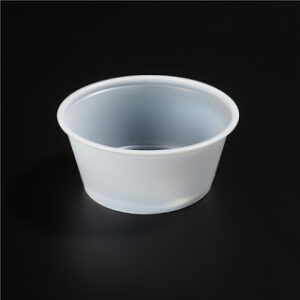
Find a microwavable plastic cup. I use one of the little Tupperware tubs that some takeaways give you sauce in. Place your shards of old soap in the cup, having removed any labels the soap may still have.
Take a metal teaspoon and carve a trough in one side of your new bar of soap. Put the soap you have carved out in the cup with the old soap.
It does not matter if the soap in the cup is wet, but be sparing if adding extra water. Spend a couple of seconds crumbling the soap so none hangs over the edge of the cup.
Place the cup of soap in a microwave and give it 30 seconds. Keep an eye on the soap and stop the microwave as necessary. I put a little too much water in with the soap and it frothed over the side of the cup. The turntable was due for a clean anyway.
If the soap is not sufficiently softened/ melted, give it additional bursts of about 10 seconds until it is how you want it.
Take the teaspoon and use it to pack the soft soap into the trough on the new bar of soap. I ended up taking a foil wrapper and encircling the soap with it to pack it down. The wrapper was used food packaging so additional points for recycling and repurposing!
Let the soap cool before you attempt to remove the wrapper if you used one. Very little soap should adhere to the wrapper if you have waited long enough.
I was a little concerned I had used too much water so I put the bar in the freezer for a few hours in the hope that some of the excess would crystalize out.
I tried the bigger bar of soap today. Works perfectly. The little plastic tub now lives in the bathroom, ready to collect future shards of soap. Currently my bar of soap rests on top of it to dry. When it gets smaller I will place it on a repurposed shampoo bottle cap.
Discovering soap can be melted in a microwave offers some interesting potential. Soaps can be made with essential oils, fruit zest, oatmeal or various other additives. I seem to recall I once saw coffee soap advertised. There is always a little bit of coffee and grounds left in the pot. It is mince pie season so some of those foil cups may get repurposed as moulds.
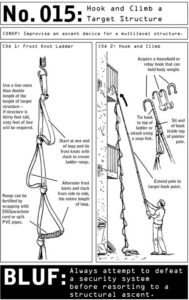
Yesterday I was reading a little more about hook ladders. The hook ladder is a masterful piece of lateral thinking: You cannot carry a ladder long enough to reach where you want to go? Carry enough to reach a ledge or balcony. Climb up to that and then use the ladder to reach higher. A typical ladder would be 4 metres/ 13 ft long.
Here are some videos of hook ladders in action, and even being used for races.
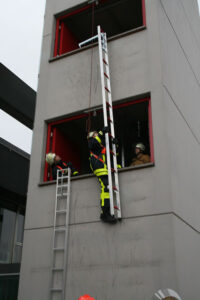
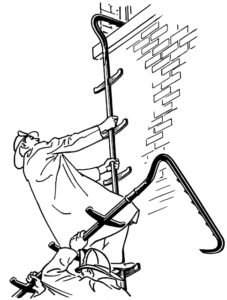
It just so happened that the same day I came across this image. If provision is made to carry or retrieve the painter’s pole such a device can be used to “climb in instalments” in the same fashion as the hook ladder is used.
The “frost knot” is simply an overhand knot. Here is a video on it, and one on making an etrier.
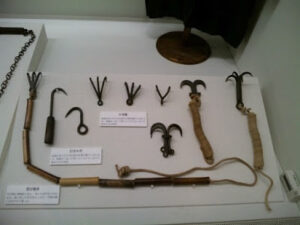
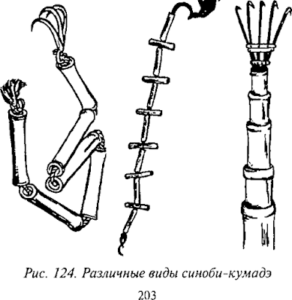
Below are some images of the ninja kumade, effectively a folding hook ladder.