Disclaimer: “As an Amazon Associate I may earn from qualifying purchases.” Adsense and Infolinks were no help at all.

If you have enjoyed this article or it has been helpful to you please feel free to show your appreciation. Thank you.

Read The Third Wave by Alvin Toffler!
Categories
Phillosoph

Survival Gear: Part Two

Sleeping Through the Apocalypse

In part one of this discourse I fielded the idea that your survival kit should start with a suitable outfit of boots and clothing, including hats, bandannas and gloves.
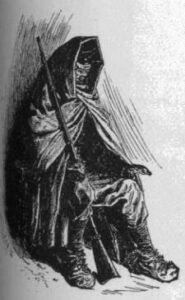
I’ll continue with a few further thoughts on “neckwear”. While useful, most modern bandannas are a little on the small side. Kephart advocated a silk neckerchief either 27" or 36" square. In “Jack Knife Cookery” James Austin Wilder stated that a scout’s neck cloth be “two cubits”. This page suggests a 30-40" square.
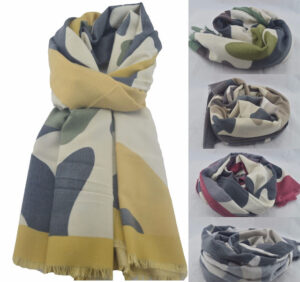
While researching today’s post I came across the “pashmina” shawl below. We tend to think of such garments as something for the ladies, but the potential of such a thing for any outdoorsperson should be obvious. At 190 x 70 cm it is effectively a mini-blanket.
To the ensemble we discussed yesterday, I will suggest a further addition, which is that of eyewear.
If you need glasses you may have them already with you when you reach your emergency kit. Ideally your kit should include a spare pair, but this is often not financially practical for many of us. If you are blessed with perfect vision, your kit should include a pair of sunglasses. Not only do these protect from sun and snow glare but also from thorns and branches in the woods.
If you need prescription glasses they should be selected from styles that cover as much of the eye area as possible.
Retainer bands, to stop you losing your glasses during rough travel are worth acquiring.
Protective goggles are another prudent addition to your kit, particularly if you operate somewhere where dust storms or harsh wind are common. 
While a lower priority than the other clothing items we have discussed, gaiters are a useful addition to any cross-country kit.
In part one of this discussion I stated that if your cold weather gear had you perfectly comfortable when you were standing around, you were wearing too much for hiking. Put another way, you should be slightly chilly when standing around in your marching order. So what happens when you finally make camp and are less active? Obviously, you have to wear more. This is time to break out the blanket!

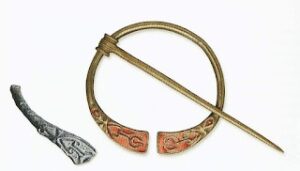
Blankets are ideal for sitting around camp, standing watch or waiting in a stand. In previous blog posts we have looked at various ways to use blankets as garments. It may be prudent to pack a few large safety pins, blanket pins or cloak pins in with your blanket.

Why a blanket, you may ask? Modern people use sleeping bags! You can wrap a sleeping bag around yourself too! Indeed you can. Typically good blankets (or poncho-liners) cost less than good sleeping bags. If, like so many of us, you are on a limited budget then the purchase of a good blanket for your emergency supplies is a better investment than that of a cheap sleeping bag.

You can add a quality sleeping bag when you have the money, and use your blanket with it if you wish.

Another consideration is that sleeping bags should be stored unrolled, while a blanket is quite happy rolled up with your other emergency items.

Available now are blankets (“throws”) made of synthetic fleece. I've not actually used these in the field but often use one at home.

For field use. they may not have the wind resistance for use as outer wear. That can be solved by the addition of a more wind resistant outer layer such as a rain-poncho.

Around the same time that you buy yourself a good blanket, get yourself a rain-poncho, small tarp, basha-sheet or all-weather blanket.
Whatever you choose should be capable of serving as both a rain-garment and a shelter cloth. Add usefully long lengths of cord to each eyelet and roll or bundle them up so they are out of the way until needed. See my knot book for some ways to do this.
Attaching such cords is better done at home in the warm rather than when out in the field when cold, wet and tired. You should be able to wear your poncho/sheet over your blanket if necessary. At night, you rig it as a roof while you curl up in your blanket.
There are many items that you can add to your emergency kit to make your sleep more comfortable, and you probably will.
The rain-poncho and blanket are the very basic must-haves that will keep you warm and dry whether awake or sleeping.
After suitable clothing, they are the first items your kit should acquire.
A foam or foil kip mat might be the next item to acquire. These are relatively inexpensive and can greatly increase your comfort at night, protecting from both the damp and chill of the ground.
In certain environments, where trees and roofs are scarce, some tent pole sections and pegs may be an early purchase.
Human nature being what it is, your possession of basic essentials such as a blanket and poncho may make you a target for theft and attack.
Next on the shopping list is a knife. The knife is not just a defensive weapon, it is a tool that can be used to manufacture shelter, build fires, prepare food and, if necessary, create better defensive weapons. Many bug-out bags include expensive folding knives.
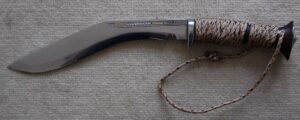
Your primary knife in your emergency kit should be fixed blade and capable of the heavy work that I have described. My first choice is my 10" sirupate kukri, accompanied by a puukko and brog.
If you are on a budget, a machete is far from the worst choice you could make.
Your kit should include some means to resharpen your blade. You will also need a belt or similar so this vital tool can be worn on your person.
For an in-depth discussion on survival blades and how to use them see my book Survival Weapons.
Water is the next consideration.
Your kit should include a couple of litres of bottled water, more if you are in an arid region.
Large plastic soda bottles are very useful for water storage. Wash them out, fill with clean tap water and add two drops of bleach per litre.
You sometimes encounter nonsense about storing water. As a qualified microbiologist I can tell you water will not “go off” if it has been properly sterilized.
Water is heavy and bulky, so you can only carry a limited amount.
Your kit should also include a supply of water purification tablets. These are valuable so carry them in the cargo pocket of your trousers.
Before using other purification methods, filter water to remove gross contaminants. This is another job for a bandanna!
In an emergency situation, it is prudent to carry at least a litre of water on your person whenever practical.
This is in addition to the water supply in your pack. This doesn’t have to be an army water bottle, although their shape is well suited to this task, so get one if the price is reasonable.
“Civilian” plastic water bottles and bladders can be used instead, so long as they are convenient to carry.
Some military bottle pouches can be rather over-engineered. Modern military pouches are designed to fit on the belt and assume a load carrying system is worn.
A shoulder strap may be a more convenient arrangement. Consider a strap or paracord carrier for your bottle or a mesh or cloth bag.
In a previous blog. I described how to create a simple, effective fire kit. Add this to a cargo pocket of your emergency trousers.
You are far less likely to remove your trousers than a jacket or shirt. Thus some of your most useful items are carried in your trouser pockets rather than your pack, jacket or belt order.
You should also have a lighter as a component of your everyday carry.
There should be an emergency disposable lighter in each of your outdoor coats. Throw a few spares into your emergency bag.
Your emergency kit contains two medical kits. The more extensive one is carried in your pack, preferably where it can be quickly located.
See my article here for some suggestions on contents.
You also should have a pocket kit that lives in a trouser cargo pocket. This is just a small selection of plasters, aspirin and alcohol wipes.
Your cargo pockets should also include at least one foil blanket. These cost a pittance but can save lives. It is worth stocking up on a few spares.
If you need particular medication, you should have it located close to where your emergency kit is stored.
Ideally you would have it packed in the kit, but stocking up on prescription items is often not practical, and you may need to make sure items are relatively fresh.
It is a good idea to store a checklist with your emergency kit. This lists items that you may need that are not stored with the main kit and can be useful when you are flustered or in a hurry.
The knife or knives in your emergency kit are supplemented by something such as a Swiss Army knife (SAK).
Mine is part of my everyday carry and is accompanied a mini-leatherman Squirt. Together, these weigh 6¼ oz/ 178 gm so are several ounces lighter than many single full size multi-tools.
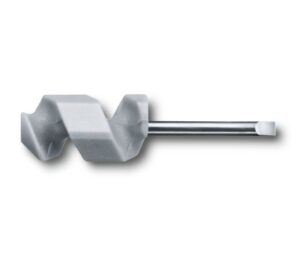
The SAK includes a fine screwdriver that stores in the corkscrew. This can be used to repair spectacles and sunglasses.
That concludes the second part of this discussion. Third part to follow soon.
Categories
Phillosoph

Survival Gear: Part One

What Will You Wear to the End of the World?
On this blog I have often tried to approach survival from a different angle. Recommended lists of survival gear are easy to find on the web. Many of these recommendations are products. We live in a consumer society so whatever your interest, someone will be attempting to sell you something to use. Many of these things can be very useful. Many of them can be classed as “gadgets”, which I do not intend to be derogatory. Regular readers will know that I love a good gadget or gizmo! I do, however, feel the need to urge caution. If the choice is between buying a belt buckle that can open any hex-nut, or a good blanket, the latter is a far better addition to your survival gear.

When discussing survival gear there is a common tendency to leap right to the contents of the pockets or pack. Many people on the internet will post photos of their bug-out bag without considering that these are of little use without an outfit of suitable clothing or footwear nearby. If you are going to be outdoors for any length of time then you need to first consider what you are wearing. Having the right underwear for the weather can make a massive difference. An effective clothing system is built outwards, and underwear is the foundation.
Underwear, whatever the material, should be open weave so as to be permeable. Outdoorsmen of previous centuries used light woollen underwear in all seasons, usually long in the leg and sleeve. If it was really cold they wore two sets. Some modern wicking synthetics that are good for cold weather may be too warm for some climates. I have used a CoolMax tee-shirt comfortably in hot weather.
You will often encounter the advice that several thin layers of mid-level clothing are warmer than a single thick layer and that individual layers can be removed to regulate temperature. You will also notice that outdoor shops are full of cosy looking thick garments to tempt your wallet.
Frequently stopping to undress and remove or add a layer of inner clothing may not be that practical in the field. Make sure your inner and outer garments can be easily vented instead.
If you are comfortably warm when standing still you are probably wearing too much insulation for hiking in cold weather.
Mid-level clothing for insulation should be open weave and thin. Use materials that remain relatively warm when wet and that dry easily. Select wools and synthetics, avoid cotton. You’ll note that outdoor shops are full of stylish cotton items they want to sell you! Shops often stock what sells, not what you actually need.
Down is best used in cold, dry conditions when the likelihood of wetting is low. Cotton garments should be reserved for hot dry conditions.
Outermost clothing needs to be tightly woven to protect from the sun, rain, wind and insects. It should be loose in cut to allow room for insulation or air circulation and for freedom of movement. Attention should be paid to the ability to easily ventilate the interior, even if the item is described as “breathable”.
Raincoats can also serve as windproofs. Even the breathable ones will need to be vented in certain conditions. Raingear is of limited use if it gets damaged. To reduce the chances of this happening wear it when you need it, pack it away when you don’t. Logically, you will need a windproof outer layer in addition to your raingear and should select raingear that is easily packable.
In previous decades the preferred outer layer of soldiers and outdoorsmen was of wool. Woollen outer garments are harder to find now and economy has many of us wearing cotton or polycotton, often of military origin or inspiration. Cotton and its relatives are easy to print but cold when wet and slow to dry. If you can find outershirts, tunics or jackets of wool they are worth considering if you can afford them.
Trousers take a lot of punishment out in the wilds. Expensive, ultra-lightweights may prove to be a poor investment. Cotton or polycotton trousers are probably a more prudent choice over the more expensive alternatives of wool or other materials. Thigh pockets are useful for carrying certain low weight items.
Generally, select neutral colours for clothing. Camouflage clothing can be counter-productive in certain situations. Read my articles on smocks and smocklets for ideas on camouflage garments that can be donned when needed. In other situations you will want to be seen so consider something in high visibility colours that can be worn when needed.
“Peripheral” clothing is important. The difference between comfort and misery or injury can often depend on whether your feet, head and hands are protected. Good underwear and accessories should be top of your survival list.

Your survival kit needs at least two hats. One of these needs a broad brim to protect you from the sun. A boonie hat is just about ideal for this. You will also need something to keep your head warm. A woollen or synthetic watch cap is a good choice. It can even be worn while sleeping wrapped in your blanket or sleeping bag. A headover is a good alternative or supplement to the watchcap. They are versatile and take up little room, so it may be prudent to carry more than one. They can be worn as warm hats but can also serve as balaclavas, scarves or neck gaiters.
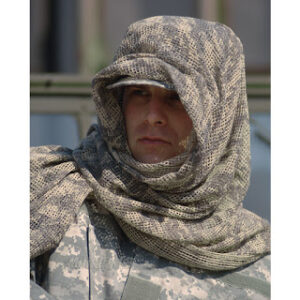
Some form of neckwear is recommended. In hot weather this may be a cotton bandanna or keffiyeh. In colder climates a woollen, silk or synthetic scarf. The bandanna or keffiyeh has a number of uses including as a towel or headgear. If your hat lacks a full brim or the sun is particularly harsh they can be used to create a havelock. Depending on colour, they may be used either to signal or for camouflage. They are therefore an “all season” component for your kit. Triangular bandages and thin tea towels can also serve as bandannas.

Spare socks are a good addition to your kit. Ideally get several woollen pairs. You can work with cotton in certain climates and if you have enough pairs to rotate them. Change into dry socks whenever you can and carry wet ones where they can easily dry. Keep your clean spares in a waterproof bag. Sew a loop of ribbon to each of your survival or travelling socks so you can hang them up securely. Socks can be used as pouches or emergency mittens. Even if your kit only contains one outfit of clothing, pack spare socks.
Fingerless gloves maintain dexterity while protecting your hands when moving over rough country or in close combat. When using gloves for insulation remember the layering principle. Several thin pairs that can work in varied combinations are more versatile than a single thick pair that must be either on or off. I have personally operated in a -30°C windchill using just thin merkalon gloves and leather fingerless gloves. The leather gloves protected against windbite on the hand hanging by my side. The hand holding the walking pole seemed to better protected. 
Gloves seem to be very good at finding their way out of pockets, particularly if you have stuffed a scarf and a warm hat in there with them. Most cold weather coats do not have sufficient pocket space for peripherals and other stuff you want to carry in them. Buy a mesh, drawcord bag and pin it inside your coat. Use this to store peripherals that you are not currently wearing. Sew ribbon loops onto all your gloves so they can be attached to a snap link on your pack or equipment if you remove them temporarily.

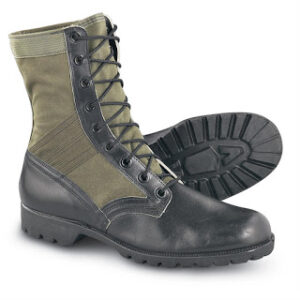
Last, but not least, you need footwear that you can travel in. Boots are a pretty good choice, particularly if you are likely to travel cross-country. Boots in an emergency kit should be worn in. If they are used for other purposes they should be stored close to the rest of your bug out equipment and clothing. A common tip is that you should replace your bootlaces with paracord. An important detail is that it should be the sort of paracord that you can pull the core strands from and still use the outer sheath as bootlace. Some budget stuff does not allow this. There is little point providing yourself with cordage if you can no longer keep your boots on. Also, ensure that the paracord you use is compatible with the eyelets and hooks of your boots. Aglets that function as small fire sticks or handcuff keys are available. Other items that might be concealed in boots will be discussed another day.
That is quite a shopping list so far, and not a multi-tool yet in sight! The second part of this article is available here.
Categories
Phillosoph

Artistic Lock Picks.

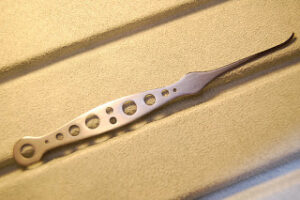
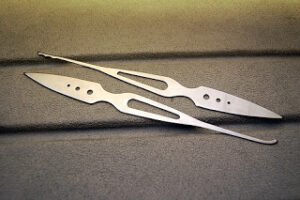
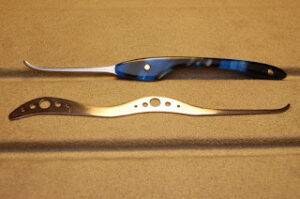
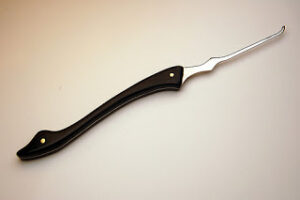
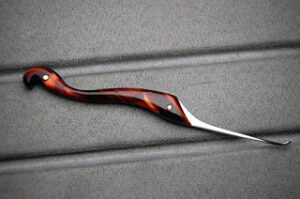
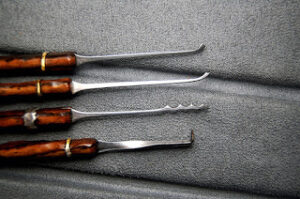
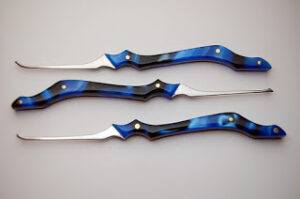
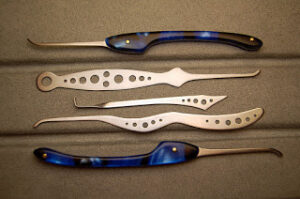
The other day I voiced some ideas that I thought might make lock picks more durable. While collecting images for that blog I came across some photos of custom lock picks. Some of these have the features that I suggested, although the choice may be artistic rather than functional. Certainly they are things of beauty and worth sharing.

Categories
Phillosoph

Creating Better Lock Picks

I must start this article by pointing out that I have very little formal training in engineering, so there may be flaws in the following proposition. My main intention is to provoke some thought and discussion on the subject.
Recently I came across a statement about lock picks breaking. Lock picks are used for repetitive actions and this may lead to fatigue and breakages, no matter how much you paid for your picks. Being relatively new to the field of lock sport I have yet to have a pick break on me, personally.
When a pick does break you are likely to discover that the only way to get a replacement is to buy a new kit, many suppliers not offering singles on their websites. Or you can make your own, using the old pick as a model.
The question I want to raise is, is it possible to reduce the likelihood of breakage?

Below is an assortment of picks that I own. For better comparison I have selected hooks.

SouthOrd
 

Chinese Goso Plastic Handle
 

Cheap Chinese (Goso?) Metal Handle
 

Dangerfield from Serenity Kit
 

Dangerfield Bogota Hook.
Obviously, some parts of a pick need to be small to fit into a lock. Does the rest of the pick need to be so fine, however? Even if you include large padlocks most keyways seem to be less than 50mm.
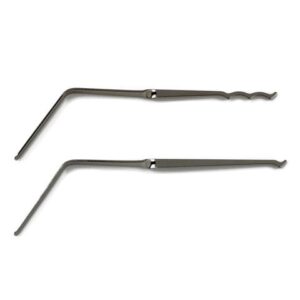
Most of the picks shown above have a relatively long, narrow neck that abruptly widens into a handle. The Dangerfield Serenity pick is off-set and widens with a step arrangement. In one of the Chinese picks the neck and handle are separate pieces joined by a pop-rivet. The Bogota (and Soho) picks remain fairly constant in width, twisting to form a handle that also serves as a turning tool.
Which of these configurations is stronger? The Bogota/ Soho configuration has the merit of versatility and compactness. Four such picks within a pouch take up much less room than two more conventional picks and eliminate the need to carry a standard width L-turning tool. Unfortunately this style is only available in a limited number of configurations. As well as the Soho and Bogota variants there is the Reina from Mad Bob, which appears to be the Princess/ Prince. Other than the Bogota single hook/ half-diamond hybrid there are no other hooks or lifters of this style, at least not commercially available.

If a pick does need a wider handle, would it not be mechanically stronger to have it widen as a curve rather than an abrupt step? Would some lightening holes in the wider part of the neck strengthen the tool and help disperse stresses? Perhaps there is a case for making picks from thicker stock and thinning the head section down?

Categories
Phillosoph

Lock Pick Kit: WIP

I have been planning to do a little “show and tell” piece on my growing lock sport kit. Unfortunately it seems every time I go to do this I think of another thing to address. Currently I have another pick in the post and I am intending to add some narrower and wider tension tools once I source some material. I am planning to make a post specifically on tension tools so it is appropriate that I post these pictures today as a work in progress.
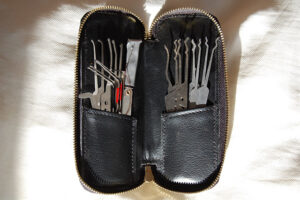
Regular readers will know that I purchased a Dangerfield Serenity kit from UK Bump Keys, who very nicely upgraded the pouch and threw in a pair of Soho picks. To this basic but useful foundation I have added my Bogota set. Both the Sohos and the Bogotas also serve as tension tools. For easy identification the Sohos have been marked with red enamel paint and the Bogotas with blue.
Here is the pouch packed. In the right section are rakes. In the left are the hooks, lifters, tension tools and everything else, such as the Bogotas, Sohos and a razor pick.
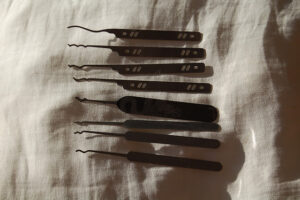
The rakes laid out. I thought that the winter sun would be a good time to take photographs but the effect is more artistic than I intended. This will have to serve until the final photography session. From the top:
  • Swerve Rake (Serenity)
  • Bogota Rake (Serenity)
  • Prince Rake (Serenity)
  • Princess Rake (Serenity)
  • Sandman (Sparrow)
  • Trio of Snake Rakes: small, angled small and large (SouthOrd)
I was going to purchase a King and Queen but learnt these are too big for many locks and that the Princess and Prince effectively serve the same function. It may be the King and Queen work better with US locks. See my first post on lock picking for a caution on differences between US and UK/ European/ Japanese locks.
The hooks and lifters:

  • Partial hook (SouthOrd)
  • High hook (Serenity)
  • Angled Reach Ball pick (Serenity)
  • Curved Reach Ball pick (Serenity)
  • Half-Diamond pick (Serenity)
  • Razor pick (Withoutakey)
As you can see, I have expaned this section with a more conventional hook and added a razor pick (note homemade point cover).
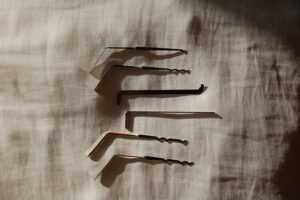
The tension tools:
  • Bogota picks
  • Pry bar/ TOK tool (Serenity)
  • Standard L tool (Serenity)
  • Soho picks
The Sohos, Bogotas and L-tool are all the same width. This kit needs some narrower and wider tensioners.
Bogotas, Sohos, Serenity kit and Sandman were all purchased from UK Bump Keys. UK Bump Keys do not sell many “singles” so the SouthOrd picks and razor pick were brought from Withoutakey. Like UK Bump Keys, Withoutakey are a very nice and helpful company to deal with. The free ebook they send for signing up with their newsletter has some interesting stuff on combination locks.
Categories
Phillosoph

Anatopismo

         Those of you who have enjoyed my non-fiction writings may be interested to know my first novella is now available.

Categories
Phillosoph

Serenity Lock Picks Review

Regular readers will have noticed that I do not usually write unboxing articles. Firstly, this is because funds are very limited (buy some books please!) and this is not a blog that gets sent free stuff. Secondly, I would rather write a post after I have had some time to try the items out.
Currently most my time is committed to another project but I would like to record some impressions on the Dangerfield Serenity lock pick set I have just received.
It has been a tough couple of months so I decided to treat myself. In my previous post I told you about the Bogota picks I brought and the cheap Chinese set of picks I had been playing with. The pair of Bogota picks was very reasonably priced but cost at least twice what you can pick the cheap picks up for. The two Bogotas, however, are much more useful than the dozen or so tools in the Chinese kit. Conclusion is, if money is tight or you only want one set of lock picks, buy a pair of Bogotas. Have a pair for practice and at least a set with your emergency kit(s).
I’ve been getting more into the leisure side of picking and wanted to improve my single pin picking (SPP) skills, hence decided to treat myself to a better quality set of tools. I opted for the Dangerfield Serenity ten-piece set. Firstly, because it has a nice selection of hooks and lifters for SPP. It also contains a Bogota-style pick. It was also currently on discount and UK Bump keys had been nice enough to send me a 10% off voucher. Kit arrived yesterday but I only had time to unpack it this morning. Initial impressions:
Dangerfield Zip Pouch
The kit is supposed to come in a webbing/ vinyl(?) pouch with a snap-button. Instead UK Bump keys upgraded this to the Dangerfield leather zip pouch. If, like me, you grew up watching cop shows where lock picks are always in a little black zip pouch, this will give you a buzz. The zip is in a nice brass rather than the black of the cop shows, but nice enough. I had noted that UK Bump keys was running an offer where if you brought this pouch you got a free pair of Dangerfield Soho lock picks, which are similar to Bogotas. That is a pretty nice deal in itself if you want a pouch. Thoughtfully, not only did UK Bump keys upgrade the pouch with the Serentiy kit, they threw in the pair of Sohos too! Like the Bogota set, the Sohos are designed to also act as tension tools. My ten-piece kit is actually twelve piece now, and effectively has four tension tools rather than two. I quite like this type of tension tool and often use the Bogotas as tension tools in preference to other tools to hand.
Soho Lock Picks
I’ll stress there is no guarantee that you will get these upgrades if you order a Serenity, but it tells you a lot about UK Bump keys’ approach to customer care that they made these additions.
Serenity Lock Pick Kit
The actual Serenity itself has the following contents:
Classic Slimline Wrench
Pry-Bar Wrench
Half-diamond Pick
Angled Reach Ball Pick
Curved Reach Ball Pick
High Hook Pick
Bogota Rake
Swerve Rake
Prince Rake
Princess Rake
The “pry-bar wrench” is what Americans called a “top of the keyway” (TOK) tension tool. American locks tend to be mounted pins upward while in the UK and Europe they are often pins down, which confuses terminology. Note that the Bogota rake has the same handle as the other rakes and picks, not the tension tool handle of the “stand-alone” set. The Swerve rake resembles an elongated snake-rake and the tip can be used for SPP. The Half-diamond pick is often termed a “hybrid” since you can rake with it too.
All of these picks, rakes and tools are made of a thinner metal than the Soho rakes and the stand-alone Bogotas. I have heard this described as 0.22" steel, but do not have a micrometer to measure this for myself.
I have tired a couple of these tools on a practice lock and they have worked as expected. My little stubborn lock is resisting the thinner picks, but this may be due to me being a little out of practice over the last few weeks. It pops for the thicker Sohos. (Update: The Serenity Bogota rake works perfectly on this lock. The Prince and Princess also work. The Swerve is not suited to this size of lock.)
The zip case is pretty much ideal for the Serenity set. You can fit four rakes in one side and the other four picks in the other. Place the tension tools how you wish. There is room for the Soho rakes/tension tools. It begins to get a little cluttered when I add my other “good” pick, a Sandman, but there may be room for an additional snake. If I was asked to suggest one improvement, it would be to add a pocket to keep the tension tools separate.
I got this kit from the same company I got my Bogotas from, UK Bump keys. I have found them prompt and very helpful. From youtube videos I note that they have a number of American customers and I can see why. Register on their site and you will be sent a download link to a free 40+ page ebook on picking. You may also get a voucher towards your next purchase. Their webpage has a blog with some interesting articles and there is no shortage of instructional videos too.
Categories
Phillosoph

Lock Picking Part Two : Let's Rock!

There are several reasons why you might want to pick a lock. If you are picking for the challenge and entertainment then experimenting varied combinations of tensioner and pick is part of the fun. Alternately, there may be situations when you just want to get a lock open with the minimum of fuss.
In the latter case single pick picking (aka SPP) is a technique that you will avoid if possible. Generally SPP needs considerable skill, practice and time.
What are the alternatives? The first technique to attempt is “rocking”.
As a distinct technique rocking is relatively new to me. I first noticed references to it while writing the previous blog on this subject. I grabbed a tension tool, a couple of locks and a hook pick.
I applied a modicum of tension, inserted the hook upside down and seesawed the end. Both locks popped open in a few seconds. I will admit I was a little miffed by this. One of these locks had refused to open to any method for several days when I first started picking! All I’d needed to do was invert a hook and wiggle it? Obviously there is at least one moral to this story. The chief one is that you should not resort to complicated techniques if you have not tried simple ones first. On the subject of simplicity, always consider if there is an easier way to bypass a lock available before you start picking.
You can rock a lock with other sorts of picks too. I prefer to use a rocking action with jag rakes rather than the scrubbing, zipping or ripping. How effective this is depends a lot on the particular combination of rake and lock. One jag rake will quickly open a lock while another will have no effect on the same lock. If you favour jags (which I do not) you had best have a reasonable assortment handy when attempting to rock.
If you read my previous blog you will know the Bogotas are my “go to” picks, and that I am probably more likely to have these handy than a single hook or jags. After my success with an inverted hook I tried the technique with my single hump Bogota. I managed to open my more truculent lock once with the single-hump, and it was not particularly fast. My impression is that my single-hump is too straight to be a good rocker. Which way up you use it seems to make very little difference.
The triple-hump Bogota can be used to rock a lock. Because the Bogota is a shade thicker than some of my picks it helps if you really relax your arm so motion is more freely transmitted to the pick. By doing this you can get the pick moving quite fast, emulating the action of electric picks. Vary you rocking action. More importantly, vary the level of torque you are applying. If the lock will not rock open, try any other picks you have, or move on to other methods. Luckily the triple-hump Bogota also lends itself to jiggling, wiggling, scrubbing, zipping and rippling so you have some other options before resorting to single pin picking.
Categories
Phillosoph

Lock Picking Part One

Version 1.5

One topic I have not dealt with on this blog so far is that of lock-picking. The reason for this is quite simple. Over the years I have acquired a reasonable body of material on the subject, but, due to a variety of reasons had never actually got around to trying to pick a lock.
Some years ago someone got locked out of their desk and my name was forwarded as “someone who might know how to pick a lock.” (Which sheds some interesting light on how some colleagues view me!) I pointed out I knew how a lock was picked but had never done so. I assembled a useful collection of paperclips, small allen keys and screwdrivers from what I had available. As it turned out, when I experimentally jiggled the lock the entire plug came out in my hand! I reached to the back of the lock with a large screwdriver and turned the latch. Cannot really count that as my first lock picking!
A few weeks back I decided to rectify this. There was a time when if you wanted lock picks you either had to make your own or had to prove you were a professional locksmith. While lock picking is still perceived as being a little dubious it is now more widely recognized that most lock pickers are hobbyists who are more interested in the challenge and skill rather than crime. If a criminal wants something he will usually use more destructive means than picking your lock! Lock picks are now available legally from many internet sites, including well-known outlets such as Amazon and ebay. CAUTION: Check your local laws!
I have seen it claimed that “picking locks makes heroin seem dull!” It is an interesting hobby and there is no feeling quite like popping a lock for the first time. I sometimes work on a padlock during the commercial breaks, varying the picks and tensioners I use or whether the light is on.
I am not going to go into details about to lock picking or the theory behind it in this blog since far more detailed material is freely available elsewhere.
I will cover making your own or improvising lock picks in a future post. If you are new to the hobby I suggest getting some commercially made picks first. Bear in mind that American locks are often larger but shorter than those used in the UK, so some pick designs intended for the former may be cramped in UK locks. Look for items designed for European use or “slim-line” versions.

Hooks and Diamonds

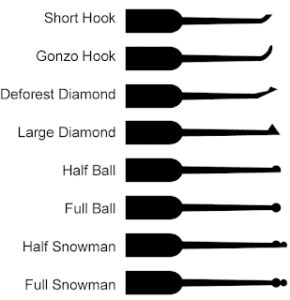
Firstly, some terminology. Basic, conventional picks can be divided into two broad groups: Lifters and rakes. Lifters (also known by other names) manipulate a single pin at a time. (Single pin picking, aka SPP) Lifters include hooks, half-diamonds and half-balls. Terminology for picks can be a little out of wack. A half-diamond will sometimes be called just “diamond” when it is actually a triangle, a “ball” is actually a circle and so on. Just to confuse things further, may rakes are used with a vertical lifting action. Diamonds and balls can be used for both SPP and raking, so are often classed as hybrid picks.

Rakes

Rakes manipulate more than one pin at a time and are used with a variety of actions which include scrubbing, jiggling and ripping. Bear in mind that you can also try these actions with a lifter, often with successful results. There are a number of different forms of rake. 
The snake rake has a sinuous tip. You will see similar forms called “worm rakes”, “S-rakes”, “C-rakes”, “W-rakes”, “serpentine rakes” and similar. Currently I only have one snake-style rake and it seems to work best with a ripping/zipping action.
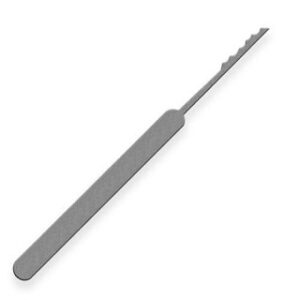
“City rakes”, “L-rakes”, “ripples”, “waves”, “jags” or “jagged rakes” (also sometimes [also!] called “W-rakes” or “lifters”), look like an irregular sawblade. Personally I did not particularly care for these initially. They seemed like a good way to damage the pins. City rakes should not be used with for horizontal ripping/zipping. They are best used with a vertical lifting or rocking motion. When they do work they tend to work very quickly.
A double-ball pick is also known as a “snowman” or “figure-8” and as you might expect, there is a half-snowman. Ball picks are designed so they do not damage the thin wafers in a wafer lock. Worth having if you expect to deal with filing cabinet or automobile locks. The full-diamond, full-ball and full-snowman are designed for locks that have pins or wafers on either side. With a single-sided pick you can just remove the tool and reorientate the tool. The snowman and his half-brother can be used for raking actions. so like diamonds, are classed as hybrid picks.

Bogotas

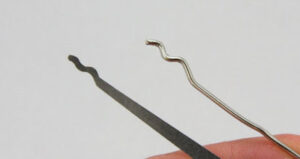
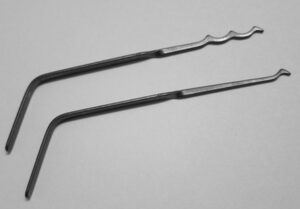
The Bogota rake is a relatively new invention and was created by a gentleman called Raimundo. He claims an inspiration was the mountain peaks and gentle valleys surrounding Bogota, Columbia. This type of pick is sometimes called a “jiggler pick”. With a design this good there are inevitably copies and attempts to circumvent copyright. You will see similar designs called “camels”, “pagodas”, “three-humps”, “M-rake”, “batarang”, “w-rake”  and similar. Batarangs are actually a separate type that looks similar but is inferior. Bogotas and their ilk lend themselves to a variety of techniques. If jiggling or wiggling does not work, try a lateral wiggle, scrubbing or ripping. The three-hump Bogota is the most consistently performing pick I have, and will sometimes pop a lock open in a few seconds.

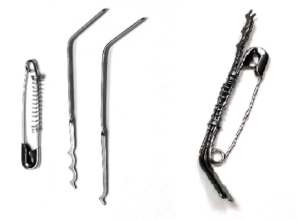
Shown is a very clever way of carrying a pair of Bogotas using a safety pin and a spring from a pen. The safety pin itself can be bent into a hook pick if necessary. CAUTION: Check your local laws about carrying lock picks!
This is a good time to introduce my golden lock picking tip. You will generally need much less force than you are using! You will need less pressure on your tension tool than you are using. If scrubbing or ripping you need to only lightly touch the pins rather than remove metal from them. If it is not working, be more gentle! Finesse not force!
Lock picks are usually offered in sets of a dozen or more designs. My personal recommendation would be to ignore these and get a pair of Bogotas. Mine are from Dangerfield.

The handles of the Bogotas are cleverly designed so that one pick can serve as a tension tool while the other is in use. The single-hump can be used as a half-diamond or hook. Picking individual pins needs skill, patience and time. Many locks can simply be raked open, and the three-hump Bogota performs very well for this once you have discovered the correct actions. The rigidity of the Bogotas is useful since some locks will pop with a lateral wiggle, something that may bend or break inferior picks. The polished finish makes manipulation within a lock easier and hides deposited brass.

First Lock Pick Set

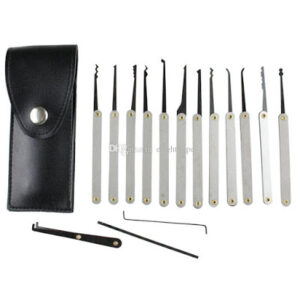
I’m well aware most of you will ignore my recommendation above and buy a kit or two. Trying out different tools and methods is part of the fun of a hobby. When I brought my Bogotas, I also brought a very cheap Chinese-made kit. I mainly got it for the practice lock, but the key extractor or pouch alone was probably worth the purchase price. Using these picks makes me appreciate just how good the Bogotas are. Thinner shanks are not necessarily an advantage and black finish reveals how much brass is scraped from the pins. My wishlist includes at least another S-rake. It was, however, satisfying to open my most temperamental lock with a single hook.
Categories
Phillosoph

Toothbrushes: Less is More!

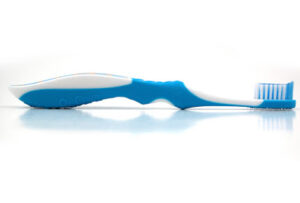
The other day I decided it was time to replace my toothbrush. Money is really tight at the moment (Please buy some books!) so the only choice was the nearest poundstore. As it turned out, this store was only stocking children’s toothbrushes on that day. On the upside, I got a pack of five for a pound!
A few days later I get around to opening the packet and selecting a new brush. The handle was noticeably shorter, but not to any detrimental extent. What was a surprise was how much better this brush seemed to clean my teeth. The smaller head means that the brush has more room between the lips and gumline and can reach all the way back to around my back teeth.

In retrospect, this makes sense. Generally the finer the job you want to do the smaller the brush you use. The smaller brushhead of the kiddy’s brush lets me reach a greater area of my teeth for a better clean. It also uses less toothpaste!
I know some of you “ounce-counters” out there cut down toothbrush handles to save bulk and weight. Consider going the full hog and switch to a children’s brush. You will find not only are they lighter and cheaper (less tax!)  but actually more efficient.