Disclaimer: “As an Amazon Associate I may earn from qualifying purchases.” Adsense and Infolinks were no help at all.

If you have enjoyed this article or it has been helpful to you please feel free to show your appreciation. Thank you.

Read The Third Wave by Alvin Toffler!
Categories
Phillosoph

Camouflage Overvisor

I have been thinking about some posts on camouflaging the head area. These will have to wait until I scan a relevant image. As an offshoot of this research I have been thinking about the issue of camouflaging the eye area.


Below we have an image of the popular conception of a ninja. In reality the items used to cover the face and hair might not be black. The “letterbox” for the eyes is very noticeable. Wearing a ski-mask type hood is not much better since this creates a pair of circles and the brain is wired to look for eyes.

One solution is to camouflage the area around the eyes with facepaint. The disadvantage of this is makeup is not as easily removed as clothing. That is a problem if the operative wants to disappear back into the local population.
Modern fighters often wear goggles. Some of us wear spectacles. These are reflective and thus difficult to camouflage. Some tactical googles are made with black frames rather than more useful colours such as tan.
Part of the solution is to wear a hat with a brim. This casts a shadow over the eye region and reduces the change of reflections. A headnet or mosquito net that covers the face can also be used.
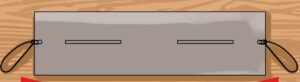
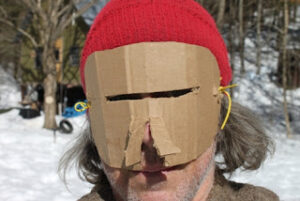
A third solution is to construct an overvisor. Acquire a rectangle of mesh material of either metal or plastic. It should be lightweight but capable of holding a shape. Bend it into an arc so that it covers the “letterbox”. The brain is attuned to picking out eye-like objects, particularly when they are in pairs. The rectangular shape of the overvisor hides the familiar shapes of eyes or glasses. Two of the photos below show snow goggles improvised with a similar method.
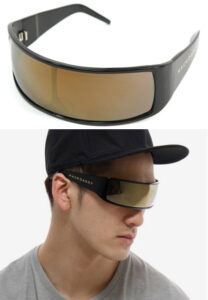

Buy a can of cheap black acrylic spraypaint from the hardware store and use it to undercoat both sides of the mesh. Leave the undercoat to dry. For the next step you will take a pot of acrylic model paint. Tamiya “Dark Yellow” or “Desert Yellow” are good shades. Take a piece of tissue or foam, dip it in the paint and wipe off the excess so the sponge is just damp. Wipe the paint onto the outside surface of the mesh. If you have some experience with drybrushing you can use this technique instead.

You now have a rectangular visor that is black on the inside and sand-coloured on the outside. If any of the “outside” colour is visible on the inside brush over it with black. The inner side of the visor needs to be black since this lets you see through it more easily. It should work rather like a fencing mask or mosquito headnet. This, incidentally, is why headnets are always dark, despite mosquitos being supposedly attracted to dark colours. A net of a more reflective colour will be difficult to see through. The goggles shown below have the right idea but the wrong colour.
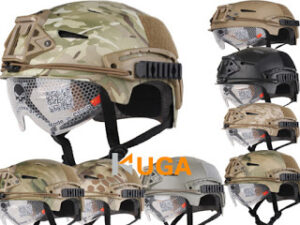
You will probably want to further camouflage the outside of your overvisor. The trick here is not to overdo it. The main objective is to break up the regular rectangular shape. You probably only need one additional colour as long as it contrasts with the sand colour. Olive drab, darkish grey or a middle/dark brown are good choices. Make the blobs one to two inches across and at least half an inch between them. A winter version might be all white or use white with grey or dull green.
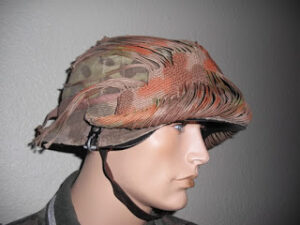
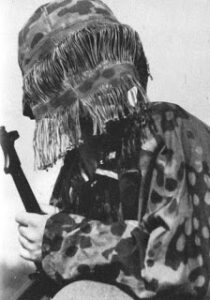
A fringe of suitably coloured frayed cloth can be fastened to the lower edge of the overvisor to help conceal the nose and mouth.
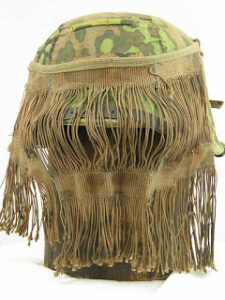
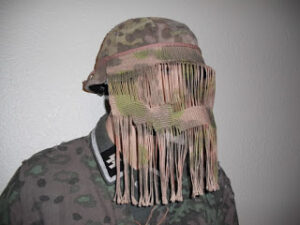
How you wear the overvisor will depend on how you wear it. If you wear it on its own you may simply cut a notch for your nose and add some elastic. Parts of cheap sunglasses may be utilised but some form of retaining band is recommended. If you wear the overvisor over googles or spectacles you may want some mechanism to attach them directly, or attach it to your headgear. Whatever option you choose make sure that the overvisor is easily removable. The overvisor acts a bit like a sunshade so at night or in low light conditions you may have insufficient visibility.
Categories
Phillosoph

Ammunition Conservation

Writing yesterday’s blog I was reminded of a paragraph in the introduction of the English language version of “Total Resistance”, the Swiss military manual:
“In my command in the Philippines, I found that the only way to break out of an ambush action was to provide indigenous personnel with limited ammunition. A guerrilla with an empty rifle will retreat readily, while one with an adequate supply of ammunition will stay too long and risk capture.”
Che Guevara’s Guerrilla Warfare manual is often dismissed as being a rehash of Mao Tse-Tung’s work. This is an unfair and inaccurate statement. Che’s work has a lot of original content and insight. Che has a lot to say about ammunition. A good guerrilla should value his ammunition like gold or treasure and never fire one shot more than necessary.
“The veteran infantry soldier, though equipped with automatic weapons, will know the value of ammunition. He will guard it with loving care.”
Amusingly, of the 8-shot semi-automatic Garand he cautions “only people with some experience should use this, since it has the disadvantage of expending too much ammunition.”
If dismounted troops are not to become overburdened with excessive ammunition loads they are going to need to change some of the ways that they conduct operations. This is particularly true of riflemen.
In terrain or conditions where armoured personnel carriers cannot be used, the infantry must be supported by smaller tracked vehicles that can carry ammunition and stores. This might be something like a tracked quadbike or modification of a snowmobile with quieter hybrid-electric propulsion.
The defence-orientated civilian or prepper does not have the luxury of an extensive military resupply system. They too need to adopt tactics and practices that reduce the weight they carry and use ammunition more effectively.
Categories
Phillosoph

Soldier's Load: How Much Ammo to Carry

Continuing our look at the soldier’s/survivor’s load, I will return to the subject of ammunition.
Regular readers will know that I am not ashamed to draw inspiration from unusual sources. They will also know I am partial to the occasional video game.
I was playing a western-themed game and came to a point where I was offered a chance to buy some ammunition. I looked at how much ammo I had collected for the weapons I used the most and decided I did not need to buy any.
What was interesting was that I had something like 80+ rounds for the repeater carbine, my primary weapon. Granted that in the game there is a mechanism to make you a deadeye shot and slain enemies generally drop useful ammunition, but if it was in real life 80-100 rounds for a Winchester would seem an ample amount.

Historical Examples

The typical soldier in the American Civil War carried a cartridge box with 40 rounds ready for immediate use.
Yesterday I was reading about World War One trench raiding. Troops did not wear “equipment” (webbing) for these raids but the men carrying a rifle and bayonet carried 50 rounds. Other men carried ten grenades instead. “Marching load” for British soldiers was 90 to 110 rounds.
An account of a World War Two British platoon had each rifleman with 50 rounds and two to four magazines for the Bren gun. How much ammunition was carried in practice may have been more.
German soldiers of the same period are noted for being frugal with their rifle ammunition and letting the machine-guns handle the bulk of the offensive and defensive fire. I’ve encountered 90 rounds as the ammunition allocation for a Mauser rifle. The issue belt pouches only hold 60 rounds as twelve 5-round chargers so the remainder may have been in the pack if 90 rounds were carried.
The Japanese soldier carried 120 rounds. Twelve 5-round chargers were distributed between two frontal belt pouches and a further 60 rounds was in a “reserve” pouch at the back.
The American soldier in World War Two was issued with an ammunition belt with ten pouches, each for an 8-round Garand clip. In his famous study of the soldier’s load, SLA Marshall claims that soldiers generally carry more ammunition than is needed and suggests six clips (48/96 rounds) be carried instead.
If we look a little later in history, the American soldier in Vietnam was instructed to carry 330 rounds for his M16. Other sources say 14 magazines. Bear in mind, a loaded 30-round magazine weighs around a pound each. 880 rounds was allocated for each M60 so the riflemen probably helped carry some of this too.
The British soldier with a 7.62mm SLR was expected to carry five 20-round magazines and a 50 round bandolier or belt for the MG. With the switch to 5.56mm weapons and a rifle capable of automatic fire came a suggested load of 330 rounds: six 30-round magazines and 150 rounds in a bandolier.
In a previous post, I have discussed appropriate and inappropriate use for fully automatic fire with rifles.
If you have a semi-automatic or manual action weapon this is obviously not a concern.
How ammunition is carried may have an influence on the quantity a shooter carries.
Give a soldier two belt pouches that each hold three magazines and he will probably carry at least seven magazines. Three in each pouch and one ready in his rifle.
Give him a single pouch that holds four magazines and he will probably carry five. Give him a claymore mine bag instead and he may fill one pocket with magazines and use the other for other useful items.

A few posts back we looked at the Viet Cong chest rigs. If a wearer decides to carry six AK magazines, he has around 180 rounds.
An AKM 30-round magazine weighs about 1.8 lbs, so six loaded magazines weighs 10.8 lbs.
The equivalent load for an SKS would be eighteen 10-round chargers. Each of these weighs 0.4 lb loaded, so 180 rounds would weigh only 7.2 lbs.

Chargers

Several of the examples given earlier carried their ammunition in chargers (aka stripper clips, but calling them “strips” reduces confusion). The Garand took ammunition in true clips.
Contrary to what TV shows, video games and some supposedly expert gun writers will tell you, a clip is not a magazine.
A clip is a device that fits inside a magazine.
A charger/stripper-clip/strip remains outside a magazine and unloads its rounds into the magazine
Carrying ammunition in chargers rather than magazines constitutes a considerable saving in weight.
Unfortunately. there are not that many modern semi-automatic rifles that can be loaded directly with chargers. The SKS and M14 are probably the only ones you are ever likely to encounter.
Canadian FALs could have their magazines topped up with chargers while the magazine was in place. When Canada switched to the AR-15, this capability was not continued, probably because of the carrying handle.
Many modern AR-15-type weapons no longer have the carrying handle and a replacement receiver top that can take chargers may be possible.
The SKS has an integral 10-round magazine but this can be replaced with a 20 or 30 round capacity part. Since the chargers hold 10-rounds, it is possible to top-up such a magazine when it is only partially empty.
The capability to use chargers is just one of the advantages an SKS has over a semi-automatic AK-type weapon.
While most semi-automatic rifles cannot be loaded directly with chargers, chargers can be used to quickly reload magazines when they are not fitted to a weapon.
For some designs of magazine, a device to facilitate this may be needed. Carry a couple. It is practical to have just a couple of magazines and carry additional ammo as lighter chargers.

A Realistic Load

So how much ammunition is a realistic load?
We are talking personal load here. If you are mechanized, carry additional ammunition in your vehicle.
If you operate in a given area, establish a number of caches with additional ammunition and other useful items.
As a rough guide, if you are a hunter or outdoorsman, aim for 80-100 rounds and two or three magazines, including the one in your rifle. You can probably find pocket room for two magazines without needing a belt pouch.
There are chest-rigs and pouches that have just three single-magazine compartments. Such a rig could probably fit comfortably under a light jacket.
A pouch for a single magazine on your rifle-stock is not a bad idea, given that ammo is of only limited use if you are separated from your rifle.
If you are in the habit of loading 27 rounds into a 30-round magazine then three magazines still gives you 81 rounds.
Nine-round chargers would be very useful in the above case. Nine-round chargers would be useful for general use. They would allow more opportunity for magazines to be topped-up before they are fully emptied.
81 ready rounds will probably be ample for a semi-automatic weapon. Additional ammo can be carried as chargers.

Six and Six

If you are military, you will probably want to carry more ammunition.
Many soldiers weight themselves down so much that they become waddling targets.
Here it is important to distinguish between what is carried and what is worn.
For the ammunition carried on your webbing, set a sensible upper limit. Do not try to carry everything you have on your webbing.
If you must carry more ammunition than the suggested limit below, carry it in a pack, a claymore bag, pulk, handcart or vehicle. Then, at least, you can occasionally put it down if you need a rest or need to move fast.
How much to carry in your webbing? A sensible limit is what I call “six and six”.
For simplicity, I will only consider riflemen. Rifle-grenades, mortars, grenade launchers and machine-guns I will save for another day.
No more than six rifle-magazines/180 rounds and the equivalent of six (standard-sized) hand grenades (c.3 kg), for example: four frags and two smoke-bombs.
This is the ammunition permanently carried on the body and immediately accessable. With the magazine loaded in the rifle included, you have 210 rounds.
If a handgun(s) is carried, the reloads for these are in addition to the six rifle-magazines. A common recommendation is to carry two reloads for a handgun. If your handgun is your primary weapon, more might be prudent.
The six rifle mags and the grenades can be carried in a chest rig, belly rig, equipment belt or across a combination of these.
Add to this load four shell/first-field dressings. Some of these may be carried around the back over the kidneys.
Categories
Phillosoph

Bayonet Techniques

Version 2.1
One of the best arguments I have seen against the bayonet was made in Tom Wintringham’s 1940s book “New Ways of War”.
Wintringham asserts that the steel used to produce thousands of bayonets could be put to much better wartime purposes, such as the production of submachine guns and grenades.
Intriguingly he suggests that only one platoon in a battalion be trained in bayonet fighting. He does not expand further on this idea so we can only conjecture on what special duty, if any, he envisioned for this platoon.
A contemporary of Wintringham’s, John Brophy, argued:
“In this war the armies on both sides possess far more machine guns with a far higher fire power. And I suppose I need not tell anyone that it would be the most insane form of optimism to tackle a tank with a bayonet. All this seems to point unmistakably to the conclusion that the bayonet is obsolete. But the problem is not quite so simple as that. The Home Guard is not going to spend all its time charging at the enemy…. It has to keep guard on thousands of posts throughout the country. It has to put out its sentries, especially by night. And there, I think, we can find a legitimate and important use for the bayonet. It is today first and foremost a sentry's weapon. On the one hand an enemy may creep up on the sentry in the darkness. . . . And that is where the bayonet on the muzzle of the rifle comes into its own. . . . But, used with proper skill, it will enable him to make sure no enemy knifes him or strangles him—and the quiet dispatch of a sentry before he can raise an alarm is always a big advantage to an approaching enemy. That, as I see it, is the chief justification for the retention of the bayonet as a weapon of modern warfare.”
The advocates of the bayonet do have some good arguments in its favour. A prudent course of action may be to treat the bayonet as a special purpose item and have a score or so available to a company. Some of these may be fancy items for parades and demonstrations, others more practical spike bayonets.
It is safe to say, however, that the modern soldier, police officer or civilian is unlikely to have a bayonet fitted when they find themselves using a longarm in close combat. With this in mind the first section of my book “Crash Combat” is entitled “Rifle Fencing” and describes a number of defensive and counter offensive moves that can be made with any longarm, bayoneted or unbayoneted. These moves can also be applied to a spear, staff or any similar improvised weapon such as a shovel or garden fork.
Today’s blog will explore some supplemental subjects. They are written in the context of rifle and bayonet but keep in mind they can be applied to other weapons too.
The basic stance for the bayonet can be considered to be weak-side forward. For a right-handed fighter this means his left foot is advanced and his right hand is towards the rear of the weapon.
The long thrust (above, right) can be thought of as an equivalent to the fencer’s lunge.
I use that comparison with some caution, however since it is important not to over-extend this action.
The long thrust also has some elements in common with the long knife thrust technique I detail in “Attack, Avoid, Survive”.
From the basic stance the soldier steps forward with his rear, strong-side foot. His weak-side leg, which is now to the rear, straightens. His weak-side arm straightens to thrust the bayonet forward. Withdrawing the blade may involve stepping back the strong-side foot or bending the weak-side leg.
Readers of my works will recognise the footwork here as constituting a “passing step” in that the rear foot passes forward of the other foot. With the rear leg straightening and providing back-heel thrust there is also a parallel with the forward stance of styles such as karate.
A point to stress with the long thrust is not to attempt to overreach. Balance and the capability of rapid follow-up actions are far more important than range.
The short thrust can be made using the “sliding step”, with the weak-side foot advancing first. Bayonets are used during a charge so the short thrust must also be practiced with the strong-side foot forwards.
The 1942 pamphlet for British troops recommends that men practice charging across ground with at least one obstacle.
Rifles would be shifted to the on-guard position when 20 yards from the enemy.
At 10 yards rifles might be fired at the objective. This was a snap shot with the rifle butt brought up just under the strong-side armpit. To avoid the tendency to shoot high, the weapon was therefore fired roughly parallel to the ground.
Some veterans advocate that firing a rifle was an option to free a stuck bayonet.
One disadvantage of the drill method of training for close combat is that actions can become very predictable.
American troops were trained to favour the long thrust to the throat so enemies such as the Japanese practiced several countermoves to this eventuality.
One countermove was to lean or step to the side away from the predicable throat thrust. The same action could be combined with a low short thrust against the attacker’s stomach.
Readers of my books will recognise that this is a possible application for the capoeira footwork taught by the ginga.
Another countermove involved dropping down so that the rifle butt touched the ground. This can be performed stepping forwards or stepping back. The high throat thrust passes harmlessly overhead and the defender’s bayonet is aimed at the attacker’s stomach.
Readers of my book will recognise this as similar in principle to the Passata Sotto and Stocatta knife moves I describe.
The Japanese did not have a monopoly on cunning tricks with the bayonet.

Some British troops were taught to knock a charging enemy’s bayonet downwards so that it stuck in the ground. The charging soldier found himself executing an unplanned pole vault. This move would often disarm the soldier and leave his rifle and bayonet conveniently placed to be used against him!

Categories
Phillosoph

The Bayonet Wound Fallacy

During World War 2 the USAAF looked into the concept of placing armour on their planes. Numerous airmen were tasked with the job of counting and noting the location of bullet holes on aircraft returned form missions. This study has become a classic of bad data collection. The airmen were only recording damage that allowed a plane to make it back to the airfield. According to their data pilots were never, ever shot through the head!
My recent blog posts have triggered an unexpected discussion on the value of bayonets. I find myself in the unusual position of agreeing with certain points of both sides of the argument. One argument that commonly crops up is what might be termed “The Bayonet Wound Fallacy”.
You will see a statement that “very few wounds are inflicted by bayonets”. Read a few military histories and you will find a number of accounts of bayonets being used when charging the enemy. These are most common in the nineteenth century and earlier when single shot weapons were the norm. There are accounts, however, of bayonet use in more recent conflicts such as Vietnam, the Falklands and Afghanistan.  There is a clear discrepancy here.
A related claim is “very few bayonet charges are completed. Usually one side or the other loses its nerve and retreats”. It is worth noting that a retreat may not be due to cowardice. If the contested ground has no strategic or tactical value it is good military sense to fall back and subject the new occupants to a mortar and artillery barrage on the previously registered coordinates. Clearly some bayonet charges did fizzle out, but military memoirs also describe encounters where the two sides do clash.
The reason for this discrepancy is also bad data collection. Two things are likely to happen to the losers in a close combat fight. If they are relatively unscathed they may escape. Sometimes they will flee only to be shot down by covering forces. Alternately the loser will be stabbed, struck and stomped on until they stop moving.  Surveying how many bayonet wounds are being treated in a field hospital does not give a true picture of bayonet use. The majority of bayonet victims will never make it to the aid centre.
If you applied the same research criteria to the aftermath of a battle in Roman times you would probably get a similarly erroneous result and conclude that Roman legionaries seldom used their swords! It would be likely that there were very few sword wounds in the field hospital. The rear ranks of a cohort routinely killed fallen enemies as they advanced. Enemies that tried to run were often cut down by cavalry.
Categories
Phillosoph

Writing and Time

          One consequence of becoming interested in the length of documents is that I have given some attention to the related field of reading speed and time.
          Over the years I have worked with a number of academics who proceed a workshop with a lengthy introduction. Sometimes this can be very long indeed! It is often claimed that the average human has an attention span of about 40 minutes.  My own experience suggests that despite this an introduction should be kept to under 15 to 20 minutes duration. Adding more content serves no purpose if it does not register.
          According to a Wikipedia article reading speed varies with language and writing system. Interestingly many people read much quicker than they are able to listen to spoken text. For English, reading speed is somewhere between 200 and 300 words per minute, bearing in mind that many people who will be reading an article in English may not have English as their first language. This means that a concise webpage of under 2,000 words will take about six to ten minutes of a reader’s time. If you have written a page of 8,000 words you should ask yourself will it interest a reader enough for them to spend 30 to 40 minutes of their time reading it?

          A fellow writer suggested the use of videos to me. Similar criteria apply, although just as a video is more complex than a written page so too are the factors affecting its acceptability. Personally I find myself reluctant to watch videos of more than ten minutes length unless it promises to cover something I am particularly interested in. If a friend sends me a music clip I find I will give it about 30 to 45 secs before I decide to continue or not. If the intro seems to be one that is particularly drawn out I may jump forward to see if the track improves. With non-musical videos I probably will give it a bit longer to develop, but a lot will depend on the presentation. If a webpage is badly presented and/or poorly structured you can sometimes fish through it for the better parts. With videos this is more difficult so poor structure or presentation will often discourage a viewer.
>

Categories
Phillosoph

Rifle Tactics

A significant contribution to the soldier’s load is ammunition. One way to reduce this is to modify how ammunition is expended.

Full-Auto Fever

An assault rifle is not a machine gun. The effective range of an assault rifle with fully automatic fire is considerably less than that of a true machine gun. Full auto from a rifle can be used to sweep a trench or clear a room. It will only be cost-effective at longer ranges if the enemy is in a big dumb bunch. Some manuals state the effective range of a rifle on full-auto as 50 metres. About half of this distance is probably more realistic. If the enemy is more than 50 metres away keep your rifle on semi-automatic.

Let the MGs, Mortars and Snipers Do the Work!

 When machine guns, snipers and mortars are available let them do the majority of the work. There is little point blazing away if you know you have little chance of having an effect. Only let the better marksmen make long range shots. Alternately use collective fire and semi-automatic volleys against the same target. Reserve your rifle ammunition for an assault or to repel assaults against the heavier weapons. The less you shoot the harder it is for the enemy to locate you.

Suppressive Fire Doesn’t Have to be Full-Auto

There will be times when rifles must provide suppressive fire. Think about the Westerns you have seen where a character gets pinned down in the rocks. The Winchesters and revolvers used did not need to go full-auto to do this! Suppress an enemy position with aimed, semi-automatic fire.

It’s Fire or Manoeuvre!

Running across a street guns blazing is pure Hollywood but you will see it done in real life. Firing like this has very little chance of hitting a target. Most of your rounds will not even be close enough to suppress an enemy. What this does do is waste your ammunition and draw attention to you!

If you are moving, concentrate on moving. Tactical movement needs your full attention. You need to be thinking about how you use the cover and concealment available and how you are going to traverse gaps and obstacles. Let other elements provide any suppression. Ideally a moving element should never be visible to an enemy.

Only when an enemy is within a few metres should you be firing and moving.

If you are shooting, concentrate on shooting. Use any cover and concealment as effectively as you can. Use the most stable firing posture that your surroundings allow. Standing or moving is the least accurate posture to shoot from. Prone is the most stable. If you are surprised, take cover first, then return fire. If in the open drop prone and then roll for cover.

Many years ago I came across a statement from the SAS when they were reactivated for operations in Malaya:

“At first we carried too much ammo. We learnt to carry less. We learnt to shoot less and hit more often.”
To that we can add a statement from the Home Guard Fieldcraft manual by Maj. John Langdon-Davies. He observes that a Home guard solder will never have as much ammo as he might wish for and that twenty rifle rounds at 25 yards will be far more effective that fifty at 250 yards.

Know when to fire and when not to.

Categories
Phillosoph

Covert Pegging

Recently, I posted a blog on lightweight shelter from the perspective of the soldier.
This weekend I was reading some suggestions about covert/tactical bivouacking.
Of interest was a passage that said something along the lines of

“The pegs are not to be hammered in. A hole is made with a bayonet and the pegs driven in with the head” (The head of the peg, presumably, not that of the soldier!)

An interesting idea, but some readers will now be recalling that recently I posted on how the bayonet should be one of the first things a soldier should get rid of.

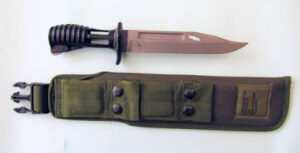
Last night, I put my SA-80 bayonet on the scales.

The bayonet alone was 15 oz, about the same as my favourite 10" bladed kukri.

The bayonet with scabbard was just over 1 lb 7 oz.

This is the later pattern of scabbard without the useful wire cutter and woodsaw fittings.

The blade is a sort of bowie-like shape so not sure how well it will poke peg holes in hard ground.

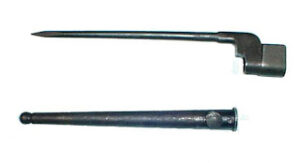
The author of the about passage was probably talking about sword bayonets. The later issue spike bayonet might be even more useful.

Obviously, there is little point carrying a heavy bayonet just to make holes for pegs.
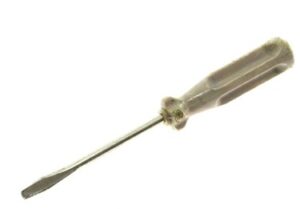
The solution is to find yourself a suitably sized screwdriver.
Sharpen the end if necessary and pack it with your pegs.
The screwdriver can be used to make peg holes.
The shank can be placed under the hook of some peg designs and the screwdriver used to pull up these pegs.
The screwdriver can also be used as a peg, so you are able to carry one peg less.

Categories
Phillosoph

Easily Digestable Writing.

Since it is Friday I will continue my tradition of a more off-topic topic!
Many readers will be familiar with Osprey. They publish a number of series of books on military history such as the “Men at Arms” and “Elite” ranges. I was recommending one of these books to a friend and made an observation that these books were of a convenient length to get through in a lunch break.
When I write a blog post I usually write it first in a word processor program. I then upload the basic text onto the website and add links and illustrations as required. Recently I have noticed that many of the posts I had made were two pages or less of plain text. This seemed to produce a blog of a relatively convenient size that can deal with a topic but not be overly long.
I had been reading some GURPS sourcebooks recently too. These can often be a useful source of interesting information since some are very well researched. These tend to be more text intensive than the Osprey books. Third edition sourcebooks can be 128+ pages long, which can be a little long (over 100,000 words). Interestingly many of the more recent fourth edition publications are under 60 pages, with some as short as 17 pages. Some may be shorter.
I began to ponder these observations. The Osprey books are very informative and detailed but generally have a page count of between 32 and 64 pages. This includes numerous illustrations, eight full colour plates and quite wide margins down one side of the page. How big is an Osprey book in plain text? I found a blog where an author talks about writing his first book for Osprey and the figure of 15,000 words is mentioned. 15,000 words is approximately 30-40 pages of single spaced text. That sounds very credible for a 48-64 page illustrated book of Osprey format.
Every now and then I come across a webpage where the writer attempts to include absolutely everything on a certain topic. They may also decide to put down everything they know related to the topic. And everything else they may be interested in at the moment they were writing the page. Just to make things even more interesting the page will often lack a logical structure. It is a pity since some such pages often include a lot of interesting information, but this is easy to overlook or miss. If the author is trying to make a particular point this can sometimes be lost in the general tidal wave. If you want to refer the reader to additional information use hyperlinks or, if writing in dead tree format, references!
Now I have written a few overly long and somewhat rambling webpages myself over the years. A few of the more recent ones, however, I have been pleased with the conciseness of. Out of curiosity I pasted a few examples of these into the word processor for a crude word count. Several of these are under 2,000 words, with the longer ones a couple of hundred under 4,000. Hubspot suggests up to 2,00-2,500 words for a blog post. Medium suggests three to seven minutes reading time.
This seems like a very useful set of guidelines. Two pages or less of plain solid text for a blog post. (Font size 12, Georgia, single spaced). 4,000 words or less for a webpage, with less than half of that attractive. For longer works aim for under 15,000 words. If that is not possible aim for sections or chapters of less than this size. The latter strategy may also help towards the better structuring and presentation of the information.
589 words 😛
Categories
Phillosoph

Multiple Combat Tactics.

When I was writing “Attack, Avoid, Survive” a friend asked that it include a section on dealing with multiple attackers. “Crash Combat” was written from a slightly different perspective so includes a section on the use of teamwork in close combat. Such might be necessary in operations such as crowd control.
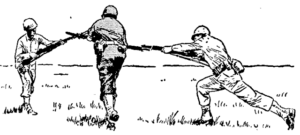
This week I came across some nice illustrations in the 1943 version of FM 23-25. While these show bayonet attacks rather than riot control these nicely supplement the suggestions in Crash Combat.
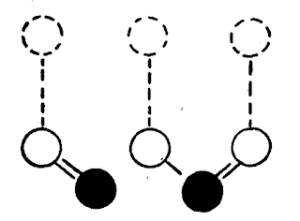
In the first few examples the exact sequence is decided by the enemy under attack. His response determines which of the attackers engages him frontally and which attacks his rear or flank.

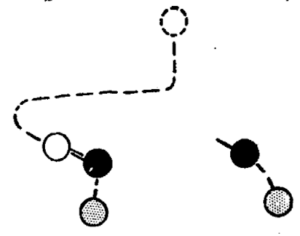
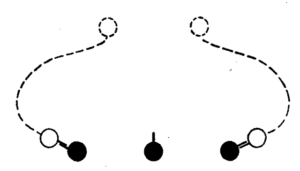
In the second example three men attack two. Once again, the responses of the two defenders determine what actually happens. The right defender could have chosen to engage the central attacker, in which case the rightmost attacker would have made a flank attack.

The next two illustrations show the tactics if the attacker is in a minority. In this example the ends of the trio are engaged to prevent the central fighter joining in. In Crash Combat I suggest the alternate approach of concentrating the attackers’ strength at one end of a formation to counter superior numbers.