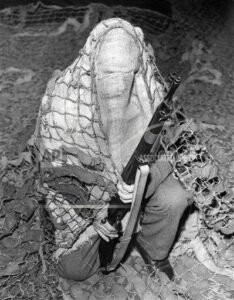
Disclaimer: “As an Amazon Associate I may earn from qualifying purchases.” Adsense and Infolinks were no help at all.

If you have enjoyed this article or it has been helpful to you please feel free to show your appreciation. Thank you.

Read The Third Wave by Alvin Toffler!
Categories
Phillosoph

Ten Move Flow Drill

Today I am going to look at a flow drill. The video says “knife strikes” but the application of this is broader.
The numbering system used in this video is different to that I used for “angles of attack” in my books. This doesn't really matter, it is the flow of the moves that is important rather than its nomenclature. Some systems only teach five angles: the four diagonals and a thrust.
While the demonstration is made with knives, these moves can be used for a variety of other weapons or unarmed strikes. I will expand a little more on that  later.
The instructor refers to a “box”. This is an imagined rectangle within which you should attempt to keep your blows. No wide swings! Your box should be a little wider than your shoulders. 
 
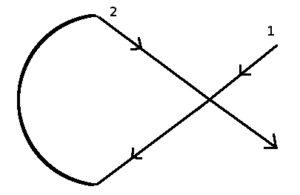
The first cut is an oblique cut from your high right to your low left. This flows upwards to make the second cut, from high left to low right. These combine to create an alpha shape. 
 
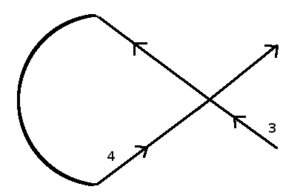
Flip your blade over and follow the alpha in the reverse direction, making the cuts from low right to high left and low left to high right. That is four cuts made already!
The fifth move is a thrust, made with the hand pronated (knuckles upmost). Then turn your hand palm upwards and make a horizontal slash, from right to left. Finish this move with another thrust, this time with the palm upwards (“supinated”). Pronate (turn over) your hand and make a horizontal cut from left to right.
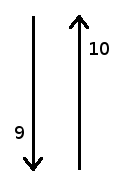
The ninth move is a vertical downwards cut, so you will find you need to learn not to overextend the previous horizontal move. Learn the most economical way to get from the end of 8 to the start of 9. 
The downwards vertical move is followed by an upwards vertical action. That completes the ten motions.
You will learn that the individual motions will need to be modified for particular weapons. With a knife the final move will probably be an upward thrust. With a machete it is more logical to turn your hand over and make this an upwards cut. The seventh move, the supinated thrust, isn't very useful if practicing empty-handed. More logical to pronate your hand and make a thrusting hammer-strike.
Practice this drill with a variety of weapons.
Here is the video:
 
Categories
Phillosoph

Textilage on Rucksacs

Two projects I completed some time ago but had not got around to photographing.

Textilage

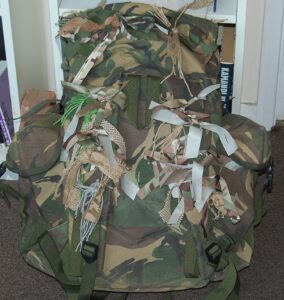
The first project was to experiment with some textilage on rucksacs.
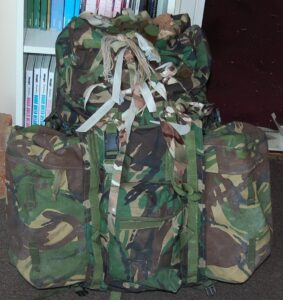
For this I used a British army “Northern Ireland” (NI) patrol pack and a larger (“Bergen”) rucksac.
I found a company that sells half a kilo of camouflage material strips. Most are PU MTP pattern and unlike most MTP, there is good contrast between the colour elements. Strips of hessian cloth or cord are also used.
Note the variation in DPM colours. This is particularly notable between the large pack and its side pouches.
This is the larger pack. Note that the side pouches can be removed. More on this later. 
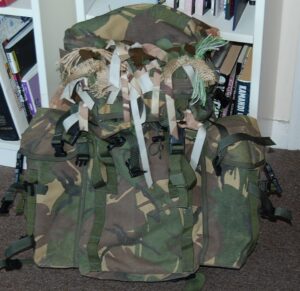
Harness side. The shoulder straps have a strap sewn down them in loops. These allow strips of fabric to be easily applied. 
“Public” side of the large pack. Some netting, brown on one side and green on the other, has been added to the lid.
The netting does not show up much against the DPM, but can be used for attaching natural materials.
Note that there are are additional “ladder” straps down the outside. More textilage could be attached to these to further break up the shape. More modern packs often have PALS, which can be used as attachment points for textilage and foliage. 
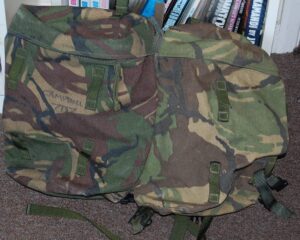
NI Patrol pack, harness side.
The shoulder straps lacked a looped narrower strap. Instead a length of paracord was zig-zagged down the padding and sewn at the curves.
As you can see, the paracord is totally hidden by the textilage and the shoulder straps themselves are well concealed.
Public side of the patrol pack. Textilage added to the pack top to break up the shape.
The above photo is the standard configuration with just the integral side pockets.
The side pockets are well constructed with a waterproof lining and drawcord top, the latter in DPM PU. Unlike the side pockets of the larger pack, these cannot be be detached. Detachable side pockets may have been added to later versions of the Northern Ireland pack.
Textilage is perhaps even more important for smaller packs. These are more likely to be worn in combat, and the pack will often be the part of you most visible to an airborne drone when you are trying to use cover.

Detachable Side Pockets for the NI Pack

This photo (above) shows my second project.
This pack has been modified so that a pair of the detachable side pouches can be attached. This can simply be achieved with some lengths of 20mm webbing and 20mm buckles.
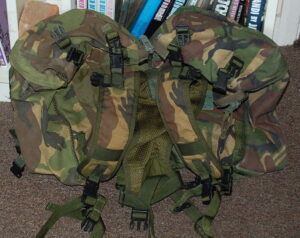
Side pouches rigged for independent use.
Side pouches with their harness. The entire thing can be clipped to the NI patrol pack without needing to be disassembled.
Categories
Phillosoph

Shelterbox

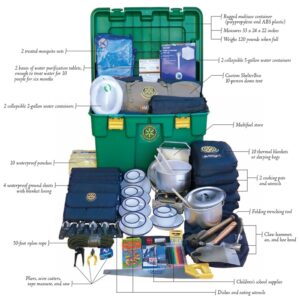
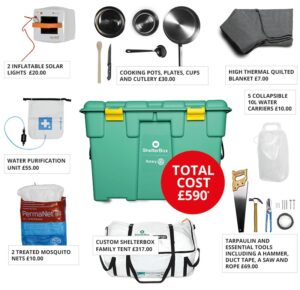
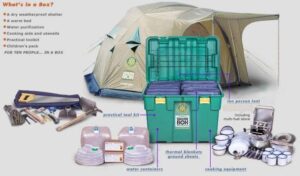
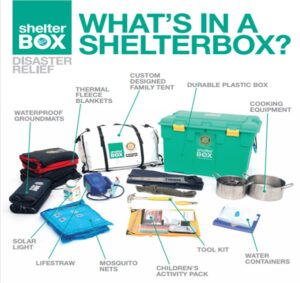
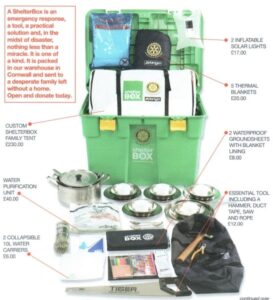
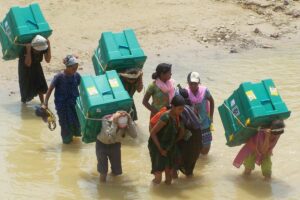
I came across a charity called “Shelterbox” the other day. The contents tie in with my recent article on foundation survival kits.
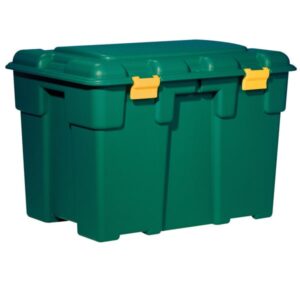
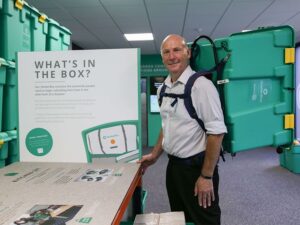
A single shelterbox can hold materials for up to ten people, which is some impressive packing. The exact contents are varied to suit the intended location. I suspect many people might be interested in purchasing similar kits for their families. Such a box could do double duty as a table or footstool until needed. 
A bit of research identifies the box as 185 litre capacity.
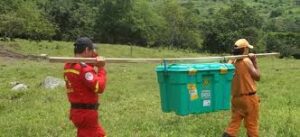
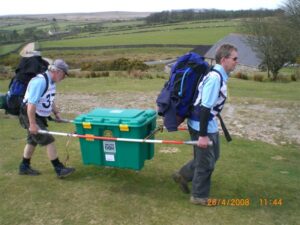
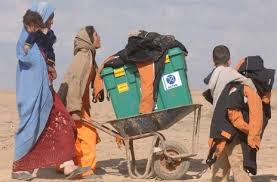
You can carry a shelterbox on your back, but if you are smart, you find other means…
Categories
Phillosoph

Brick and Mortar Camouflage

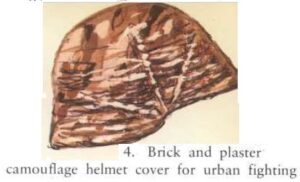
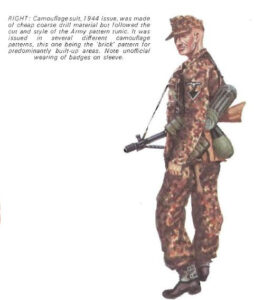
Way back in the 1980s I read an article about camouflage. In that article was a reference to the German army issuing a “brick and mortar” camouflage for urban combat. (Not the April Fool pattern above!) More information could not be found, and it was several years before I came across a single illustration.
Locating this image on line proved even harder!
 
Here is the illustration, taken from Funcken's “Arms and Uniforms. Second World War Part 2”. My recollection was of a red pattern with grey/cream swirls. My recollection is inaccurate, but it can be seen how the creases and wear lines on the illustration would create this impression.
This is actually the same pattern as shown in “Waffen-SS” by D.S. V. Fosten and R. J. Marrion.
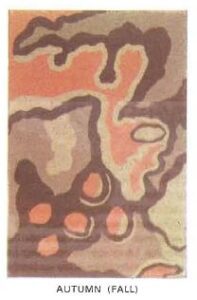
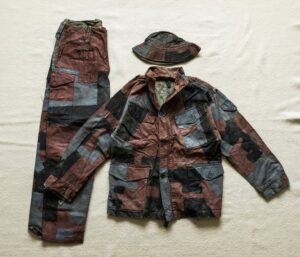
In addition to this pattern the German army and SS issued a number of autumn patterns that used reds and oranges. These were intended for environments such as woodland leaf litter but might have also proved useful in some urban environments. Below is a German garment captured and used by the urban fighters of the Warsaw uprising.
 
Another German pattern that might be useful in brick environments: 
Future conflicts are very likely to take place in urban environments, yet most military gear is still being designed for verdant, rural environments. In some urban environments desert or semi-arid camouflages are useful. Other environments may need more red/orange dominant patterns. Correctly designed these patterns may also serve in some rural environments too. Smocks are the logical way to provide troops with the correct camouflage for the fight.
A friend of mine found this, originally a British army DPM item, it has been painted. 
Categories
Phillosoph

Getting Jigae

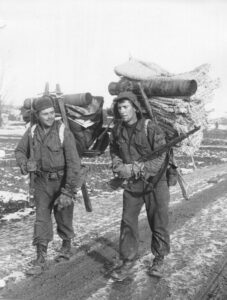
Various diversions took my thoughts in the direction of Korea the other day, and I recalled and located this image.
The soldier is Chinese, but the pack design is the Korean “chige” or “jigae”. The text notes that the frame can also be used to serve as section of tent frame. I spend a lot of time on this blog trying to teach people to carry less. Sometimes you have to be able to carry more, and one of the ways to do it is the jigae.

Yes, a floorboard!

I found some images of barrels being carried by jigae but so far no photographic evidence to back up the stories of 210 litre oil drums being moved by jigae
Rooting around the net I came across this company offering an aluminium version. This idea takes the idea further with what resembles a modified chair. Food for thought!
Categories
Phillosoph

More Toggle Ropes

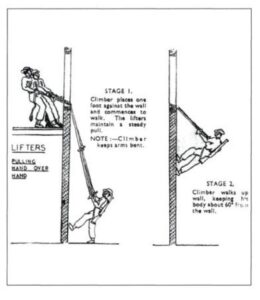
A friend of mine asked me about “the thing with the toggle”, so today I will post a couple of examples of toggle ropes in use.
The first is called “the fly walk”. Two or more ropes are joined and passed behind a soldier. The two men above then take up the slack and the soldier “walks” up the wall. Another book of mine notes that once a high place was reached fishing line was useful for drawing up a toggle rope.
 
The second method uses a pair of ropes as a sort of ladder. Each time the climber bends his knee the man on the rope takes up the slack. The illustration shows a sliding loop for the foot. If you are not wearing rock-hard 1940s army boots I would suggest a fixed loop.
Categories
Phillosoph

"Shooting to Kill" for the Home Guard

There are a number of shooting systems that claim to utilize a shooter's “natural pointing ability”. While these systems seem to work, I will admit to having been a little skeptical as to just how inherent or accurate such pointing abilities really are.
Today I found an explanation that seems answer some of my doubts.
The writer explained that when you point at something the finger does not necessarily line up with the eye. Point at something and then move your head so you can look down your finger. You will find your pointing ability is much more accurate than you might have expected.
Learning this is rather timely, since this week I read “Shooting to Kill” by Andrew G. Elliot. Shooting to Kill is a manual written for soldiers and home guardsmen in the 1940s.
In my book “Survival Weapons: Optimizing Your Arsenal”, I describe a number of methods of using pistols or long-arms when there is not time to use the sights.
These include the “Quick Kill” methods based on the book “Shooting to Live” by Fairbairn and Sykes.
“Shooting to Kill” nicely complements the latter work, and not just in the symmetry of the titles!
The Quick Kill method can be described as locking your attention on your target and firing as your gun raises up into your field of vision. Shooting to Kill is written for riflemen but uses a method derived from the shotgun techniques developed by Robert Churchill.
Lock your attention on to the target, or more specifically the part of the target you intend to hit.
Raise your rifle to your shoulder and fire. This is done without trying to (consciously) acquire the sights.
Look, point and fire.
The body, support hand and eye are directed toward the target. The support hand fine tunes the muzzle's position.
The sights can be used if there is sufficient time, to “fine tune” the initial pointing.
If your shouldering action is sound, your eye should have naturally assumed a position where it was looking through the aperture rearsight at the foresight.
The brain automatically centres the foresight in the field of view.
If using a “U” rearsight, the eye should have assumed a position where it was looking across the rearsight at the frontblade, the top of the blade level with the top of the U.
Elliot notes that for most shots the sights are unnecessary if you have mastered this method.
Elliot notes that a rifleman is unlikely to engage targets beyond 300 yards so advocates that the battlesight be used exclusively in combat.
Like many of his contemporaries, he notes that a shooter has little need to concern themselves about the effect of wind, distance or rain at the combat ranges they will be shooting at.
Elliot on wind allowance: “The inexperienced will have heard much about allowance for wind, and the effect of rain on the bullet’s course. These factors can be ignored. In war, most shooting is at 300 yards or less, and at that range, wind or rain have no perceptible effect. In theory, with a strong wind, at a couple of thousand yards, aim should be taken a few feet to the windward, but in practice, except at very long ranges, it is better to ignore this academic principle.”
Traditional shooting ranges were only for zeroing and teaching the very rudiments. All other rifle practice should be combat orientated.
Elliot remarks that he gets respectable scores on the target range without using his rifle's sights.
The key to the technique that Elliot advocates is that the process of shouldering the rifle be sound and consistent.
The soldier or guardsman should often practise shouldering and pointing the rifle, for as much as an hour at a time. He notes this is also a very practical way to build up arm strength.
A firefight is no time to be guessing at target speeds and calculating leads.
Elliot suggests that moving targets be engaged with what would be called a “swing-through” of “smoketrail” method in more modern parlance.
Track the target and increase speed to swing past it and fire just ahead without halting your motion. Aiming point against moving targets was “the tunic buttons”. This automatically shortens the lead if the target is approaching at an angle.
Elsewhere he suggests the belt buckle as an aimpoint. Since soldiers often shoot high one can see the wisdom in this. A lower aim is also needed if a target is charging towards you or at a higher or lower elevation.
Some of the advice in this book needs to be taken in context.
Against an enemy firing over cover, an aimpoint several inches below the top of the cover is suggested.
The .303 rifles of this time had a battlesight zeroed to 300 yards, giving a maximal ordinate of seven to eight inches.
The .300 (.30-06) P17 used by the home guard had a battlesight set for 400 yards, giving a max ordinate of twelve to thirteen inches.
Thus a head shot at shorter ranges needed a significant hold under. More modern cartridges with a 200 metre zero will behave differently.
Against a prone target, Elliot suggests shooting low, which is reminiscent of Rhodesian combat techniques.
The book gives advice on a number of other matters.
When engaging low-flying aircraft, he suggests a lead equivalent to the distance between the forefinger and little finger tip of a spread hand held at arm's length. This is about ten to twelve degrees, which is about right for a target moving at around 200 mph.
Categories
Phillosoph

Asian Squat

A few months back, I reread Tom Wintringham's “New Ways of War”. Much of it is still relevant today and recommended for anyone interested in military matters.
On one page, Wintringham opinions that parade drill is only good for teaching men how to stand around. Elsewhere, he suggests that one of the first skills a man be taught is how to take cover.
Thinking about this reminded me of the “poppa-san squat”, more commonly called the Asian squat (or hunker).
But sometimes, there were no filled and unoccupied sandbag seats available, and for some reason, you did not have your steel pot with you in the NDP or FSB, and wanted to sit down, there was the ultimate GI expression of becoming as one with the RVN environment: the Poppa-san Squat! Also known as going Asiatic to the guys from WWII and Korea.

To do the Poppa-san Squat, a soldier, just folded up in a sitting/squatting position, with his skinny butt touching the heels of his jungle / combat boots, leaning forward with arms on knees or at the dangle (see pictures of the RVN civilians sitting this way). Once accustomed to doing so, a body could sit like this for prolonged periods of time without discomfort, but no GI could remain in this position as long as a Vietnamese!!! With practice, you could really get comfortable, and simply by pulling down the trousers, it was possible to take a dump in this pose (that is why the RVN copies of those famous old French toilets had footpads inside the bowl!). Be advised that one must be slender and fit to do the Poppa-San Squat without causing damage to muscles and tendons!

You see, most of the RVN peasantry did not own furniture other than a crude platform bed, and a maybe a table, so that is how they sat for social occasions in the vill, and even the poor folks in some of the big cities too.
Again this method of sitting has caused many weird looks from wives, girlfriends, family members, passersby, and soldiers who never served in combat in the Pacific, Burma, Korea, RVN, etc. The presence of obvious furniture is again often overlooked, and i even squatted down next to my footlocker in the barracks like this several times, to polish footwear, in spite of the big OD footlocker at the foot of my bunk – this is the Stateside, European or garrison soldier's lounge chair in the barracks environment).[sic]
It used to drive the lifers wild Stateside and in Europe to see lines of GIs (for whatever reason there was a line waiting) with the RVN vets hunkered down in the Poppa-san Squat instead of standing tall! Not proper soldiers! Bad image! Etc, etc!”
If a unit halts, it makes sense for the majority of the men to drop down. Two men observed standing in a field might be farmers. A dozen men standing in a field are probably not!
Squatting rather than sitting also protects you from the cold, wet or hot ground surface.
In this is the passage: “You are less visible from the air if you: do not move; in the shadow of buildings (objects); you sit instead of lie down (reduce.your size); you match the color of your uniform with the terrain, that is, you don’t fuss and don't “glow.””
Viewed from above, a “lump” is less recognizable as a human than a prone figure.
Squat position for firing a handgun
The above passage rather reminded me of the ninja technique of “uzura gakure”: “In the darkness the ninja rolls his body into a ball giving the appearance of a stone and remains motionless on the landscape.” (Comprehensive Asain Fighting Arts, p.125, Don F.Draeger and Robert W. Smith)
Some field manuals also suggest freezing in a crouched or prone position in response to airborne flares.
Elsewhere is the recommendation that squatting in a trench rather than lying gives a better chance of survival if the trench collapses.
There are clearly a number of applications for a soldier being able to squat!

One of the nonsenses sometimes voiced about the Asian squat is that only Asians can do it. Delta Mike's recollections above clearly disprove this. Squatting is also regarded as a Slav thing.

Being able to assume an Asian squat would be a useful ability for a young soldier. This is something that is easiest to learn while young and supple. It should probably be incorporated into basic training and its practice encouraged.
There are numerous webpages explaining how to perform the squat. One that I came across was actually intended for weight-lifters who wanted to improve their stance during squat lifts.

The technique was to drop into a squat, feet flat on the floor, while having your hands on a solid object you could use to steady yourself. I use the edge of the bath. The video I saw suggested doing 30 seconds the first day, a minute the second, two minutes the day after and so on. I just do a minute, first thing in the morning.

I should explain here that time has not been kind to my legs, tendons and feet. I know from personal experience that it is possible to limp with both legs at once!
I had been given some stretching exercises to do, like those used by runners, but they did not help much.
To my surprise, I discovered that scrunching down into a squat was a far more effective exercise.
Hanging on to the edge of the bath was a pretty good exercise for the forearms, too.
I will never be able to effortlessly squat like some people can, but training for squats has its own benefits.

The squat is a great way to limber up. It's a good warm-up too. Every other morning I will follow the squat with a minute or so of dumbbell work, then straight into the shower.
Even if you don't want to learn the poppa-san, experiment with adding the squat to your exercises.
Categories
Phillosoph

Foundation Survival Kits

Many visitors to this blog are interested in putting together survival or emergency kits. Regular readers will be aware that I don't regard a little tin full of gizmos an ideal start.
If you have such a kit, one of the first things you should add to it is a mylar space blanket. These can be carried on your person at all times and can provide you with warmth and protection from the rain. And they only cost a few bucks!
Recent discussions with friends have made me reflect that many of the items in a suggested list of equipment fall under the heading “nice to have/gadgets”. Your starting point in putting together a kit should be those items you might class as “really in trouble if your don't have”.
With this criteria firmly in mind, I would base any kit around three items. These would be:
  • A blanket.
  • A fire kit.
  • A good knife.
You can use a sleeping bag instead of a blanket, but ideally it should be one that can easily be adapted as clothing.
“Budget” rectangular bags may be more suitable than more expensive “mummies”, so keep an eye out for bargains and promotions at big stores.
Poncho liners are an alternative to blankets and can often be found for a cheaper price. Both original style or versions with head openings or hoods are suitable.
A couple of blanket pins added to your kit can help in making or blanket or similar into a cloak. (Not sure if you can magnetize blanket pins)
If you have a spare space blanket, throw it into the kit as extra insulation.
A plastic or plastic and foil survival bag is worth having too.
Fire kit is the basic kit described elsewhere. A pair of disposable lighters and some cotton wool.
If you are female you might wish to replace the cotton wool with some tampons. As well as the intended use they can be used for tinder or as wound dressings.
If you want you can put your fire kit in a little Altoids or tobacco tin and seal it up. Throw in some matches and/or some birthday candles if you wish. Fire drills, fire pumps and ferro-rods are very nice but you can get dozens of disposable lighters for the same money. When you are cold and tired a lighter is simpler and quicker.
You may carry a ferro-rod as backup if you have one.
What is a “good knife”? There are a number of suggestions in my book “Survival Weapons”.
In short, a full-tang fixed blade, single-edged and not less than seven inches. My first choice is one of my kukris.
If on a budget look around the gardening section of local stores. A mass-produced billhook or machete is often more capable than more expensive smaller knives.
These three items constitute the foundation of any good emergency kit.
The cost is reasonable so you can probably put several together within a reasonable period of time.
The three items form a relatively compact package that can be placed in a daypack, the bottom of a wardrobe or the trunk of a car.
For a kit for a young child you may wish to replace the knife and fire kit with a flashlight and whistle. These are good additions to an adult's kit, but of a lower tier of priority.
Friends of mine said they would add sewing kits, fishing kits and/or an AM/FM radio.
Some of these are useful, some are nice to have but I do not regard them as essential, even though my sewing kit has seen considerable use over the years!
If expanding the kit the next items that I would recommend are:
  • A rain poncho.
  • Bottle(s) of water.
  • Roll of toilet paper in a waterproof bag.
The rain poncho can be worn or can be rigged up as a shelter or windbreak. It can be used as a waterproof wrap for your other garments when river crossing and if packed right can be even be a flotation aid. It can be combined with a poncho liner or blanket to form a sort of sleeping bag. You can even rig it to catch rainwater for drinking.
Shop around and you can find rain ponchos at a price you can tolerate.
How much water to put in your kit will depend on your local environment. In some places where water is plentiful you may need no more than a litre bottle in your kit.
Generally I would recommend at least two litres, perhaps four. Two-litre soda bottles are a very good choice for storing water in a kit. They come “free” with the soda. Wash them out. Boil some tap water, let it cool slightly and fill the bottles with it. Loosely cap and let the water in the bottles cool to about hand temperature. Add a couple of drops of bleach to each bottle and seal. If you wish you can seal the cap on with wax and/or tape. The bleach breaks down into salt and water, which is harmless at this concentration. In fact this constitutes a trace amount of electrolytes.
Truly sterile water, which the above process should have produced, will be good for years and will not “go off”. Wrap the bottles inside your blanket to keep them out of the light, just to be extra sure.
FEMA estimate a person needs a (US) gallon of water per day, but half of this is intended for hygiene. If it really is an emergency you may have to forgo your daily shampoo and shave and let the pits smell a little. Priority should be given to washing wounds and cleaning the hands before eating or medical procedures.
Used intelligently a gallon should last you a couple of days at least.
You can buy water bottles of about a gallon capacity for a kit if you want, but I think a pair of 2 litre soda bottles are easier to carry, as well as being cheaper.
See my free knot book for how cordage such as string or paracord can be rigged as a carrier for a bottle.
The roll of toilet paper is a useful but very cheap addition to the kit. In addition to the obvious use, it can be used for cleaning wounds and fire starting.
In one of my favourite movies a character stops a truck by running streamers of toilet paper across the road. The trucker is so surprised he hits the brakes. Appropriately coloured toilet paper can be used for signalling!
Toilet paper is of little use for most purposes if it gets soggy. Invest in a suitably sized ziplock bag that can be sealed against the entry of water.
The above six items form the basis of a fairly capable emergency kit. Even if within a modest budget it should be possible to construct a kit for every member of the family.
Relatively compact, a kit can be stored in the bottom of a wardrobe, form the foundation of a bug-out bag or be tucked away in the trunk of a car. A warm hat/headover, bandana and gloves are useful further additions. If we want to make the list a round seven, then a metal canteen cup or equivalent can be added.
Making a shelter and many other tasks will be easier with some cordage. A reel of tarred nylon bank line is more compact than paracord and does not stretch.
Disaster relief organisations should stockpile such kits.
I suspect certain governments have large surpluses of ponchos and liners that can no longer be issued since they are not in the latest camouflage pattern.
If not, manufacture ponchos and liners in high-viz colours. This is a good option for kits to be sent overseas. Makes them harder to be used for military purposes.
A fire-kit tin with lighters, tampons and matches can be put together for a couple of dollars.
Bags of toilet paper and sealed bottles of sterile water can be mass-produced.
Certain factions will doubtless squwit their britches at the idea of handing out knives, so I suggest these “agency kits” have a ferro-rod and striker of a design which still gives the survivor a useful cutting edge. Perhaps the striker could be the sort of credit card-sized tool that includes a can-opener and other tools.
Categories
Phillosoph

Two Methods of Estimating Distance

A friend of mine sent me the link to this webpage.
I have not seen this particular trick before! I have not had a chance to experiment with how good an estimate this gives, so go out and have some fun with it for yourselves.
The basic method is to first select a reference object and estimate its length/width. I suggest you use yards or metres since this will give you smaller numbers to deal with and give you a more useful final answer.
Hold your right thumb at arm's length, close your right eye and align the thumb with the edge of the object.
Close your left eye and open your right. Estimate how far your thumb has “jumped” in multiples of the object length/width.
Take your answer, multiply it by the length/width in metres (or yards) and multiply that answer by ten. This will give you your estimated distance in metres or yards.
This method reminded me of one of the ways to use milliradians to estimate distance. An article on this subject can be found here. A useful thing to remember is that half a metre (a shoulder width) is one mildot at 500m.
 
 
My preferred method of using milliradians is to estimate the length/width/height in metres (or yards) and divide this by the apparent measurement in mildots. (Use either a scope or your hand for the latter). This gives you a fraction, such as 2 over 1, 2 over 3, 1 over 8 etc. Multiply the fraction by 1,000 to get the distance in metres (or yards). Bone up on the decimal conversions of common fractions, such as ⅔ = 0.66 and ⅛ = 0.125.