Disclaimer: “As an Amazon Associate I may earn from qualifying purchases.” Adsense and Infolinks were no help at all.

If you have enjoyed this article or it has been helpful to you please feel free to show your appreciation. Thank you.

Read The Third Wave by Alvin Toffler!
Categories
Phillosoph

The Avengers

One of my recent pleasures is that a certain channel has been re-running early episodes of “The Avengers”. The British ones, that is, not the Marvel characters.
The Avengers was quite a significant show in the history of British television, being one of the first shows to be sold to the US for Prime-Time showing. It is not hard to see why it was successful. The show was “Spy-fi” at a time when “James Bond” films and “Men from UNCLE” were all the rage. The show was witty, often subtly surreal and had a good dollop of British eccentricity. Steed was suave and dashing, Emma was brilliant and beautiful.
The Avengers was never short of action either. “Martial Arts” was another trend of the time and like many series The Avengers included “kung fu” and “Judo” techniques. Every now and then I notice a technique that is more likely to have come from wartime commando training.
Most television series are not a good place to learn realistic fighting techniques, and we can include The Avengers in this. Every now and then, however, I notice a move or two that gets me thinking.
In episode 5-13 “A Funny Thing Happened On The Way To The Station” Emma immobilizes a man using an interesting hold. Her forearms form an inverted “L” shape and her hands are in what Erle would have called “a wrestler’s grip”: one thumb slipped between the fingers of the other hand. The horizontal forearm is across the man’s throat while the other comes up under his armpit in a sort of half full nelson. Interesting, and reminds me somewhat of the stranglehold used extensively by Moshé Feldenkrais in “Practical Unarmed Combat”.

The technique that inspired me to write something about The Avengers in this blog appears in episode 4-20 “The Danger Makers”. Blink and you may very well have missed it.
Emma parries a punch with a rather conventional forearm parry. Immediately the other hand swings up and slaps the attacker, sending him flying. There are several things I like about this apparently simple movement.
The first is that she makes the strike with an open hand. The slap is a much underrated defensive technique. With a relaxed arm it can be made with considerable speed and correspondingly hit with surprising force. A slap and a palm heel strike are not as different as some people think. In my book and on this blog I have often recommended the palm as a weapon since its use reduces the chance of hand damage to the user.
Another thing I like about Mrs. Peel’s technique is the economy of movement. As one hand does the parrying the other uses the same motion to counter attack. If you have brought my book, read this blog or read the Tai Chi book I wrote with Erle, you will recognize this as one of the fundamentals of Long Har Chuan. As one side of the body makes an outward parry the other moves in to make a second parry or an attack.
You will see this principle in a lot of effective combat moves. The one that The Avengers’ sequence most reminded me of was one of the applications of “White Crane/ Stork Spreads Wings” in “How To Use Tai Chi as a Fighting Art”. The most commonly seen application of this move is a pair of outward parries with the lead foot set up for a kick. Erle showed another variation. One hand makes an outward parry, preferably taking you to the foe’s outside gate. The other hand whips up in a fast, powerful centrifugal punch straight to the foe’s temple. Erle described this move using a punch, with the fist becoming fully inverted and striking with the first two knuckles. Since your target may be hard and bony there is considerable merit in practicing this as a palm strike instead. 
Categories
Phillosoph

Beds and Bugs and Cots and Carpets

This is probably one of my more off-the-wall blog posts, but hopefully it will inspires some ideas.
Recently I have been enjoying the company of a rather charming young Greek lady. Unlike many of her (professional) ilk, she is smart enough to know how little she knows. She has been avidly absorbing the more practical advice that myself and others have been providing to her.
This lady’s particular field of interest is dust mite allergens. Recently she was informing me that in Greece, fitted carpets are quite unusual. Greeks prefer bare floors and put down rugs in the winter. As well as being vacuumed rugs are taken outside for cleaning, often twice a week. You can also send them away to be cleaned. There are businesses that will store your rugs in summer if you do not have room. She is rather baffled by the preference for fitted carpets in northern Europe and the Americas. She has told me about scientific studies in homes that have experienced incidents of leukaemia that found connected carcinogens still present in the carpets four years later. Fitted carpets never get properly clean, she avers. She describes fitted carpets as being like Macdonalds in that “People know they are bad, but still have them”. Personally I think most people in northern Europe or America are actually quite unaware of this. We have just never thought about the pros and cons of carpets against other options.
Another item you have probably never thought about is your mattress. A mattress is just a great sponge for absorbing dust, sweat and any other bodily fluids. None of that ever comes out and your mattress is probably a thriving ecosystem. I began to reflect on this a few years back when the mattress my landlady had supplied had become so worn that parts were sagging and metal springs poking through the surface. I began to look into replacements and half seriously gave some thought to a Brazilian hammock. I was single back then and looked like I was going to remain that way for the rest of my life. The fates had a surprise for me and rather than a Brazilian hammock I acquired a Brazilian girlfriend.
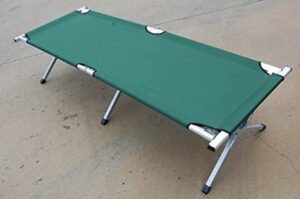
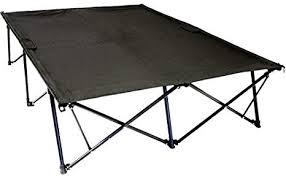
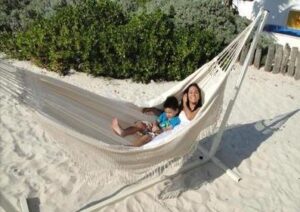
The advantage of a hammock is that the bit you actually sleep on is relatively thin. Dust can drop through it and the parts that might become dirty are relatively easy to machine wash. Hammocks are a bit of an acquired taste, however, particularly if you do not sleep alone. Back in my childhood the family would often holiday in a caravan. The upper bunk was effectively a sort of stretcher with the ends of the poles fitting into brackets on the walls. A similar idea are the camp beds or “cots” you have probably seen on programs such as “M.A.S.H”. A sheet of stout cloth, a frame to support it and some legs to raise it off the ground. It has some of the easy cleanable features of a hammock without needing a sturdy frame or walls to attach it too. Again, the main objection to these is if you do not sleep alone. Double camp beds are offered, but I have never used one personally. Many designs have a pole down the centre, which can cramp your style. What is probably needed is a camp bed with some form of mesh or net beneath the cloth part. Possibly the net needs to be in three sections. The outer nets would support the sleepers when they were apart, and the middle section provide more support when they are together. I am sure someone with a better grasp of engineering could come up with better solutions. I have seen it recommended to use a 1-2" thick memory foam mattress ("mattress topper") with a double cot. That may work sufficiently well while still being more easily cleaned than a traditional mattress.
This is an idea worth exploring. Not only would a camp bed be more hygienic but it would probably be much cheaper to produce. A colleague of mine recently had to replace his mattress and was quite stunned at the price!.
Categories
Phillosoph

TP-82 Space Gun!

Back in 2012, I came across and article about Soviet cosmonauts carrying a firearm on their spaceships.
I may have stumbled across the article by accident but it is more probable that a friend of mine directed me towards it.
The other week, another friend sent me an article about the gun. A few days later, a third friend, who has never spoken to the other two, sent me a link on the cosmonaut’s gun.
Seemed the fates were telling me I should write something about this for the blog!

The original article I saw was somewhat confusing.
Much was made about the gun being a defence against bears. These are bears encountered after the space capsule has landed in a wilderness, not space bears. The Soviets seem to have been unworried about space bears!
The gun illustrated looked like a sawn-off shotgun with a third barrel for rifle rounds.
The rifle barrel was described as 5.45mm, which would suggest the 5.45x39mm Soviet assault rifle round.
It is, however. possible that the article was in error and the barrel was actually for a .22 small game round.
A sawn-off shotgun with a pistol grip would not really be my first choice of weapon for defence against bears.
There were even suggestions that the weapon had been withdrawn because it contravened arms treaties about weapons in space!
Just to add to the confusion, my third friend informed me the gun could be uses as a handle for a machete! That didn’t sound very practical.

I decided to do a little research and by reading some additional articles a clearer picture began to emerge.
Firstly, it became evident that many articles were only showing you half of the actual weapon.
Rather than being a handle for a machete the weapon ingeniously used as sheathed machete as a detachable stock.
The gun wasn’t intended to be a pistol, but a compact double-barrelled shotgun useful for taking various small game and in extremis as a defensive weapon.
The machete, incidentally, was also designed to serve as a digging implement.
Apparently the weapon was withdrawn from issue due to cosmonauts’ concerns about a fellow crew member becoming crazy and using the weapon. (Sci-fi movies have taught us that one crew member always goes crazy on a space mission. Russian sci-fi is not different apparently.)
So, for today’s blog, I present some links and pictures of the TP-82 “Space Gun”.
While researching this I came across something even more astounding!
Categories
Phillosoph

Handcuff, Duct tape and Zip tie Escapes

Just a quick post today, but one I think some of you will find interesting. Apparently various DIY stores are expecting a run on cable ties due to the release of the movie version of “Fifty Shades of Grey”. This information may prove more practical for some of you than I expected!
I’ll admit I have not tried this out personally yet!
Here is a nice video that also included cable ties and handcuffs.
Apparently the same method works on a single cable tie.

This guy is evidently unfamiliar with knots. Given that you may have to do this in the dark I would advise simple overhand loops rather than Bowlines.


Obviously, the comments about books in the second video were joking. Books are awesome, especially mine, so buy them! (Please)
Categories
Phillosoph

Gundata Bug Out Bag

A friend directed me to the following article on the contents of a Bug-Out Bag. I though it might be useful to examine it with “Uncle Phil’s List”. Below are the items arranged in the categories and some suggestions and observations of my own.
Shelter (Sleeping, Clothing).
The only real shelter item on the list was a small waterproof tarp. It may be prudent to include some spare clothing since theoretically you may have to grab your Bug-Out Bag while wearing only what you are standing up in, be it day or night. Perhaps a spare bag with boots and travelling clothes can be placed nearby to by grabbed if needed. In the Bug-Out Bag itself a blanket is able to serve both as clothing and bedding. Items such as gloves and hats are useful to protect the extremities from the extremes. A large bandanna or shemagh can serve a number of useful functions. A natural disaster often means bad weather so waterproof clothing is useful too.
Fire.
Waterproof matches and butane lighter(s). You might as well throw in a candle or two. They are good for getting fires going as well as illumination.
Water.
A means to purify water but also ways to carry water. A bottle or so of preboiled water should be in the bag to keep you going until you find a new water source.
Food Supplies, Hunting/ Fishing, Cooking.
Food suggested was peanut butter or Power Bars. Either are high calorie, can be stored for extended periods and can be consumed without cooking or heating. A number of alternatives may be chosen instead. Regular readers of the blog will know that I have experimented with pinole. A basic means of cooking such as a metal canteen cup would also be prudent. This item can also be used to pasteurize suspect sources of drinking water. A basic fishing kit is worth including since it takes up very little room and the items can be useful for other purposes.
First Aid (Medication, Wash kit, Hygiene).
The article suggests the bag carry a small First Aid Kit and some personal hygiene items too. Personal medication might come under “last minute items” that are added to the bag just before use. Hygiene items would be at the very minimum a spare toothbrush and a bar of soap. A supply of feminine hygiene items should also be included if there are female members of your party. Such items can also be used as field dressings and tinder. Toilet paper can prove useful too.
Tools (rope, repairs, money)
The author of the article suggests carrying some paracord, which is good advice. My kit contains a long hank of it tied Hojo-jitsu style. He also repeats the often seen advice of replacing your bootlaces with paracord. This isn’t going to give you a lot of paracord and it is unclear how you keep your boots on if you need paracord! I’d also include a bundle of more basic string in the bag too to conserve the paracord for jobs than need its abilities. Duct tape is also suggested and have numerous uses. (perhaps you can tape yourself into your boots when you need some paracord!). Some needles and synthetic thread take up little room and cost little so are worth adding.
An interesting suggestion is to include a small roll-up tool kit in the bag, about the size of a toilet roll. This can be used for repairing vehicles or liberating needed supplies. A small crowbar would be a useful addition to this kit. The author of the article suggests the bag contain a Swiss Army Knife or “good quality” multi-tool. My personal inclination is towards the former (I actually carry one on my person all the time but this list is on what to put in the Bug-Out Bag). Multi-tools tend to be expensive and often heavy. In reality a good pair of insulated pliers included in the tool kit is cheaper and more capable.
Personally I would make sure a bug-out bag also includes a larger blade such as a kukri short machete, tomahawk or golok. When you need shelter or fire you often need them in a hurry and a good cutting tool can make a lot of difference.
Disasters often bring out the best in people and encourage them to help their neighbours. Or sometimes it doesn’t! Thus the Bug Out Bag includes a defensive pistol in locations where such things are legal and the owner is properly training in their use. The final “tool” is a supply of money.
Navigation.
Maps and Compass. GPS is nice, but you need a map and compass too, and the knowledge of how to use them for when it decides not to work.
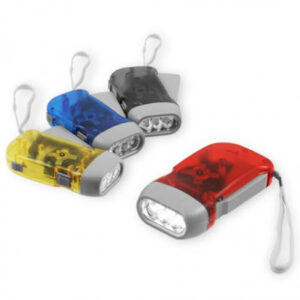
Signalling equipment includes at least one flashlight. Bombproof, waterproof “tactical” survival torches are very nice. A flashlight should not be too heavy or bulky and ideally should be an item that works without batteries. Hand-cranked LED lights can be found for just a few dollars and are fine for an emergency kit. Some have capacitors in them so you do not have to crank them continuously.
An AM-FM portable radio or scanner can provide useful information in times of trouble. Like the flashlight this is ideally hand-crank powered and not too large or bulky.
Categories
Phillosoph

Working Harder to be Lazy!

Since my last blog post was rather poignant today’s will be in a much lighter vein. This made a friend of mine laugh a lot so I might as well pass it on.
The other day I was entering an Underground Station. There is a large staircase going down one level and beside it there is a lift. Ahead of me is a man already about a quarter to a third of the way down the stairs. He suddenly realizes that someone has called the lift and the door has opened. He reverses direction and rushes back up the stairs to try and get in the lift!
I continued my leisurely descent down the stairs and noted at the bottom the individual had yet to emerge for the lift. He had actually used more energy trying to get in the lift than it would have taken him to continue down the stairs, only to travel down even slower.
One of the dumbest things I have seen in some time, which is saying something!
Categories
Phillosoph

Great Ultimate Erle Montaigue

Decades ago I became interested in Tai Chi. The World Wide Web and Google was still in the future so a friend and myself headed into Chinatown to see if I could find any books on the combat uses of Tai Chi. In one store I came across a small book called “How to Use Tai Chi as a Fighting Art” by Erle Montaigue. Pretty much what I was looking for and "did what it said on the label", as they say. Some parts of that book at the time I did not understand, while others had a far greater impression on me that I then realised.
A decade or so passes and I am inspired to write a book about self-defence and common principles found in various martial arts. While I am researching various aspects of this I discover Erle Montaigue’s website. I suddenly realize that a lot of what I have written about principles behind self defence have come from Erle’s book. Rereading the book again I see that many of the passages that previously I did not understand are describing concepts and conclusions that I had arrived at by other routes. Also on Erle’s website was the text of several other of his early books. As I read through these I realise that they could be combined to form a more comprehensive book on Tai Chi and Pa Kua.
I emailed Erle and explained that inadvertently my book had a lot more of his ideas in it than I had realised. Erle had nothing but encouragement for me and I ended up adding a very useful section on Long Har Chuan to the book. An occasional correspondence ensued, with Erle always willing to answer questions and offer encouragement. During this time I took the text of the books that I had found on his website, combined them and wrote some text to bring the various parts together. Erle took this rough work, turned it into a PDF and placed it on the website as a free “Tai Chi Compilation” book. At the time this was a side project for both of us so he never got around to adding the photos referred to in the text. Things got a bit garbled too. Erle labelled some of the text that I had written as his own and some of his comments as made by me. I consider this something of a compliment and an indication that some of my interpretation was on the right track.
Erle continued to provide encouragement with my own book, suggesting several publishers that might be interested. The book acquired some useful passages on Tai Chi-based combat and a sizeable and detailed section on Dim-Mak using my own system for locating points. A pleasant surprise was when Erle volunteered to write a foreword for my book. Erle was also an ex-wrestler so I was pleased he considered my section on Ju-jitsu worthy of special mention.
For a number of reasons it was some time before my book was finally published in mid-2011. I emailed Erle to tell him the good news only to receive a reply from his son, informing me Erle had been suddenly taken from his family that January. Today is Australia day, the anniversary of Erle’s death.
I have heard that some elements of the Tai Chi community took exception to Erle. Erle was a plain-speaking Aussie who had some strong opinions about some of the courses modern Tai Chi had taken. Many people are not even aware that Tai Chi is a martial art. It is largely thanks to Erle that many people now know better and know that Tai Chi is a potent fighting art. My own experience was of a man who was both generous and encouraging. He made a big impression on the world while he was in it and I believe the effect he had was beneficial.
Thank you Erle.
Categories
Phillosoph

Spears: One Handed

The other week I saw a photo of a model of an ancient warrior holding a spear.
A familiar image but this time something about it got me thinking. I don’t have the particular picture but the drawing below shows the same pose in the left figure.
What occurred to me was this.
Why is the warrior holding the spear in the middle?
Why carry a spear eight or nine feet long and only use four foot of its reach?
Some of you will have said “for balance” and I will deal with that in a moment.
Note that when the fighter holds his spear single handed in this way about a metre projects behind him.
Ancient warriors often fought in close formations so the length of spear behind a warrior is going to be a hindrance to the rank behind.
Often the butt of a spear was fitted with a spike such as the “sauroter” (lizard killer) used on some Greek spears and this would prove a real hazard to the ranks behind.
My favourite way to use a fighting staff is for my rear hand to grip it about a foot from the butt.
This gives me a length of material below my hand to defend or attack with which is not so long that it cannot be moved past my torso in certain movements.
Since the staff is a long homogenous cylinder this grip point is nowhere near the balance point.
The staff is mainly used two-handed but some moves just use the rear hand.
This is practical because when I make such moves the bottom part of the staff presses up against my forearm above, counterbalancing the greater length of the forward part.
I don’t know any ancient spearman, but I do have a friend who was a pikeman in English Civil War re-enactments.
I ran some ideas past him.
One thing I learnt was the balance point of a Civil War era 16 foot pike was a third of the way up from the butt. Grasping at this point it should be possible to hold the pike single-handed at chin level.
Given how pikes were used, it is logical their balance point should be more towards the user.
My friend also observed that my five foot fighting staff was actually heavier than many longer spears. He also observed that pikes and indeed many spears had their shafts tapered towards the head.
Unless the head fitted was very heavy, tapering a spear shaft would shift its balance point rearward.
We know that some spears such as those of the Persians were fitted with counterweights at the butt. Fittings such as the sauroter may have had an additional role in adjusting the spear’s balance.
There are therefore a number of techniques a spear maker could use to construct a spear that could be wielded while gripped closer to the butt end.
In Cowper’s book “The Art of Attack” he mentions spears with a swelling or other arrest near their butt and describes that these were so the spear was not lost when darted through the hand to provide more reach.
It is obvious from this statement that spears were sometimes gripped below their middle.
Gripping a spear about a cubit from its butt would give more reach and allow comrades behind to fight with less hindrance and hazard.
Rearward ranks could also move closer to the forward ranks so be able to offer more support to the forward warriors.
This source, and “Hunting Weapons” p.97 by Howard Blackmore confirms that lances and spears for “pig-sticking” were held either at the end, or two-thirds down from the point.
“The Oriental form of lance, used for sport or war, varied in length from 6-10 ft. The shaft of male bamboo was often decorated with lacquer, brocade, or silver and gilt, and was noticeable for its heavy metal butt which had a ball pommel ending in a spike. This acted as a counterweight when the lance was held well back towards the butt to give the maximum reach. The point was usually a small triangular or leaf-shaped blade…
European pig spears were rarely decorated and were fitted with much simpler types of blades and butts. There were, in the main, two sizes or types of spears.
The long spear was from 7-8 feet long and weighed about 2-3 lb. It was used ‘underhand’, grasped about two-thirds of the way back from the point, with the knuckles turned downwards and the thumb pointing along the shaft. In this fashion, with the arm hanging loosely at full stretch there was free play for the wrist, elbow, and shoulder. The boar was also kept at a safe distance and the whole impetus of man and horse came behind the thrust. The disadvantage of the long spear, like that of the lance, was its unwieldiness amongst bushes, trees, and long grass.
These snags were avoided by the short spear, which had a stouter shaft, 6½ ft. long, with a lead weight on the butt. This was used ‘overhand’. Grasped near the butt end, with the knuckles to the front and the thumb upwards, it was wielded from the elbow and plunged downwards through the back of the boar in a deadly, perpendicular stroke.”
“p.100: Roman mosaics in the British Museum show horsemen with short spears with leaf-like or arrow-shaped blades, either using them as a stabbing weapon held 'overhand' near the butt, or throwing them like darts.”
Here is a video on the single handed use of spears.
Categories
Phillosoph

More Applications of Single Whip

Today's blog continues on the topic of applications of tai chi's single whip movement. Be sure to read the previous blog on this subject.
As the left foot steps forward and out, there is a moment when there is no weight placed on it.
Anytime that your foot is in this state it may be used to kick.
Kicks from the single whip movement will often be forward or horizontal snap kicks.
Since tai chi fighting tends to be at relatively short ranges, it is prudent to use your opponent for additional support.
For example, an opponent swings a club at you with his right hand. You use your left palm to parry his forearm and momentarily take hold.
Your left leg springs upward and throws a roundhouse kick, contacting with the shin, instep or toe as appropriate for the range.
A likely target is the Liv 13 point on the side of the body where the torso is narrowest. This point allows you to attack the kidneys with a strike to the side of the body.
The hold on the opponent’s arm gives you support but also allows you to sense any following movement he makes.
If you have the window of opportunity a snap kick to the groin may be possible instead. You can follow this with the hooked palm making a strike to the Liv 14 area as described in the previous blog.
The next technique is an extension of something I described in my book in the section on the outward karate parry.
In that technique, you parried across the foe’s chest and a slight turn outward and body movement forward unbalanced them.
In our single whip example, the foe’s right hand is first parried by our right, so we are on their outside gate.
You step towards your foe, your left foot advancing behind them.
This movement may allow you to make a strike under their arm with your left shoulder.
Your left arm swings up under their right arm and extends forwards across their chest. Done correctly, this will nudge the opponent off-balance and the placement of your left leg will prevent him stepping back to regain it.
The next example uses an earlier part of the single whip movement.
As an enemy punches at you with their right, you use your right arm and the hooked palm to parry it outward to your right.
The fingers of your left hand point towards your right elbow so your left arm forms a shield across your body.
Keeping your arms in the same relative positions, you step forward and use your hooked right palm to strike forward and down at the area beneath the foe’s right armpit.
This punch with the hooked palm and some of its targets were described in the previous blog on single whip.
In a variation of the above, you again parry with your hooked palm but your right hand finishes in a position where it is not on a direct line to the armpit. In this case you step forward and use your left to palm strike the foe’s body.
I mentioned single whip being used to initiate locks in the previous blog. Today I will describe some of the possible techniques in a little more detail.
Suppose we are on the outside gate and acting on the foe’s right arm. Your right arm has either hooked over or grabbed his wrist area.
One of the simplest moves from here is for the left palm to come up and strike the elbow. Since the other hand is pulling the arm in the opposite direction such an attack to the joint can be very damaging.
If the application of force is less acute, then a straight arm lock can be applied. Pull his hand back and to your right and apply your weight to his elbow.
If your left palm is applied to the lower side of his elbow, you can move the elbow up and pull his hand down to set up a bent arm lock such as a hammerlock. This can be used in various ways, including to pull him off balance.
For our third variation of lock, the left hand goes under the elbow and makes contact with the inner side of the elbow.
Readers of my book will know there are some strike points on the inside of the elbow and that the edge of the hand can be applied to these as this lock is made.
The intention here is to fold the elbow joint, raising the hand up.
You can then use the forearm as a lever to twist the upper arm and shoulder joint. Force the hand up and back and also push the upper arm backwards to unbalance the foe.
Sometimes the foe will not unbalance, orat least not enough to fall.
If this happens, release the hand and use your right to move in a fast semi-circle to hammer-fist him below the pectoral in the area detailed in the previous blog.
Bounce you right hand up again and use it to palm strike on the chest or face. Then try something else.
You can also apply locks from the inside gate, although this is a bit more dicey since you can be hit by his other hand.
In these examples the hooked palm right hand engages his left wrist area. As you step forward your left hand makes an edge-of-the-hand-strike on the crease of his elbow.
This is the same sort of lock as described in the previous section.
You fold his elbow joint and take his hand up and back, moving to his outside gate. As you stepped in, you probably placed your feet between his so this move can be turned into a thigh or knee strike to the groin.
Another technique for the inside gate is the variant of the karate outside parry. Engage the left wrist with your right hand and then step in, passing your left arm under his and extending it across his back. Turn your hips to the left to unbalance him.
In the previous blog on single whip I mentioned breaking wrist grabs.
My book contains a variety of methods for doing this, my favourite being the “underneath and outside” movement.
The video below shows a number of applications of single whip, including a method for breaking wrist grabs.
Note that as the hooked palm turns over it effectively passes underneath and to the outside of the grabbing arm.
The left hand coming over has a number of applications, one of which is to shield the body should the grab be turned into a strike or should the other hand or head be used to strike.
I hope this brief look at the applications of single whip have been of some interest.
For much more information on self-defence and the principles upon which some of these applications are based please buy a copy of my book.
 
Categories
Phillosoph

Bag Thief Tricks to Watch Out For.

I got reminded of the following incident in the past the other day when a friend of mine described how a friend of his had recently got a phone call claiming to be from the police. She phoned the police station that had been named and established that the call was fraudulent.
Many years ago I was enjoying a quiet respite at work when there was a knock at the door. A young girl wanted to know where the security desk in the building was. While this building had security guards, there was nothing that could really be described as a security desk.
The young lady explains she had just got a call from her father. Her father had been phoned by her bank to tell her that the bank card she had lost that day had been found and that she could pick it up from the security desk the following morning. I thought about this for a couple of seconds and said: “You need to cancel that card now! Use my phone!”
What was happening was that the person who had stolen her purse had looked through her address book and then phoned her father pretending to be the bank. Being without your bank card for a couple of days while a new one is sent to you can be an inconvenience. Many people, if told that their card was in fact safe and could be picked up the next morning, will not bother to cancel the card. This buys the thief an entire night to use your card. You can spend a lot of money in a single night in a big city!
I think I have mentioned before that I regularly come across bags and other valuables just sitting in the corridors or placed on top of lockers. Yesterday as I went for lunch I came across a bag just placed on a chair at the top of the stairs, no one else within sight. I handed it into security. Sometimes I hear the excuse “There isn’t much worth anything in it”. That is not going to prevent a thief from stealing it. You will probably find that many things you had in the bag were much harder to replace than you thought. Modern thieves have many new ways to milk a victim of money. Long term readers of the blog will know my girlfriend had a bag stolen a couple of years back. Using the information on her phone he got into her email account and stole the video game credits she was sending to her son for Christmas, credits that she had worked long and hard to earn the money for.
Message for today is to be aware of tricks such as the one described above and not to give thieving scum easy scores.