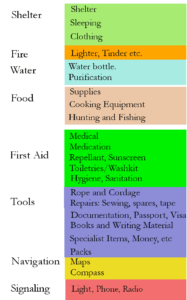
For today’s blog I thought it might be useful to give an example of how the “Uncle Phil List” can work.
We need a scenario, so as an abstract example, let us consider the protagonist in the video game “Far Cry 2”. He is a mercenary operating in “Unnamed African Country” (UAC).

First broad category is “Shelter”, subdividing into shelter, sleeping and clothing.
The climate is fairly warm and sunny, but subject to heavy  rainstorms.
Terrain varies between jungle, savannah and arid/desert regions.
Hostile forces are widely encountered so shelter needs to be low key.
The temperature means a tent is probably unnecessary, although a basha sheet or rain poncho may need to be rigged to keep the rain off.
In the jungle, a hammock will be the safest way to sleep.
On the grasslands and desert using a hammock may not be possible so he will need a ground sheet or kip mat of some form.
Mosquitoes and other insects will be a problem, so a mosquito net that can be used with both the hammock and ground mat will be needed.
Outside the forest a way to support the rainsheet and mosquito net will be needed so a couple of tent poles may be carried.
A blanket or two may be more practical than a sleeping bag.
 Clothing needs to be comfortable and suited to the hot and often humid conditions.
 Rhodesian and South African troops often wore singlets and shorts for operations, only wearing long trousers and sleeves at night or when in heavy bush.
Hiding is the main strategy against enemy patrols so colours/ shades that blend with the environment are preferred.
An interesting idea would be soling boots with sections of truck tyre so foot prints look like those of locals wearing homemade sandals.
A hat that can protect against the sun will be necessary: so much so that a spare might be carried.
Sunglasses will be needed due to the bright reflections from sand and bleached grass. Goggles might be useful in the desert or for when driving vehicles.
A neck scarf/sweat rag fulfils a number of roles.
A head net and gloves for protection against insects will be needed.
Fingerless gloves and useful against thorns and other hazards when moving in brush.
Gaiters will provide some protection from snakes, even when wearing shorts.
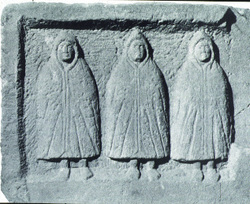
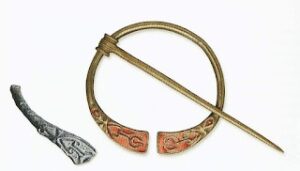
If the weather is cold, or if moving at night one of the blankets can be worn as a cloak, so a couple of blanket pins are included.
A poncho is carried for those tropical downpours and also provides shelter while sleeping.
Fire: A couple of lighters and possibly a container for tinder and other firelighting aids should be carried.
In the forests available wood may be damp. A candle is useful for applying sustained heat to moist tinder and kindling.
Water: At least one water bottle will be needed. Water encountered will need to be sterilised.
Purification tablets will be carried and so might a means for filtration.
A vessel for boiling water to conserve the tablets should also be carried.
Crocodiles may be a hazard when filling water bottles. A pail on a string might be a useful device
Food. Food and cooking equipment will be needed.
Game is fairly present, although means to acquire it without gunshots that might alert patrols need to be considered.
A small fishing kit takes up little room and can be used to set night-lines when resting up.
First Aid and Other Medical: Given the character’s profession, some shell dressings for gunshot wounds need to be carried.
Various parasites are an obvious concern. In the game the character contracts malaria and has to source medication.
Insect repellent, sunscreen, medication and basic hygiene items will be needed, and in generous quantities.
A snake bite kit will be prudent given travel will often be across country and in heavy undergrowth
Tools: A machete (panga) will prove to be a very useful item. There may be a case for carrying a spare in the pack as well as on the belt.
A few yards of rope would prove useful when crossing streams and navigating steep terrain.
Lesser cordage will prove useful for various applications.
The weapons you encounter in the game are often in a poor state. The environment of UAC is hard on such things so you will need a gun-cleaning kit.
A collection of spares for your weapons and other items will be needed, as well as more generic repair items such as tape and a sewing kit.
A notebook will be needed for recording intelligence. Keep it in a waterproof bag and ensure all vulnerable gear is protected from moisture and insects.
Specialist items may include field glasses and a satellite phone. (Amusingly the character gets phone calls in the middle of gun battles and infiltrations!)
A pack will be needed to carry the gear and some webbing to carry the items he may need when not near his pack: ammunition, machete, first aid, water etc.
One of the simplest ways to get around in the game is to take the bus, illustrating that some money will be useful.
A hiking pole or even spear may help movement across difficult terrain and deter large animals.
In Africa, a man walking with a spear may be less remarkable than one obviously carrying a rifle. The spear can also bring down animals for food silently.
Camouflage paint may be considered a specialist item and necessary since shorts and singlets leave lots of skin exposed.
Caucasian South African troops use face-paint to conceal that they are Caucasian when viewed at a distance. Pale skin can draw attention and make the owner a priority target! (My character in the game is oriental, but the same applies!)
Navigation needs are fairly obvious. The character will have some maps and at least one compass.
It is easy to get disorientated in the forest or long grass so a wrist compass may be a useful item.
Given that the enemies in this scenario are relatively unsophisticated and will not be using electronic warfare, a GPS system may be practical. Possibly it will be built into the satellite phone?
In the game, the character has a GPS that also locates uncut diamonds, which would be nice!
The frequency of sunny days suggest revising the methods for direction finding by the sun for that hemisphere.
Likewise, the clean night skies suggest a refresher on constellations.
Record this in your notebook so you do not have to rely on memory during stress.
In the game, the character is pretty much on his own so means of signalling are a low priority.
The conditions favour heliographs (but he has no one to signal).
Likewise a whistle on his compass lanyard would take little room, but not be of much use when the whole country is against him.
I guess the satellite phone is a signalling device.
There is a flare gun in the game but this is mainly used for arson!
A source of light such as a flashlight would be useful.
Some of the terrain is very dark at night and a low-power red bulb or pinhole flashlight would be useful for brief checks of terrain or the map.
There are also caves and deserted dwellings that need to be searched.
By no means a comprehensive list, but this does illustrate how the Uncle Phil List can be used as a tool to plan what gear you may need.