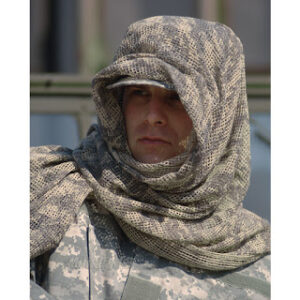
In previous blogs we have seen how useful items such as scarves, keffiyeh and bandanas can be.
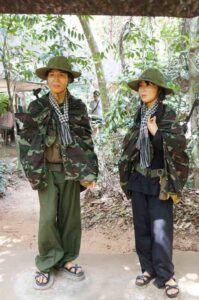
North Vietnamese soldiers often favoured a neckerchief cut from camouflaged cargo parachute material.
This was generally worn inside the jacket but could be spread over the shoulders for additional camouflage.
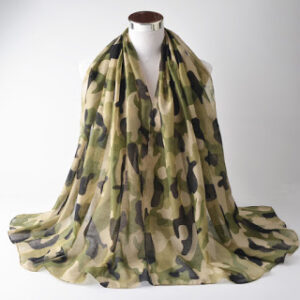
A similar idea is seen below using capes of more conventional camouflage material.
Capes and cloaks have often been a topic of these blogs but so far I have not made much discussion of their merits for concealment.


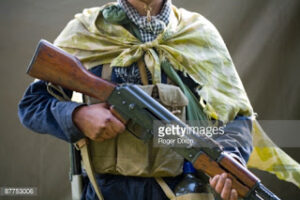

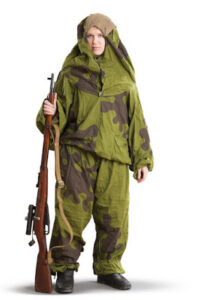
Some camouflage systems recognise this.
The Soviet system shown below is obviously designed to conceal the distinctive head and shoulders shape.
Modern sniper ghillie suits often address this too.
There is, however, in some quarters, a silly attitude that such levels of shape disruption are “just for snipers or special forces”.
While it is not practical for all infantrymen to operate in ghillie suits, improvements can be made over current levels of camouflage.
There is more involved in camouflage than simply wearing a patterned jacket and helmet cover!
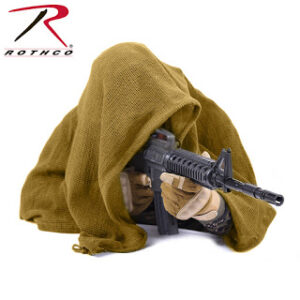
Possibly the most practical approach is to create a sort of “soldier’s mantle”.
In effect a short cloak or shawl.
Shown below is a small net-like item that might be a good starting point. Ideally it would be a light sand colour to be suitable in the widest range of environments.
A few blobs of a darker, contrasting brown colour would not hurt.
Like the helmet camouflage that was described in a previous blog the camouflage effect is greatly improved if three-dimensional materials such as hessian, scrim and raffia are added.
One of the reasons for selecting a net-like material is so that natural materials can be added too.