Disclaimer: “As an Amazon Associate I may earn from qualifying purchases.” Adsense and Infolinks were no help at all.

If you have enjoyed this article or it has been helpful to you please feel free to show your appreciation. Thank you.

Read The Third Wave by Alvin Toffler!
Categories
Phillosoph

"Shooting to Kill" for the Home Guard

There are a number of shooting systems that claim to utilize a shooter's “natural pointing ability”. While these systems seem to work, I will admit to having been a little skeptical as to just how inherent or accurate such pointing abilities really are.
Today I found an explanation that seems answer some of my doubts.
The writer explained that when you point at something the finger does not necessarily line up with the eye. Point at something and then move your head so you can look down your finger. You will find your pointing ability is much more accurate than you might have expected.
Learning this is rather timely, since this week I read “Shooting to Kill” by Andrew G. Elliot. Shooting to Kill is a manual written for soldiers and home guardsmen in the 1940s.
In my book “Survival Weapons: Optimizing Your Arsenal”, I describe a number of methods of using pistols or long-arms when there is not time to use the sights.
These include the “Quick Kill” methods based on the book “Shooting to Live” by Fairbairn and Sykes.
“Shooting to Kill” nicely complements the latter work, and not just in the symmetry of the titles!
The Quick Kill method can be described as locking your attention on your target and firing as your gun raises up into your field of vision. Shooting to Kill is written for riflemen but uses a method derived from the shotgun techniques developed by Robert Churchill.
Lock your attention on to the target, or more specifically the part of the target you intend to hit.
Raise your rifle to your shoulder and fire. This is done without trying to (consciously) acquire the sights.
Look, point and fire.
The body, support hand and eye are directed toward the target. The support hand fine tunes the muzzle's position.
The sights can be used if there is sufficient time, to “fine tune” the initial pointing.
If your shouldering action is sound, your eye should have naturally assumed a position where it was looking through the aperture rearsight at the foresight.
The brain automatically centres the foresight in the field of view.
If using a “U” rearsight, the eye should have assumed a position where it was looking across the rearsight at the frontblade, the top of the blade level with the top of the U.
Elliot notes that for most shots the sights are unnecessary if you have mastered this method.
Elliot notes that a rifleman is unlikely to engage targets beyond 300 yards so advocates that the battlesight be used exclusively in combat.
Like many of his contemporaries, he notes that a shooter has little need to concern themselves about the effect of wind, distance or rain at the combat ranges they will be shooting at.
Elliot on wind allowance: “The inexperienced will have heard much about allowance for wind, and the effect of rain on the bullet’s course. These factors can be ignored. In war, most shooting is at 300 yards or less, and at that range, wind or rain have no perceptible effect. In theory, with a strong wind, at a couple of thousand yards, aim should be taken a few feet to the windward, but in practice, except at very long ranges, it is better to ignore this academic principle.”
Traditional shooting ranges were only for zeroing and teaching the very rudiments. All other rifle practice should be combat orientated.
Elliot remarks that he gets respectable scores on the target range without using his rifle's sights.
The key to the technique that Elliot advocates is that the process of shouldering the rifle be sound and consistent.
The soldier or guardsman should often practise shouldering and pointing the rifle, for as much as an hour at a time. He notes this is also a very practical way to build up arm strength.
A firefight is no time to be guessing at target speeds and calculating leads.
Elliot suggests that moving targets be engaged with what would be called a “swing-through” of “smoketrail” method in more modern parlance.
Track the target and increase speed to swing past it and fire just ahead without halting your motion. Aiming point against moving targets was “the tunic buttons”. This automatically shortens the lead if the target is approaching at an angle.
Elsewhere he suggests the belt buckle as an aimpoint. Since soldiers often shoot high one can see the wisdom in this. A lower aim is also needed if a target is charging towards you or at a higher or lower elevation.
Some of the advice in this book needs to be taken in context.
Against an enemy firing over cover, an aimpoint several inches below the top of the cover is suggested.
The .303 rifles of this time had a battlesight zeroed to 300 yards, giving a maximal ordinate of seven to eight inches.
The .300 (.30-06) P17 used by the home guard had a battlesight set for 400 yards, giving a max ordinate of twelve to thirteen inches.
Thus a head shot at shorter ranges needed a significant hold under. More modern cartridges with a 200 metre zero will behave differently.
Against a prone target, Elliot suggests shooting low, which is reminiscent of Rhodesian combat techniques.
The book gives advice on a number of other matters.
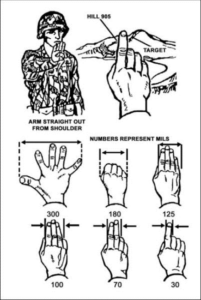
When engaging low-flying aircraft, he suggests a lead equivalent to the distance between the forefinger and little finger tip of a spread hand held at arm's length. This is about ten to twelve degrees, which is about right for a target moving at around 200 mph.
Categories
Phillosoph

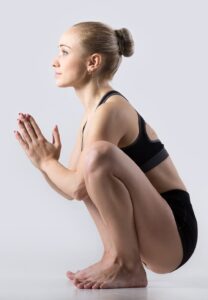
Asian Squat

A few months back, I reread Tom Wintringham's “New Ways of War”. Much of it is still relevant today and recommended for anyone interested in military matters.
On one page, Wintringham opinions that parade drill is only good for teaching men how to stand around. Elsewhere, he suggests that one of the first skills a man be taught is how to take cover.
Thinking about this reminded me of the “poppa-san squat”, more commonly called the Asian squat (or hunker).
But sometimes, there were no filled and unoccupied sandbag seats available, and for some reason, you did not have your steel pot with you in the NDP or FSB, and wanted to sit down, there was the ultimate GI expression of becoming as one with the RVN environment: the Poppa-san Squat! Also known as going Asiatic to the guys from WWII and Korea.

To do the Poppa-san Squat, a soldier, just folded up in a sitting/squatting position, with his skinny butt touching the heels of his jungle / combat boots, leaning forward with arms on knees or at the dangle (see pictures of the RVN civilians sitting this way). Once accustomed to doing so, a body could sit like this for prolonged periods of time without discomfort, but no GI could remain in this position as long as a Vietnamese!!! With practice, you could really get comfortable, and simply by pulling down the trousers, it was possible to take a dump in this pose (that is why the RVN copies of those famous old French toilets had footpads inside the bowl!). Be advised that one must be slender and fit to do the Poppa-San Squat without causing damage to muscles and tendons!

You see, most of the RVN peasantry did not own furniture other than a crude platform bed, and a maybe a table, so that is how they sat for social occasions in the vill, and even the poor folks in some of the big cities too.
Again this method of sitting has caused many weird looks from wives, girlfriends, family members, passersby, and soldiers who never served in combat in the Pacific, Burma, Korea, RVN, etc. The presence of obvious furniture is again often overlooked, and i even squatted down next to my footlocker in the barracks like this several times, to polish footwear, in spite of the big OD footlocker at the foot of my bunk – this is the Stateside, European or garrison soldier's lounge chair in the barracks environment).[sic]
It used to drive the lifers wild Stateside and in Europe to see lines of GIs (for whatever reason there was a line waiting) with the RVN vets hunkered down in the Poppa-san Squat instead of standing tall! Not proper soldiers! Bad image! Etc, etc!”
If a unit halts, it makes sense for the majority of the men to drop down. Two men observed standing in a field might be farmers. A dozen men standing in a field are probably not!
Squatting rather than sitting also protects you from the cold, wet or hot ground surface.
In this is the passage: “You are less visible from the air if you: do not move; in the shadow of buildings (objects); you sit instead of lie down (reduce.your size); you match the color of your uniform with the terrain, that is, you don’t fuss and don't “glow.””
Viewed from above, a “lump” is less recognizable as a human than a prone figure.
Squat position for firing a handgun
The above passage rather reminded me of the ninja technique of “uzura gakure”: “In the darkness the ninja rolls his body into a ball giving the appearance of a stone and remains motionless on the landscape.” (Comprehensive Asain Fighting Arts, p.125, Don F.Draeger and Robert W. Smith)
Some field manuals also suggest freezing in a crouched or prone position in response to airborne flares.
Elsewhere is the recommendation that squatting in a trench rather than lying gives a better chance of survival if the trench collapses.
There are clearly a number of applications for a soldier being able to squat!

One of the nonsenses sometimes voiced about the Asian squat is that only Asians can do it. Delta Mike's recollections above clearly disprove this. Squatting is also regarded as a Slav thing.

Being able to assume an Asian squat would be a useful ability for a young soldier. This is something that is easiest to learn while young and supple. It should probably be incorporated into basic training and its practice encouraged.
There are numerous webpages explaining how to perform the squat. One that I came across was actually intended for weight-lifters who wanted to improve their stance during squat lifts.

The technique was to drop into a squat, feet flat on the floor, while having your hands on a solid object you could use to steady yourself. I use the edge of the bath. The video I saw suggested doing 30 seconds the first day, a minute the second, two minutes the day after and so on. I just do a minute, first thing in the morning.

I should explain here that time has not been kind to my legs, tendons and feet. I know from personal experience that it is possible to limp with both legs at once!
I had been given some stretching exercises to do, like those used by runners, but they did not help much.
To my surprise, I discovered that scrunching down into a squat was a far more effective exercise.
Hanging on to the edge of the bath was a pretty good exercise for the forearms, too.
I will never be able to effortlessly squat like some people can, but training for squats has its own benefits.

The squat is a great way to limber up. It's a good warm-up too. Every other morning I will follow the squat with a minute or so of dumbbell work, then straight into the shower.
Even if you don't want to learn the poppa-san, experiment with adding the squat to your exercises.
Categories
Phillosoph

Foundation Survival Kits

Many visitors to this blog are interested in putting together survival or emergency kits. Regular readers will be aware that I don't regard a little tin full of gizmos an ideal start.
If you have such a kit, one of the first things you should add to it is a mylar space blanket. These can be carried on your person at all times and can provide you with warmth and protection from the rain. And they only cost a few bucks!
Recent discussions with friends have made me reflect that many of the items in a suggested list of equipment fall under the heading “nice to have/gadgets”. Your starting point in putting together a kit should be those items you might class as “really in trouble if your don't have”.
With this criteria firmly in mind, I would base any kit around three items. These would be:
  • A blanket.
  • A fire kit.
  • A good knife.
You can use a sleeping bag instead of a blanket, but ideally it should be one that can easily be adapted as clothing.
“Budget” rectangular bags may be more suitable than more expensive “mummies”, so keep an eye out for bargains and promotions at big stores.
Poncho liners are an alternative to blankets and can often be found for a cheaper price. Both original style or versions with head openings or hoods are suitable.
A couple of blanket pins added to your kit can help in making or blanket or similar into a cloak. (Not sure if you can magnetize blanket pins)
If you have a spare space blanket, throw it into the kit as extra insulation.
A plastic or plastic and foil survival bag is worth having too.
Fire kit is the basic kit described elsewhere. A pair of disposable lighters and some cotton wool.
If you are female you might wish to replace the cotton wool with some tampons. As well as the intended use they can be used for tinder or as wound dressings.
If you want you can put your fire kit in a little Altoids or tobacco tin and seal it up. Throw in some matches and/or some birthday candles if you wish. Fire drills, fire pumps and ferro-rods are very nice but you can get dozens of disposable lighters for the same money. When you are cold and tired a lighter is simpler and quicker.
You may carry a ferro-rod as backup if you have one.
What is a “good knife”? There are a number of suggestions in my book “Survival Weapons”.
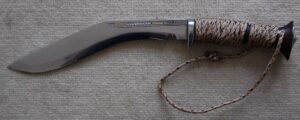
In short, a full-tang fixed blade, single-edged and not less than seven inches. My first choice is one of my kukris.
If on a budget look around the gardening section of local stores. A mass-produced billhook or machete is often more capable than more expensive smaller knives.
These three items constitute the foundation of any good emergency kit.
The cost is reasonable so you can probably put several together within a reasonable period of time.
The three items form a relatively compact package that can be placed in a daypack, the bottom of a wardrobe or the trunk of a car.
For a kit for a young child you may wish to replace the knife and fire kit with a flashlight and whistle. These are good additions to an adult's kit, but of a lower tier of priority.
Friends of mine said they would add sewing kits, fishing kits and/or an AM/FM radio.
Some of these are useful, some are nice to have but I do not regard them as essential, even though my sewing kit has seen considerable use over the years!
If expanding the kit the next items that I would recommend are:
  • A rain poncho.
  • Bottle(s) of water.
  • Roll of toilet paper in a waterproof bag.
The rain poncho can be worn or can be rigged up as a shelter or windbreak. It can be used as a waterproof wrap for your other garments when river crossing and if packed right can be even be a flotation aid. It can be combined with a poncho liner or blanket to form a sort of sleeping bag. You can even rig it to catch rainwater for drinking.
Shop around and you can find rain ponchos at a price you can tolerate.
How much water to put in your kit will depend on your local environment. In some places where water is plentiful you may need no more than a litre bottle in your kit.
Generally I would recommend at least two litres, perhaps four. Two-litre soda bottles are a very good choice for storing water in a kit. They come “free” with the soda. Wash them out. Boil some tap water, let it cool slightly and fill the bottles with it. Loosely cap and let the water in the bottles cool to about hand temperature. Add a couple of drops of bleach to each bottle and seal. If you wish you can seal the cap on with wax and/or tape. The bleach breaks down into salt and water, which is harmless at this concentration. In fact this constitutes a trace amount of electrolytes.
Truly sterile water, which the above process should have produced, will be good for years and will not “go off”. Wrap the bottles inside your blanket to keep them out of the light, just to be extra sure.
FEMA estimate a person needs a (US) gallon of water per day, but half of this is intended for hygiene. If it really is an emergency you may have to forgo your daily shampoo and shave and let the pits smell a little. Priority should be given to washing wounds and cleaning the hands before eating or medical procedures.
Used intelligently a gallon should last you a couple of days at least.
You can buy water bottles of about a gallon capacity for a kit if you want, but I think a pair of 2 litre soda bottles are easier to carry, as well as being cheaper.
See my free knot book for how cordage such as string or paracord can be rigged as a carrier for a bottle.
The roll of toilet paper is a useful but very cheap addition to the kit. In addition to the obvious use, it can be used for cleaning wounds and fire starting.
In one of my favourite movies a character stops a truck by running streamers of toilet paper across the road. The trucker is so surprised he hits the brakes. Appropriately coloured toilet paper can be used for signalling!
Toilet paper is of little use for most purposes if it gets soggy. Invest in a suitably sized ziplock bag that can be sealed against the entry of water.
The above six items form the basis of a fairly capable emergency kit. Even if within a modest budget it should be possible to construct a kit for every member of the family.
Relatively compact, a kit can be stored in the bottom of a wardrobe, form the foundation of a bug-out bag or be tucked away in the trunk of a car. A warm hat/headover, bandana and gloves are useful further additions. If we want to make the list a round seven, then a metal canteen cup or equivalent can be added.
Making a shelter and many other tasks will be easier with some cordage. A reel of tarred nylon bank line is more compact than paracord and does not stretch.
Disaster relief organisations should stockpile such kits.
I suspect certain governments have large surpluses of ponchos and liners that can no longer be issued since they are not in the latest camouflage pattern.
If not, manufacture ponchos and liners in high-viz colours. This is a good option for kits to be sent overseas. Makes them harder to be used for military purposes.
A fire-kit tin with lighters, tampons and matches can be put together for a couple of dollars.
Bags of toilet paper and sealed bottles of sterile water can be mass-produced.
Certain factions will doubtless squwit their britches at the idea of handing out knives, so I suggest these “agency kits” have a ferro-rod and striker of a design which still gives the survivor a useful cutting edge. Perhaps the striker could be the sort of credit card-sized tool that includes a can-opener and other tools.
Categories
Phillosoph

Two Methods of Estimating Distance

A friend of mine sent me the link to this webpage.
I have not seen this particular trick before! I have not had a chance to experiment with how good an estimate this gives, so go out and have some fun with it for yourselves.
The basic method is to first select a reference object and estimate its length/width. I suggest you use yards or metres since this will give you smaller numbers to deal with and give you a more useful final answer.
Hold your right thumb at arm's length, close your right eye and align the thumb with the edge of the object.
Close your left eye and open your right. Estimate how far your thumb has “jumped” in multiples of the object length/width.
Take your answer, multiply it by the length/width in metres (or yards) and multiply that answer by ten. This will give you your estimated distance in metres or yards.
This method reminded me of one of the ways to use milliradians to estimate distance. An article on this subject can be found here. A useful thing to remember is that half a metre (a shoulder width) is one mildot at 500m.
 
 
My preferred method of using milliradians is to estimate the length/width/height in metres (or yards) and divide this by the apparent measurement in mildots. (Use either a scope or your hand for the latter). This gives you a fraction, such as 2 over 1, 2 over 3, 1 over 8 etc. Multiply the fraction by 1,000 to get the distance in metres (or yards). Bone up on the decimal conversions of common fractions, such as ⅔ = 0.66 and ⅛ = 0.125.
Categories
Phillosoph

Kephart's Summer Outfit

There are a number of topics I intend to cover in the near future. The starting point for many of them begins with Horace Kephart, so it is prudent to begin with looking at some of his recommendations for outfitting. Here is his list of clothing and equipment for summertime trips in the North American woods. This particular version was taken from the 1957 reprint of the 1921 edition of “Camping and Woodcraft”. My 1927 edition has an identical list. My comments and clarifications and in green. Quotes from Kephart in khaki.
SUMMER EQUIPMENT FOR BACK-PACKING WEAR
“With such an outfit and his gun or fishing tackle, camera, or whatever may be the tools of his outdoor hobby, anyone of average physique and a little gumption can fare very well in the open, and enjoy absolute independence.”
Woolen gauze undershirt.
Hard to find at a reasonable price, nowadays! Key features are its permeability and ability to dry easily. A clothing system needs to build from the inside out. Modern alternatives may be string vests, mesh synthetics and soft microfibre garments such as Coolmax tee-shirts. In winter Kephart recommends wearing two sets of medium-weight woolen underwear rather than one heavy set.
Woolen gauze (or balbriggan) drawers.
Kephart notes that the legs sweat less than the torso so in warm weather drawers of open-weave ribbed cotton are a viable alternative to woolen gauze. Cotton drawers are easier to wash in the field. If cold conditions or lots of wading is expected drawers should be wool. Drawers should be long legged to protect the knees and legs from scrapes and bumps.
Woolen socks, winter weight, natural color.
These can be safety-pinned to the bottom of the drawers to keep them up, if necessary.
Army overshirt, olive drab chambray (or flannel).

“Flannel” is an ambiguous term but I think in this context he means woolen flannel, both woolen flannel and cotton chambray being suitable for summer overshirts, but it could mean cotton flannel too. There is some mention of chambray being better than “khaki” shirts, which may refer to the army issue item of cotton. The US Army of this period issued both woolen and cotton garments. “Khaki” often refers to the cotton version, the woolen being described as “olive”. Elsewhere Kephart suggests when the weather gets cooler an officer's woolen shirt be used instead of the chambray.

Shown is an illustration from the 1907 Abercrombie and Fitch catalogue. This is likely to be the sort of shirt Kephart wore. It is a head-over design and long enough to be a serviceable nightshirt. Incidentally, this catalogue defines “khaki” as being a closely woven cotton twill.
Silk neckerchief, 27 x 27 in.
Khaki trousers, extra suspender buttons.
Kephart notes that cotton trousers survive the woods better than woolen. His preference is for “genuine English moleskin” cotton. Wool trousers have advantages where the weather is very wet or much wading is done. Army trousers of “olive-tan wool” are acceptable but he considers woolen “kersey” better. Notable is Kephart always uses the term “trousers”, never “pants”. Elsewhere he suggest trousers can be cut off six inches below the knee.
Invisible suspenders.
Kephart notes these are hard on buttons, hence the spares suggested above.
Leather belt, narrow.
Army shoes, cone-headed Hungarian nails.
Army leggings, canvas.
Among their many merits, provide some protection from snake bite.
Felt hat, medium brim, ventilated, felt sweat-band.
A felt sweat-band is preferred to leather since it is permeable and quick drying.
IN POCKETS
Left shirt—Map sections, in cover. Leaf of almanac. Note book and pencil.
The map case he favours has six transparent pockets, each of which can hold two sections of a US Geological Survey map, back to back. Note book should be quadrille ruled for mapping and drawing to scale, which is a valid suggestion even today.
Take along an almanac to regulate the watch, show the moon's changes (tides, if near the coast), and, by them, to determine the day of the month and week, which one is very apt to forget when he is away from civilization. Have a time-table of the railroad that you expect to return by.”
Right shirt.—Compass.
I wear the instrument in a small pocket sewed on my shirt for that purpose, so it fits, and attach it to a button-hole by a short, strong cord. A long cord would catch in brush. If the compass is carried in a large pocket it will flop out when you stoop over or fall down.”
Left trousers.—Purse. Waterproof match box, flat pattern (as reserve).
Kephart was a pipe smoker. These matches were for emergencies, the supply on his belt being used for his pipe.
Right trousers.—Pocket knife.
The jackknife has one stout blade equal to whittling seasoned hickory, and two small blades, of which one is ground thin for such surgery as you may have to perform”
Fob.—Watch.
Left hip.—Pipe. Tobacco.
Right hip.—Bandanna handkerchief.
ON BELT
Right side, front.—Waterproofed matches (50) in leather belt-pocket.
Right side, rear.—Sheath knife.
Blade of less than five inches. Kephart carried a tomahawk, hatchet or axe, so did not feel the need for a larger knife.
Further on, Kephart says that if part of a group it is useful for each member to carry a whistle, and have an agreed code of signals.
ON BACK
Duluth pack sack, 24 x 26 in. . . 2 lbs 4 oz.
Shelter cloth, 7 x 9 ft., waterproof. . . 2 lbs 4 oz.
No support poles are carried. The surrounding woods and the tomahawk met these needs. Unlike many modern campers, Kephart expected to have a camp fire to sleep before. At high altitudes a closed tent (3½-4 lbs) and warmer bedding might be required.
Mosquito net, 68 x 72 in . . 4 oz.
U. S. A, [US Army] blanket, summer weight, 66 x 84 in, . . 3 lbs
Browse bag, 32 x 78 in . . 1 lbs.
The browse bag was a sack that could be filled with foliage, straw or other soft materials to serve as a mattress.
Pillow bag, 20 x 30 in . . 3 oz.
A smaller version of the browse bag, to serve as a pillow.
Rubber cape, 34 in . . 1 lbs 5 oz.
Designed to reach to the knee. Used as protection against the wind as well as the rain.
A cape has the merits of a poncho, in that it is airy underneath, and it can be slipped on over the pack-sack, while it has the advantage of leaving your arms free to fend off bushes, to climb with, to shoot, paddle, and so on.”
Stag shirt . . 1 lbs 8 oz.
The “stag shirt” Kephart uses is made of “Mackinaw”, a strong woolen cloth. The 1907 Abercrombie and Fitch catalogue describes the Mackinaw cloth it uses as 40 oz. The shirt is used instead of a coat or jacket and may be used as a sleeping garment or in combination with the cape. Modern Mackinaw garments are very expensive, and often only available in red check patterns rather than the more discrete grey Kephart favoured. Fleece jackets are a potential alternative, but many of these are insufficiently windproof so will need to be combined with a robust shirt or hoodie worn over them.
Spare suit underwear and socks, as above . . 1 lbs 2 oz.
Tomahawk, muzzled . . 12 oz.
The knife never was made that will compare with a good tomahawk.” ( I doubt Kephart ever encountered a kukri!)
The tomahawk or similar provided both firewood and shelter.
Among my most valued possessions is a tiny Colclesser tomahawk, of 8-ounce head and 2½ inch bitt, which, with hickory handle and home-made sheath, weighs only three-quarters of a pound. I seldom go anywhere in the woods (unless in marching order with a heavier axe) without this little trick.
It is all that is needed to put up a satisfactory shelter wherever there is hemlock or balsam, or bark that will peel, while for other service I use it oftener than I do my jackknife.”
Side-cutting pliers, 5 in, . . 4 oz.
There is some speculation that if Kephart was around today he might have carried a multi-tool. I suspect he might have been quite bemused by examples that weigh half a pound or more!
Carborundum whetstone, 4 x 1 x ½ in . . 2 oz.
Wallet fitted with small scissors, needles, sail needle, awl point, 2 waxed ends, thread on card, sail twine, buttons, safety pins, horse-blanket pins, 2 short rigged fish lines, spare hooks, minnow hooks with half barb filed off, sinkers, snare wire, rubber bands, shoe laces . . 6 oz.
A combination of sewing kit, repair kit and emergency fishing and snaring kit.

Strong twine in bag . . 1 oz.

Aluminum frying-pan (858 in.), plate, fork, white-metal dessert spoon, dish towel, in bag . . 1 lbs 1 oz.
2 Aluminum buckets (1 qt.), in bag . . 14 oz.
See my blog here for more information on these.
Tin cup, seamless (1 pt.) . . 3 oz.

Oddly the list does not include a water bottle, although elsewhere Kephart tells us:

“One may travel where water is hard to find, though this seldom is the case in a timbered region. The best canteen is one of aluminum which neither leaks nor rusts like the old-fashioned tin affairs. [Aluminum will be corroded by copper ions. Copper ions are present in most tap water.] It should have a canvas cover with felt lining. When the felt is wet its moisture cools the water in the canteen bv evaporation. The canvas cover prevents too rapid evaporation, and keeps the canteen from wetting one's clothing. At night or in case of illness, the thing can be used as a hot-water bottle, the insulation keeping the water hot for a considerable time. The best pattern is the present regulation army canteen, which is shaped like a flat flask, but with one side rounded a little and the other concaved to fit the body. It has a flat bottom, so you can stand it up. The aluminum screw-cap, held by a chain, cannot jolt out like the corks of common canteens.
Nails and tacks . . 3 oz.
Used to create camp furniture or assist in shelter construction. Kephart tells us these are only needed if expecting to stay several days in one place. Half a dozen each of 6d (2") and 3d (1¼") wire nails, and some galvanized tacks.
Cheesecloth, 1 yd . . 1 oz.
Used to carry fish or hang meat. Also used for straining. Could be used to create a head net against insects.
…substitute for a tea-ball.
Fly dope, in pocket oiler . . 2 oz.
Fly dope was insect repellent.
Talcum powder, in wpf. bag . . 1 oz.
For care of the feet.
Comb, tooth brush, tiny mirror, bit of soap in wpf. bag, rolled in small towel secured by rubber bands . . 6 oz.
Toilet paper . . 1 oz.
First aid kit . . 5 oz.
Spare matches, in tin box secured by adhesive plaster . . 2 oz.

Electric flasher, flat, round corners . . 5 oz.

Total pack without provisions. . . 18 lbs 3 oz.

Provisions will be discussed in a future post.
Categories
Phillosoph

Towards Universal Ethics.

Recently I finished a very interesting book. Worth reading if only for the crash course in science it gives. Psychology, astronomy, physics and biology are just some of the fields covered. The book is “Developing a Universal Religion” by David Hockey. If I have one issue with this book it is probably the title. “Religion” is likely to repel as many potential readers as it intrigues. What the author chooses to call “universal religion” is probably better thought of as a universal ethical environment or context. Think of it as a sort of Hippocratic oath that not only doctors are held accountable to.
Some of you may answer that your faith already provides you with an ethical environment and that something better is not needed. If so, you might consider how it is that even people of the same faiths and denominations arrive at such very different answers to the same moral problems.
Whatever your beliefs, I would recommend giving Hockey's book a read. Some sections may contradict your currently held beliefs, but I urge you to push through to the end to understand the full context.
Here is a short extract of one of the early chapters. Interesting stuff!:
Of course we all, scientists, mathematicians or laypersons, solve many problems every day. While most of these are addressed and resolved routinely and efficiently, the speed and accuracy of our problem solving depends almost entirely upon one factor—how well we understand the background situation, i.e., the “environment” (examples discussed below will shortly clarify and extend this term) that contains and presents the problem we are trying to solve. Everyday problems are solved very quickly, often without realizing a problem is being addressed, because we generally know a lot about the various environments we inhabit. On the other hand, scientific and mathematical problems not infrequently take a long time to solve; this is usually because those working on the problem do not yet have sufficient information about their problem’s environment.
To correctly solve any problem then, we must correctly understand its “environment.” This is because a problem is only properly solved when its solution can be used within (or is accepted by) the relevant environment, without causing additional problems. Luckily, each problem’s environment also invariably contains the criteria which the problem’s solution must satisfy…(snip)
…Moral problems are actually very similar to mathematical problems. Like math problems (which have their origins in the abstract mathematical environment that defines them), moral problems arise from their own abstract moral environment. And we must understand the true nature of this environment in order to find satisfactory solutions. Moreover, the more difficult the problem is, the more we have to understand about its environment. Moral problems ask the mind to decide which solutions are “right” rather than “wrong,” and which behaviours might be deemed to be “good” rather than “bad.” Now, as we have seen, the criteria needed to select the right answers for practical problems are found by examining the environment that presents the problem. But what environment actually presents moral problems? From where do they stem? This would be the rightful place to find the criteria sought, but this presents a dilemma: the universe contains no practical, concrete, “real” or verifiable moral environment waiting to be found and consulted.
Moral problems arise solely within the mind, and it is therefore the mind itself that both defines the moral environment and contains the criteria that solutions must meet to be deemed satisfactory. Everything that makes some particular concern a “moral problem” to a person is contained wholly within that person’s mind. Thus, it is the mind-set of the customer at the checkout counter that determines if being undercharged presents a moral problem, and it is this mind-set that provides the frame of reference that is drawn upon when the decision to speak up or remain silent is made.
We should stop here to consider what this means, and what we typically do about it. If a person is a practising member of a religion, then they almost certainly possess an appropriate mental environment which they can consult when contemplating moral issues, and usually nothing stops the problem-solving process for them at this point. The most important function of any religion is to build such a mental environment, to teach followers what to believe and how to behave (that is, to provide solutions that resolve various kinds of moral problems). The “religious environment,” the neural networks constituting memories that those following a religion have spent time building within their minds, is available for exactly these occasions. It is rare (although perhaps now becoming more common) to encounter a moral problem that has not been already solved by others within the doctrine, but, if ever this does occur, then the adherent is expected to think about what has been written in religious texts, taught by their religious teachers, or said by a religious leader. The devout likely solve most of the moral problems they encounter by referring to one or more of these sources. More complicated issues might involve talking to a theologian or other respected authority. But there exists, for people following a religion, a relevant environment to consult, in which can be found the criteria to judge which solutions are acceptable, as well as the valued purpose that provides reasons for making the “correct” choice.
(However, it may be that many moral problems are not actually solved this way today, even by the devout. Perhaps some, or even most, everyday “moral” problems are in fact solved by recourse to the individual’s social or cultural environment. In other words, perhaps when a person wants to know the “right thing to do,” they [possibly quite subconsciously] might think along these lines; “now, what does society sanction?” Or, “what would my group expect of me?” They might even think, “what can I get away with?” Or, “how far can I go without being caught?” The last two examples might be a little extreme, but they serve to make a point: that in many situations today we may actually be obtaining our values, our standards, the criteria we use to judge which solutions are morally acceptable, from the social sub-set we inhabit, not from our religion. I suspect that, to the extent that this may be true, it is mostly so because our religions are failing to keep up with the changing times.)
So be it for those who have a religion to follow, or those who can be satisfied by adopting their society’s criteria of what a “good person” should do. People with these ideologies can make decisions (and feel or be certain that they have behaved morally) by consulting their knowledge of these constructed environments. But, what about those who have no mental religious environment to guide their decisions and disdain the vagaries of social standards? How can these people solve moral problems? Admittedly, there may be relatively few such people today, but there must have been many pondering such dilemmas before religions became common features of social life. Since we will shortly be investigating the emergence of religions, it is particularly important to explore what such people might do.
Presumably, some who have thought about such issues will have worked out their own value system, perhaps one based upon standards drawn piecemeal from one or more existing religions or societies they know about, but personalized in some manner. Others might just “play things by ear,” letting their emotions and feelings tell them how to behave as each situation unfolds. But a few, surely, would not be satisfied by such methods, and would want to work out solutions in a careful and rational manner. Where are these individuals to obtain the criteria they need to make moral choices? The physical environment holds none. The social environment has been ruled insignificant. Every religious source has been deemed artificial or irrelevant. And, they lack an appropriate internal, or mental, environment. How can such individuals solve moral issues rationally, and make decisions they can live with? We are not quite ready to answer such questions yet but will do so in Chapter Three, where we explore how decisions are made. Before then, there are a couple of other issues that should be addressed. The first has to do with what people consider to be moral problems; the second asks why such problems arise…(snip)
…The second question we should touch upon before moving on is: what prompts the appearance of “moral” problems? If individuals possess no inherent mental “religious” environment and have to be taught in order to construct one, then why would any “moral” problem have arisen in the first place? What would have prompted its appearance?
This question is easy to answer. Moral problems arise simply because the mind has the words and language that makes posing such problems possible. It is our mind’s ability to manipulate words that causes it to ask, “is it right to do this?” Humans are so used to mentally seeking the best course of action to take when practical alternatives arise that it is done automatically whenever more than one choice is offered. To put it crudely, we simply daydream moralistic alternatives, and then become stuck when trying to decide, “what is the right thing to do now?”
Without the mental ability to pose and answer questions (i.e., to note and solve problems) we could not ask ourselves if anything were right or wrong. In short, we don’t agonize over moral problems because we must, we do so simply because our mental ability with languages makes it possible, as the “moral” problems presented earlier in this section demonstrate. Our daily requirement to decide how to behave (together with the fact that religions have made the words “moral” and “ethical” part of most people’s vocabulary) is all that is needed to prompt such inquiries.
We are now well equipped to investigate the nature of decision making. Doing so will provide answers to the questions asked earlier: how can individuals solve moral issues rationally, and make decisions they can live with, if they lack a relevant (possibly religious) mental environment?”
Categories
Phillosoph

How Safe Is Your Home?

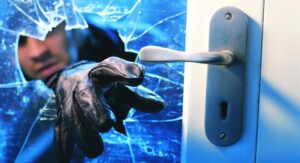
A few weeks back I was spending a lazy Saturday watching movies. Notably, at least two of these movies had a scene where someone breaks through a door and reaches in to operate the lock. Doors with glass panels right next to the lock are quite common, and if you think about it, not a very good idea!
 
One of the companies that I buy lock picks from is UKBumpKeys. They have an informative and entertaining blog that is well worth a look. This article in particular makes for very interesting reading.
Categories
Phillosoph

Further Adventures with Coffee and Soap.

Last weekend I decided to make some more coffee soap. I made some refinements to the techniques I used last time.

·Combine your various bits of soap in a microwavable bowl. Old soap can be crumbled. Newer or larger pieces are shaved into flakes.
·Add some coffee grounds and mix.
·Add sufficient water to cover the mixture. A little too much water is better than too little. Instead of water you can use any cold coffee that is with the grounds, or a mix of water and coffee. Neither water nor coffee need to be cool, for that matter.
·Place bowl in microwave and heat for a couple of minutes.
·When the soap appears to be softening and melting remove the bowl from the microwave and stir the contents to ensure coffee and soap are mixed.
·Dump the mixture into a sieve or colander to remove the excess liquid.
·Place the drained mixture on a sheet of Clingfilm. Wrap in Clingfilm and use to roll the mixture into a long sausage.
·Flatten the sausage to form an elongated bar.
·Allow to cool naturally.
·Once cooler, cut the bar into smaller, more handy, pieces. Cutting the end of the bars square lets you stand the soap up on its narrow end, presenting more surface to dry.
·Leave the soap to further cool and dry. It will be ready to use the next day.
Coffee soap does not produce a lot of lather but has a gentle abrasive effect. Give it a try!

Categories
Phillosoph

Seven Targets on The Head

In a previous post I described the concept of learning in “chunks of seven”. Therefore, today’s post will be on seven target areas on an aggressor’s head. If you have read some of my books you will know that the head has numerous target areas. The seven I have selected have been chosen for their effectiveness and accessibility. Some have also been included since they are not as well-known as other targets.
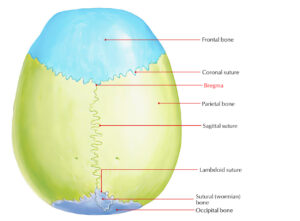
1.Bregma. The bregma is an intersection of sutures on the skull. For our purposes it can be regarded as the apex of the skull. Vulnerable to downward blows, unless the enemy is bent forward. Use a striking technique suited to bony areas.
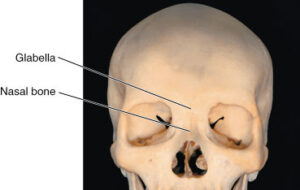
2.Glabella. The glabella is between and just above the eyes. When you see a TV evangelist knocking people over with “the power of god” he is actually striking the glabella. Not a miracle, just physics and physiology.
3.Eyes. The eyes are protected by reflex actions and these can be exploited to make an attacker back off. Suddenly covering the eyes can be a useful “low-impact” technique. Feint at the eyes with a swift finger jab. See my books for a variety of techniques.
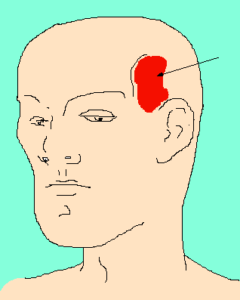
4.Temples. For defensive purposes, the temple can be regarded as the area on the side of the head at a 45 degree angle up from the eye. This is sometimes described as a weak area of the skull. The bone here is not significantly thinner but it is flatter and even slightly convex, making it less effective at shedding force. Attacks include the palm heel, hammer fist and elbow.
5.Chin. Blows that jerk the head backwards or to the side are more likely to result in a knockout. The palm heel uppercut, aka “chin jab” is a good technique, as is an upward elbow strike. If the foe is bent over a knee strike may be used.
6.The Mind Point: “Qianzhen”. This is on the side of the jawbone, just in front of the earlobe. Feel around with your finger and you will locate a sensitive spot. A good target for palm heel, hammer fist or elbow strikes. Even when hit with the large surface area of a padded boxing glove a strike here can cause a knockout.
7.Ears. Slapping both the palms onto a foe’s ears is a counter to various grabbing attacks. A palm heel strike to just one ear can also be effective. Ears can be painfully grabbed, pulled and twisted. An attempted rape or grappling attack may position an ear where it can be bitten. The ear marks a “target rich” area. If you cannot hit the temple, strike the ear or just above it. Right beneath the ear is a cavity with a major blood vessel and sensitive nerves.
Since I was limiting myself to just seven targets there were some alternates that did not make the final list.
The nose remains a good target. It is easily accessible and a relatively light blow can cause considerable pain and disorientation. It can be struck upwards, downwards, from the sides and inwards. In close range fighting it is going to be the primary target for a head butt. An upward palm strike to the nose will not “drive the bones into the brain” as many fiction writers maintain. It remains a good defensive technique, however.
Upward blows aimed at the nose have a change of hitting the mouth. Being hit in the mouth is unpleasant, but it also carries the risk of the striker’s hand taking a nasty injury. For this reason I selected the chin rather than the mouth for the above list.
A strike to the back of the head can be disorientating and potentially can be fatal. I would have included this area in the above list but attacking this area is relatively well known, so I opted to include the bregma instead.


Categories
Phillosoph

Another Win for Polaris!

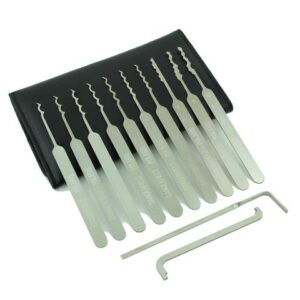
One of my colleagues presented me with a padlock that had been cut from a locker. The end of the shackle was still locked into the body of the padlock. Much to my annoyance, I was unable to pick the lock. I think I must have tried most of my lock picks on this padlock, but it refused to yield.
I received the Polaris kit this weekend so I decided to try it against this padlock.
I decided to start with the four-hump Bogota. While this is a reasonably-sized padlock, the key-way where the pins are is very narrow. The Bogota was not making enough contact. I decided to move on to the four-hump Sinusoid, rake no.5. A bit better, but still not opening. Rake no.7, the five-hump Sinusoid. This felt very different and the rake was clearly finding its way into the narrow key-way. A few seconds of rocking and scrubbing and the lock opened. This was a nice example of the tactile aspects of lock picking. Often you can feel what is “right” or “nearly right” and use this to guide your selection of rake or pick.
Yet another conquest for Polaris!