“Military men make good husbands. They already know how to clean, sew and take orders.”
A few years ago my girlfriend was running a café. This turned out to be a surprisingly brutal and cut-throat business. We should have heeded the words of Charles Grodin’s character in “Midnight Run”.
One of the better memories was the sewing nights.
“Sewing” is probably not one of the first things that comes to mind when you consider heavy metal, but all those patches have to get on jackets somehow.
A group of friends would hire the café for an evening and sit sewing.
It was a highly talented, artistic and creative bunch of people, so these nights were always entertaining.
One of the newer members commented after her first visit: “I cannot recall the last time I just sat and just talked.”
Which is an interesting comment, and possibly a sad reflection on the current phone‑obsessed culture.
I do not recall personally doing any sewing on those nights, but have been known to wield a needle at times.
Often this was when travelling. It seems like buttons and seams wait until you have left the country before they loosen.
I recently added some extra pockets to a coverall. My girlfriend remarked at how neat the stitching appeared. That surprised me, since for a camouflaged item I was not attempting to be particularly neat.
My sewing is entirely self-taught, there being no youtube nor websites back when I started.
Here are a few things I have learnt along the way that may be worth passing on:
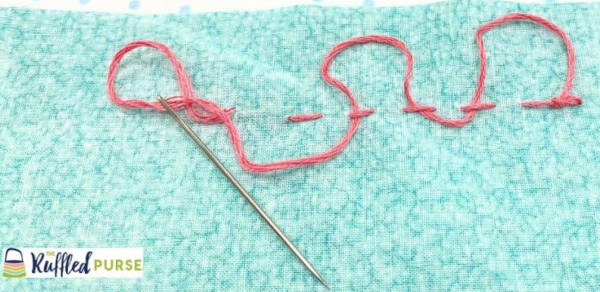
• Overly long threads are wasted motion. Having to make wider arm movements for every stitch soon adds up.
Sewing with shorter lengths of thread is less fatiguing.
As a general guide, a thread should be no longer than the distance between your shoulders. It is also probably stronger to secure a cloth with several shorter sections of thread rather than on long one.
The most notable exception to the above are the needles in my emergency kits. These are pre‑threaded with about a two foot of doubled “invisible” thread.
• Needles would often become undone when I sewed. My solution was simply to use a doubled thread, the ends joined in a simple overhand knot.
The only drawback to this technique is a higher probability of the thread getting tangled and knotted. This can be reduced if the two threads are allowed to untwist every half‑dozen or so stitches.
• Perhaps I was using the wrong knot? I have looked for advice on tying single threads to needles, but have yet to find anything useful.
Judging by some of the sewing sites online, many seamstresses do not bother knotting thread to needle and simply hold the thread in the eye with their thumb. I have started using this method on the rare occasions that I need to sew with a single thread.
Once you've got about an inch of thread "out the other side" let go of the needle and pinch both threads between your thumb and forefinger, *then* pull. This reduces wear and tear on the thread where it goes through the eye (which with linen can wear out before you run out of thread 😉), it gives you finer control over thread tension, and it reduces the tendency for the thread to slip out the eye of the needle.
• I have been known to use a blanket stitch at times, but a lot may be done with a simple running stitch. I will often sew and seam and then go back on it, placing the second set of stitches between the spaces between the first. This is simple, strong, and looks relatively neat.
• I sew buttons with doubled thread. Even smarter is to use quadruple thread! Fold the thread in two and pass the loop through the needle eye. Place the loop and the two ends together and tie into an overhand.
• On the subject of knots:
The “fingertip” method allows you to rapidly tie an overhand/stop knot. This can become handy for applications other than sewing.
• I used to pride myself that I could thread a needle.
Years later, it is harder to see.
Now I often use threading aids. I have even added one to my ultra-compact travel sewing kit.
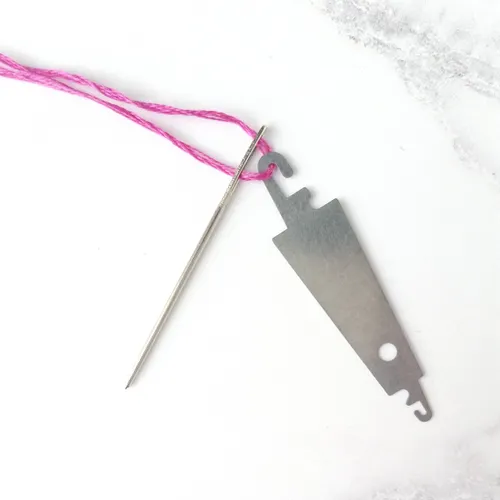
This is a flat lightweight piece of metal with a hook at each end, not as fragile as the type that use a rhomboid of wire.
These flat metal threading tools are roughly finished, so benefit from a little sanding or filing to smooth the edges.
I brought a bag of ten or so and added the others to my home sewing kit.
Fine wire or thread may be used as an improvised threading aid.
Threading aids work by pulling a loop of thread through the eye. This is a clue for how to thread a needle when you do not have a threading aid.
Try to push a loop of thread through the eye rather than the possibly frayed end.
My EDC and travel kits now include a number of devices that have magnifying lenses.
• Thread ends are sometimes easier to burn down with a lighter than cut off.
Home Sewing Kit
I have described my main travel sewing kit elsewhere. This fits in a little six by one centimetre plastic tube. If anything, it is a little too compact.
I have to pack it carefully so it does not become lost within larger bags. Usually it is in a ziplock bag along with other repair items such as spare rucksack buckles, superglue and tape.
My other emergency sewing kits are even smaller.
Each is a single needle, threaded and wrapped in invisible thread. One is taped to the side of the pencil in my pocket pouch. The other is under the saw of my Swiss Army Ranger.
At home, I have a much more extensive kit, most of which fits in a re‑purposed plastic box that originally had cakes or ice cream in it.
Such a home kit can be easily and cheaply stocked up.
Pound shops/dollar stores often have card‑mounted sewing kits with dozens of items. A couple of these give an assortment of coloured threads, pins, safety pins, needles, tape measures, thimbles and other items.
These are adequate for many applications.
Some needles in these kits come with incredibly small eyes. Make sure you own some needles that you can actually thread!
The little scissors with these sets are generally not much good. (Few scissors are better than those on Swiss Army knives. My spare Classic SD may end up in the sewing box)
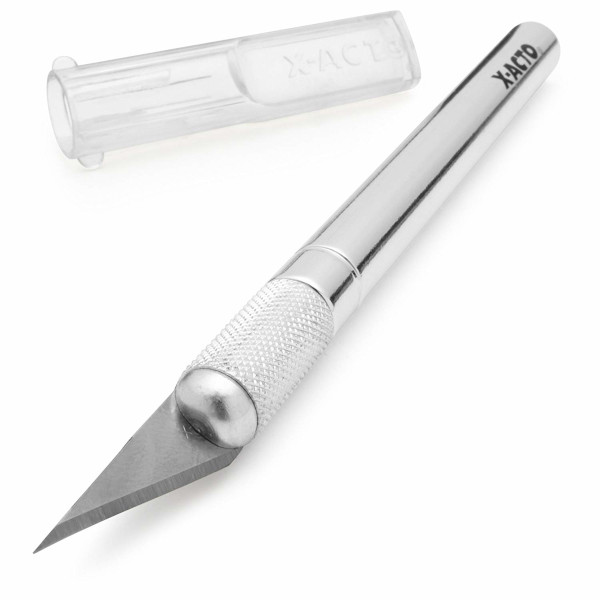
Add a sharp‑edged tool or two to your kit, a seam‑ripper and/or pointed or curved scalpel/X-Acto blade, blackboard chalk for marking, and a disposable lighter.
My kit also includes some EMT shears that were surplus to requirements and a couple of razor‑sharp small folding knives.
The emergency sewing kits that some hotels give away to guest for the asking are worth acquiring should you come across them.
I suggest you also acquire a few upholstery and sailmaker’s needles.
One of the smaller straight needles can go in your travel kit and is useful for tougher materials. At least one rucksack of mine has been repaired with such a needle using dental floss.
The curved and other straight needles go in your home sewing box.
I also have some surgical needles, about a centimetre long and either straight or curved. These have proved useful at times.
Magnifying lenses and/or tweezers might be another useful addition to your box. I usually have these nearby on a workbench if I need them.