Disclaimer: “As an Amazon Associate I may earn from qualifying purchases.” Adsense and Infolinks were no help at all.

If you have enjoyed this article or it has been helpful to you please feel free to show your appreciation. Thank you.

Read The Third Wave by Alvin Toffler!
Categories
Barata

Best EDC Tools: Split-ring Tool Kit

I recently read a webpage where the author jokingly referred to his “take anywhere, always ready EDC tool kit”.
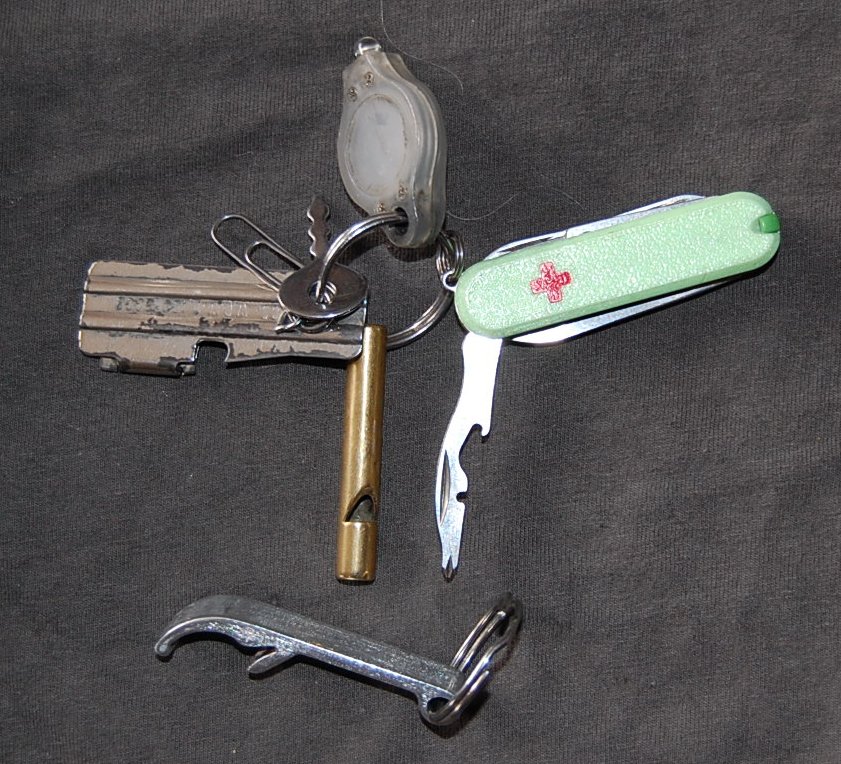
This was a split ring that rode on his keyring. On that ring was a Photon II LED light, a 58mm Swiss Army knife, and a P51.
I had a quiet chuckle, since I have essentially the same kit on my keyring.

Keyring Tool Kit

My keyring is an unlocked carabiner. Items can easily be added or removed.
It hangs from the ring of the key-hanger over my right front trouser pocket.
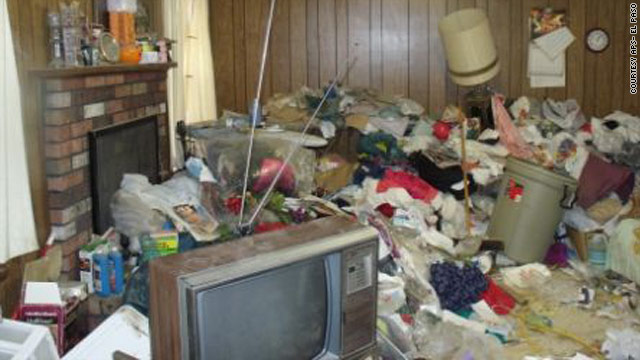
The carabiner itself is a useful tool. I recently used it as a handle for an overly filled shopping bag.
Keyring Tool Kit for EDC
P51, Photon light, SAK Rambler and whistle above the bottle-opener

Whistle

The most obvious difference is that my keyring kit also includes a whistle.
This is a thin brass tube that came with a cheap hollow-handled survival knife my brother had back in the 80s.
Technically speaking, it is better to have a non-metallic whistle for if temperatures drop below zero. Very cold metal sticks to flesh. (I have a number of plastic whistles with other items of gear such as the soft-core pack and German Army parka.)
I stick with the brass whistle on my keyring, since I have not encountered a non-metallic whistle that is as compact. If the inside of my trousers get that cold it may be too late to whistle for help.
If I really needed a keyring whistle for arctic conditions, I could probably make one from wood or scrap plastic.

Light

My Photon light is a knock-off, since I am a cheap bastard and got about a dozen for a fraction of the price of an original.
Gave some of those to friends.
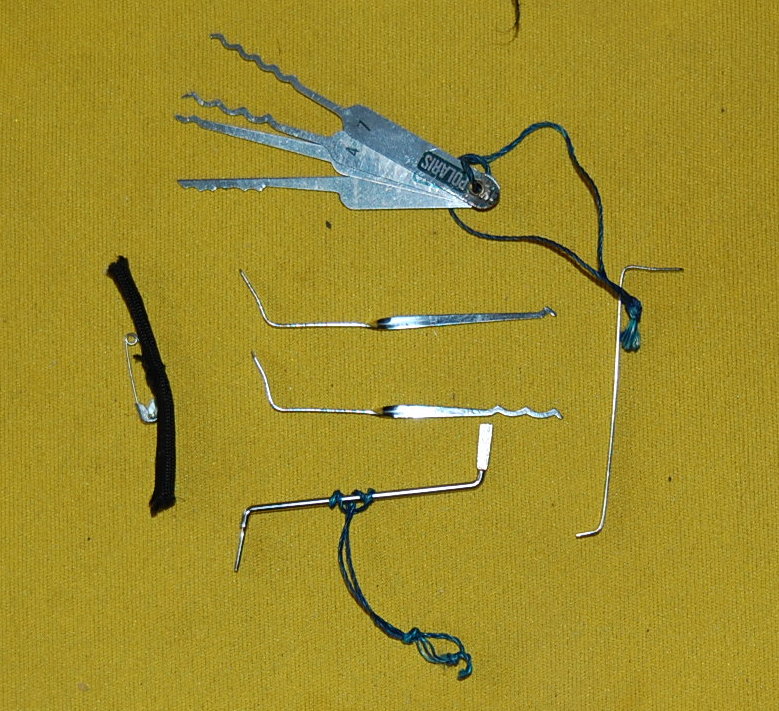
Another is with my lock pick pouch.
The remaining lights give enough spares and batteries for mine to last me decades.
That said, my pseudo-photon still lights with its original batteries, and must be at least ten years old.

Rambler Swiss Army Knife

My keyring has a 58mm Swiss Army knife, and some readers will know I recently replaced my old Classic SD with the Rambler.
The Classic SDs are great, but I really recommend the Rambler.
The Rambler comes with the 58mm version of a combo-tool. This has a wire-bender/stripper, cap-lifter and magnetic Phillips screwdriver.
Capability to handle Phillips‑head screws is one of the few shortfalls of my SAK Ranger. The 3 mm screwdriver on the can opener can handle some Phillips screws, and the point of the nail-file might work.
My mini-Leatherman has a short, flat pointed tool that is intended for Phillips screws.
However, some screwheads are at the bottom of narrow screw wells.
The Rambler has a 3D Phillips screwdriver that has more reach and is better suited to narrow places than the Ranger and mini-Leatherman tools. The Rambler Phillips works with the tiny screws in the photon light.
The Rambler works with the Ranger in much the same way my Mora and kukri do.
The Rambler is easier to get at than the Ranger, so gets used for most jobs, which generally do not need a larger knife. Using the Rambler instead keeps the Ranger in good condition for when it is really needed, and decreases the chance of the Ranger getting lost.
The Rambler gives me two screwdrivers, scissors, a nail-file, a small blade, a bottle-opener, wire‑stripper/bender, toothpick and tweezers.
If I choose to carry a knife other than the Ranger, the Rambler on my keyring means I still have available to me some of the most useful capabilities of a penknife.
Being on my keyring, the Rambler and the other tools on the ring are readily available and immediately to hand. Thus, they see more use than items in pouches, pockets, or tucked in wallets.
Being with your keys, this is the tool set you are most likely to have with you when you need a tool.
Tools left at home in a cupboard or in your truck are not so useful.

P51 Can-Opener

The final object on that split-ring is a P51 can-opener. You can open a can with a Rambler/Classic SD, but a P51 is easier.
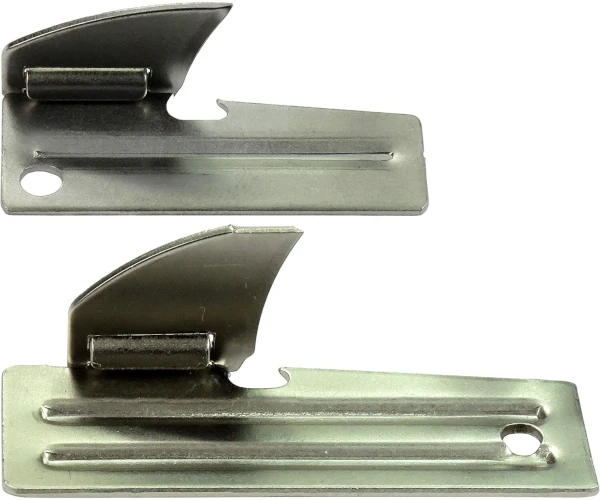
The P51 is the bigger brother of the famous P38 mini-can-opener. Some jobs were too much for the little P38, so the P51 was created.
Contrary to what you may read on many websites, the basic design dates back to at least 1924.
The P38 is about 38 mm/1.5 inches long, and has a hole in one of the “top” corners. The P51 is about 51 mm/2 inches long and has its hole at the bottom end.
P38 and P51 Can-Openers
Of the two types, I recommend the P51, since it has more leverage and is less fiddly, for a barely noticeable increase in size.
If you find the hook blade tends to catch on things, wrap a few centimetres of duct tape around it. The duct tape itself may prove useful.
There are whole webpages describing the various uses a P38/P51 may be put to.
Some of my favourites include:
Pry-bar suitable for opening paint tins and similar
Improvised screwdriver
Box cutter/letter opener
Fingernail cleaner
Measuring gauge
Improvised fishing lure
Scraper for ice
May be easily modified into a ferro-rod striker.
The P51 covers many of the applications that the Rambler does not.
For some jobs it is quicker to bring the P51 into action than to unfold a SAK blade.

Bottle-Opener

On its own ring on the keyring is a bottle‑opener.
The Ranger has a bottle‑opener, the Rambler has a bottle‑opener. The mini‑Leatherman has a bottle‑opener. With a little fiddling, I have opened bottles with the P51. Why do I need yet another bottle‑opener?
A while back I was at a party. Plenty of beer bottles, but bottle‑openers were in short supply.
I lent my Swiss Army knife to some people, but this made me nervous.
Several times have I lent items out and they have proved so useful they were never returned.
I added a “loaner” bottle‑opener to my keyring so in future I would not have to offer more prized tools. It is also quicker to use than the penknives, since nothing needs unfolding.

Other Items

A couple of other minor items may also be found on my keyring.
A paperclip is a useful bit of wire with several possible uses. Push resets of electrical devices. Eject stuck DVDs and computer discs. Can be used to shim or pick handcuffs.
There is a little key from a luggage padlock. This can open many small warded locks.
There is also a short length of insulated wire to bridge electrical circuits.

Conclusion

So there you have it.
One split ring, four(ish) tools.
A tool kit that will nearly always be with you and offers a wide range of useful capabilities.
This is a very good starting point for creating your EDC. Add some cordage and a lighter to your pocket and you have taken a big step in the right direction.
Procuring these items will not break the bank. Adding such a kit to your keyring is within most people’s means.
Categories
Phillosoph

Survival Library: Chapter 10, Swiss Army Knives

About a week ago, I posted the second part of “Knives You Need”, discussing Swiss Army Knives.
Since the first version went up, I have added more links and more content.
The pocket clip for my Swiss Army Ranger arrived, so I have posted an additional image of the new scales with the clip installed.
Customized Swiss Army Ranger with pocket clip
I have also put a few additional modifications on the page.
For today’s chapter of Survival Library, it seems appropriate that I look at two books that look specifically at the use of Swiss Army Knives.

Whittling in the Wild

Cover of Felix Immler's Whittling book
If you are interested in Swiss Army Knives, you will have encountered videos posted by Felix Immler. Most of the links from my previous blog are to videos by Herr Immler, and for good reason.
There is a lot of rubbish on Youtube, but people like Felix Immler are a welcome breath of fresh air!
Immler has written several books on the Swiss Army Knife, but I have only been able to find a copy of “Whittling in the Wild”. It may be found under variations of this title such as “Victorinox Swiss Army Knife Whittling in the Wild”.
Felix Immler has apparently done a lot of work encouraging young people to experience whittling and create objects for themselves.
Most of the projects in this book are toys, fun‑stuff or curios. This is not the book to teach shelter construction or how to make a better rabbit trap. However, within these projects are many construction techniques that might be put to other uses, so they are worth a browse.
The book is worth reading just for the sections on safely using your Swiss Army Knife and basic handling techniques.
If you have young people you want to teach to use a knife safely and creatively, this is an ideal book. Many of us longer in the tooth and barer in the pate may learn a thing or two too!

Swiss Army Knife Camping & Outdoor Survival Guide

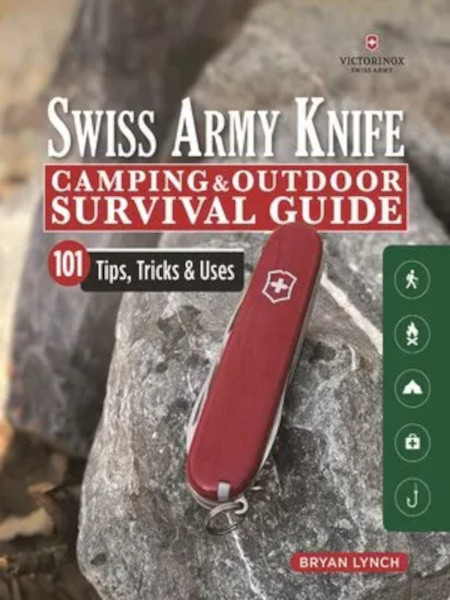
Cover of Bryan Lynch's Swiss Army Knife book
The second book is “Swiss Army Knife Camping & Outdoor Survival Guide, 101 Tips, Tricks & Uses” by Bryan Lynch.
Part One of the book mainly looks at a variety of knife models from Victorinox, ranging from the 58mm Midnight Manager to the SwissChamps and several of the locking blade models.There is a nice chart comparing the models included in the book.
To my mind, this selection misses out some of the more humble, but more useful variants such as the Climber, Compact, Huntsman and Ranger.
Swiss Army Ranger
Part Two is a nice section on safely using and maintaining your knife, including sharpening tools such as the wood saw and the chisel.
Part Three is on using your Swiss Army Knife in the wilds.
One oddity of this section is the author states that the distance of an arm‑span, fingertips to fingertips, is “roughly 5 feet (152cm)”.
Generally, the arm‑span is taken to approximate an individual’s height. For me this is bang‑on: distance from the centre of my chest to finger tips is exactly half my height.
The author later mentions that he is “a little on the short side”. The quick measuring scale he illustrates will not apply to the majority of readers. As he himself states “Obviously everybody is different, so premeasure your own limbs”.
Most of this part are presented as “projects” with an estimated time. Most of the projects are survival ideas that will be familiar from other sources.
Many are nicely described, and include the occasional less‑well known idea, such as the fire‑plow. Wilder has a nice story about someone using a fire‑plow, but I have seldom seen mention of this device in other publications, although it is included in some versions of FM 21-76/3.05.70 and the SAS Survival Handbook.
There is a suggestion about carrying wire wool under the corkscrew. I wonder if contact with the corkscrew will encourage the wire wool to rust, which makes it even less useful for firelighting. It is not a particularly good tinder for non‑electric sources of ignition. Some Swiss Army Knives have an LED. Can steel wool be ignited with the batteries for these?
There are far more useful things to carry than steel wool.
When using the back of the saw or some other tool with a ferro‑rod, it is more effective to draw back the ferro‑rod while placing the “steel” on the tinder.
I liked the section on carving wooden fish hooks from branched twigs.
The author talks about “catch and release” sport fishing.
Some mention might have been made that the paracord net described (or any net made with knots) will damage fish and should only be used for emergency or sustenance fishing. Similarly, wooden gorges as hooks are very cruel, often illegal, and should only be used in genuine emergencies.
While fish trapping with a bottle is mentioned, there is no mention of trot‑lines, which are likely to be more efficient than active fishing in an emergency.
There is a useful section on how a Swiss Army Knife may be useful for firearm maintenance and cleaning.
I also liked the tip on making a squirt bottle for cleaning out wounds. Yet another use for the sometimes maligned reamer! A bottle with a drinking nipple can probably be used the same way.
There is a lot of wasted space in a vehicle, and I urge people to use it.” Good advice, although I would stress having something like a rain poncho, duct tape, vehicle tools and a sleeping bag or poncho‑liner.
Imagine attempting to repair your vehicle in very bad weather. It will help to have a means to keep the rain or snow off what you are working on.
In the “Urban” section, the author describes getting locked in a washroom cubicle. Similar happened to me in the toilets of a very famous museum. Like the author, I used my Swiss Army Knife to dismantle the lock and free myself.

Summary

In summary, I liked both of these books. Each is worth a read. I was lucky in that I was able to read both of them together.
There is a good possibility that when you really need a tool, your EDC Swiss Army Knife may be the only tool available. These books provide a nice reminder that you are better equipped than you might fear.
Categories
Phillosoph

Knives You Need: Part Two, Swiss Army Knives

“Til I woke up dry beneath the African sky
Just me and my Swiss Army knife”
“Last Mango in Paris”, Jimmy Buffet
I had originally planned to make “Knives You Need” a two‑part series.
I have now had second thoughts.
The second part was going to address the topic of field knives. Much of it would have repeated ground already covered in other previous articles.
Instead, I have decided to take a slightly different angle and have decided to break this topic into smaller, bite‑sized pieces.
Many of you reading this may have spent good money getting yourself a survival knife. Good tools are important, you will get no argument from me on this point.
However, unless you spend all of your time in the great outdoors, the odds are that when you really need a tool, that survival knife will be back at home or in your car rather than on your person.
What is more, the tool you actually may need may not actually be a knife.
If you are willing to spend hundreds of dollars on a survival knife, is it not sensible to invest a little in the tools you are most likely to carry with you every day?
It is no secret I am a big Swiss Army Knife (SAK) fan.
Multi-pliers and lock knives will be covered at a later date.
Today, I want to cover some of the points I did not make in my previous article on SAKs.

Safety First and Always

Critics of the Swiss Army Knife point out that the blades lack a locking mechanism and potentially may close on the fingers of the user.
In practice, I have seldom had this happen. Perhaps penknife users are more cautious due to the lack of locking mechanism?
Mechanisms fail, so a lockknife that is mistakenly used like a fixed blade may be a greater potential risk.
There are several websites that give advice on safely handling and using penknives. Many of these are written for scouts, but many older users would probably benefit from putting these ideas into practice.
I recently read of someone who did have a blade close on them. They accidentally hit the back of the blade against a nearby wall.
This might have been avoided if the user had taken the precaution of extending an arm and checking for clearance around themselves before starting at task.
This is a prudent procedure for any tool use.
If using a long tool like an axe, hold it at full extension and check all around you. Do not forget to check for obstructions above and below you too.

The Penknife Grip

When using a folding knife, use what I call “the penknife grip”.
Safe way to hold folding knives.
Your four fingertips are pressed against one scale. The opposite scale is held by your thumb and themar eminence. This keeps your precious digits out of the way of the main blades. This is the way to hold your penknife when opening tools.
When you need to close a tool, hold the knife in the same way and place the palm of your other hand on the back of the open tool. Calmly and smoothly fold your hands together to close the tool.
Many actions can be performed with your knife held in the penknife grip, keeping you safe should a tool unexpectedly close.
Some tasks will require a grip with your fingers around the knife body. Ensure a solid object, such as what you are working on, obstructs the tool from closing and that any pressure is applied in the correct direction.
Never use force to compensate for a blunt tool!
Never cut towards a body part, including your own. This simple and sensible precaution is often neglected in Youtube videos!

Right Tool for the Job

The risk of injury may be reduced by using the right tool for a job.
The long knife blade and saw-blades probably have the greatest potential for causing injury.
If you need to cut something, the short blade or the scissors are usually more appropriate.
If you need to bore a hole, use the shorter blade or the reamer.
If you need to pry, use the can- or bottle-openers, or better still use a more appropriate tool that is not your penknife.
In the pouch I carry my penknife in, I also carry an eight centimetre-long flat pocket pry bar. On my keyring, the P38 may be used to pry or open paint tins.

Classic SD and Rambler

On my keyring, I have a 58mm Classic SD.
It is handy for trimming my nails or other minor jobs that it is not worth getting the main Swiss Army Knife out for. It actually sees a lot of use since it is the first tool I usually reach for.
The Classic was donated by the lost property box. It originally had green cracked scales and was missing its tweezers.
A few years back, I treated myself to a new toothpick and tweezers, which had recently become available in green.
Recently, it occurred to me how shabby the cracked scales looked. I would need something that matched the green of the toothpick and tweezers.
I found a set of replacements at a tolerable price. What was more, the new scales were in luminous green.
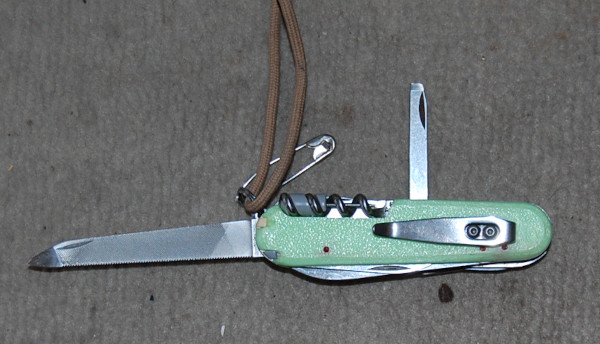
Swiss Army Knife Classic SD with luminous scales
Classic SD with luminous scales. Note whistle, P51 baby can-opener and Photon-light also on keyring. The safety pin is attached directly to the Classic SD. I have now removed the safety pin since it had a tendency to open while the keys were in my pocket.
The Classic is a single-layer SAK with a small blade, a pair of scissors and a nail file. The tip of the nail file of the SD model is designed to act as a screwdriver. Some users grind the end to create a wider slot screwdriver. Some reviewers complain that the file no longer ends in a pointed nail cleaner. The screwdriver tip is still good for cleaning nails.
The Classic SD is one of Victorinox's most popular best sellers.
A friend showed me the 58mm Rambler, which is a two-layer SAK with all the blades of the Classic SD plus an interesting combination tool with a cap‑lifter, magnetic  #00/#0 Phillips screwdriver and wire‑stripper/bender as well. I will likely buy a Rambler  if I ever need to replace my Classic SD.
(Update: I have no willpower! I brought a Rambler and transferred the luminous scales on to it. This now rides on my keyring.)
The Manager is apparently a Rambler that replaces the toothpick with a retractable pen. The Midnight Manager is a Manager that replaces the tweezers with an LED. I have heard this light is not waterproof.
There are other 58mm models, but I feel the Classic SD or the Rambler are most useful.
I do not see much point in a 58mm model without scissors.
One oddity in the 58mm models are the bladeless Jetsetters. Supposedly airliner “cabin-safe”, this ignores that the scissors are probably a more practical weapon than the blades of 58mm models. The wirestripper on the combo-tool will not work without a blade.
If you intend to have a 58mm as your primary EDC knife, the MiniChamp may appeal. The extra tool that most appeals to me is the cut and picker
Some may find the MiniChamp may be a bit bulky or heavy for keyring carry. A friend of mine has an alox version and considers it a little heavy for his keyring. Pocket clips for 58mm models may be found, but I do not use one myself.
Incidentally, SAK with Alox scales generally do not have tweezers and toothpick slots. I would recommend only considering models that have these useful tools.
I could not get the sharpener trick to work with a Rambler. The central layer divider makes the slot for the file too snug.
The Rambler nicely complements my Ranger, most notably in that it gives me a Phillips screwdriver that can reach into tight places.
The P38 or P51 can-opener is another good addition to your keyring, btw. It is a useful prying tool, among other functions.
I have now taken the safety pin off my Rambler. When worn on a keyring the safety pin will sometimes open in my pocket.

84mm Swiss Army Knife

Victorinox makes a number of 84mm models.
For those looking for a light, low bulk EDC knife, some of these are worth looking at.
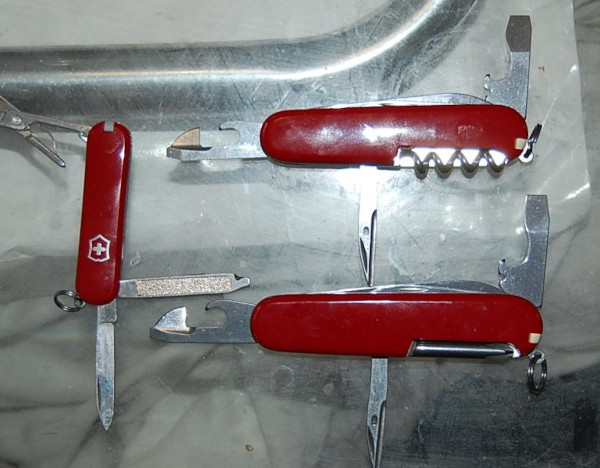
58mm, 84mm and 91mm Swiss Army Knives
58mm, 84mm and 91mm Swiss Army Knives (Classic SD, Sportsman, Tinker)
Unfortunately, the models that include scissors have been discontinued. This may not be a problem if you also carry a Rambler or Classic SD.

91mm Swiss Army Knife Models

When it comes to “full-sized” (91mm) Swiss Army Knives, Victorinox currently offers 28 different models.
For general use, survival, emergencies or EDC (Everyday Carry), I would suggest one of the following models:

Spartan

As one might expect from the name, the Spartan is the most basic model of the 91mm Swiss Army Knives. Apparently it remains one of their best sellers.
It is a two‑layer knife, so you get a large and small knife blade, plus the can‑opener and the bottle‑opener. On the back is the reamer and the corkscrew.
Knife blades are quoted as 58 mm and 36 mm in length, with a hardness of RC 56. My own measurement gives a cutting edge of around 60 mm, with the distance from tip to knife body being greater. A 91mm Swiss Army Knife complies with the 3 inch/76 mm blade length restrictions some areas impose. This figure was probably chosen so that SAKs were exempt!
If you want a two-layer knife, the Compact or the 84mm models such as the Sportsman  or Tourist are worth considering. Slimmest option is the Bantam in Alox.
While on the topic of smaller knives, this video suggests a 74mm Executive for EDC, but they have been discontinued. 
The applications for the knife blades are fairly obvious. Quite large pieces of wood may be split or removed by using techniques such as batoning.
The knife blades are sharpened at an angle of 20 degrees.
The X-notch is useful for construction of rabbit stars.
The X-notch is an alternative to the square or log-cabin notch. It may be created by saw cuts or batoning a knife blade
The bottle-opener and can-opener are collectively referred to as the “opening layer”. Both the can-opener and the bottle-opener have applications that may not be immediately obvious.
The 58mm Rambler has a tool with a magnetic Phillips screwdriver. Oddly, the screwdrivers on 91mm knives are not magnetised. My bottle opener is weakly magnetic and the can opener more magnetic, but that may be due to the magnet I keep in them.

Bottle‑Opener

The notch on the bottle‑opener/cap‑lifter works together with the cutting blade to serve as a wire-stripper. The notch may also be used as a wire‑bender or nail‑puller. It may be used as a striker for small diameter ferro-rods.
The notch may be modified for increased wire-stripping utility.
Various other parts of the bottle‑ and can‑opener or the keyring eyelet may be utilized bending wires or similar materials.
The tip of the bottle‑opener is a large (6 mm) slot screwdriver. This will fit in a socket heads adapter should you need another type of screw head. The screwdriver tip may also be used as a light prying tool.

Can‑Opener

The tip of the can‑opener is a small (3 mm) slot screwdriver. What is not often appreciated is that this part is also intended to work with Phillips screws too. The tip may also be used for light prying, such as opening stubborn pistachio nuts.
I sometimes use the screwdriver tips as measuring gauges to estimate if something is 3 or 6 mm .
The hook part of the can opener may also be used to cut tape on boxes. Felix Immler has a video on how to turn this part into a more efficient hooked cutting tool. Some alternate examples of sharpened the unsharpened edge to improve string and box-cutting capability.
This can-opener may also be used as an orange peeler or a billy lifter.
One of my favourite uses for this tool is that it can be used to carry a 5.7 mm magnet. The magnet is useful for picking up or holding secure small screws, or magnetizing a pin, tweezers, safety pin or needle for navigation.
The can-opener on its own is now magnetic. Interestingly, the bottle-opener on the same layer is also weakly magnetic.
I have taken to alternating storing the magnet between the bottle-opener and can-opener to increase the effect. The main blade and scissors are now also magnetic, and the hook weakly magnetic.
Another way to get a magnet. 
Check to see if the pin in your penknife scales is actually magnetic.

Corkscrew

My main use for the corkscrew is to carry the 1.5 mm mini‑screwdriver.
The mini‑screwdriver is an essential for anyone who wears spectacles or even sunglasses. Not all SAK come with the mini‑screwdriver. I very much recommend acquiring one.
Not surprisingly, all the SAKs I recommend for EDC have corkscrews so you can carry a mini‑screwdriver.
The mini‑screwdriver may be used as a tiny prying tool to pop the back off a watch and to remove the battery. It may be used to drive out small pins, and may be used this way when replacing the spring of the SAK scissors..
Imaginative other uses for the corkscrew include bending wire, untying knots, suspension point from cord, use as a drawing compass, rawplug retriever and as a parcel carrier for penknives that lack the multi‑purpose hook.
Cotton wool may be wrapped around the corkscrew to serve as a source of tinder, or it may be used to carry a supply of fishing line.
There are other alternate tools designed to fit in the corkscrew, including the Fireant, a tiny ferro‑rod. Larger diameter ferro‑rods may be cut down to fit within the corkscrew.
Alox handled variants may lack the corkscrew and other back-tools.
I have glasses, so carry the mini‑screwdriver.
Note that the Spartan, Climber, Camper and Huntsman have an equivalent that replaces the corkscrew with a #2 Phillips screwdriver. These the Tinker, Super Tinker, Hiker and Fieldmaster.
Trivia: MacGyver did not drink, and many of the penknife models he used in the series lacked a corkscrew.

Reamer

The reamer is another very versatile tool. It acts as an awl, a scraper, a punch,  a seam‑ripper, wire‑stripper, wire‑bender and a threading tool.
The reamer is very useful for creating pilot holes for a drill bit or gimlet. It may be used to clean up or bevel a hole you have bored.
A bit of trivia: when your reamer needs resharpening, it should be sharpened at 48 degrees.
84mm and 91mm Swiss Army knives share the same component for their reamer.

Scale Tools

Scale tools usually refers to the tweezers and toothpick. Some models have additional items such as the ballpoint pen or pin.
Some tools you will not use often, but will be very pleased you have them when you really need them. This may include the tweezers or toothpick.
Some models, such as those with Alox handles, lack the tweezers and toothpick. The tweezers in particular are worth having, and the toothpick has also proved useful to myself.
There is a neat trick of using the split-ring and the tweezers together to form a little clamp or vice.
Even if you do not own a Swiss Army Knife, the tweezers are a useful thing to have in your medical or emergency kit. They are hard to beat for compactness and functionality.
Trivia: Tweezers for the 58mm and 91mm models are of similar size, but differ in the shape of the head.

Toothpick Tick Removal Tool

Compact, Companion and Climber

A friend of mine likes his Compact Swiss Army Knife. Unlike many Swiss Army Knives with only a few layers, the Compact includes the pen and mini‑screwdriver.
The Compact is a two‑layer knife like the Spartan but replaces the small blade with the scissors, and the reamer with the multi‑purpose hook. Instead of the cap‑lifter and can‑opener, there is a single “combo‑tool” that serves as a 6 mm screwdriver, can‑opener, cap‑lifter, wire‑stripper, emergency Phillips screwdriver and wire‑bender.
Personally, I think the reamer is a “must‑have”.
The Compact apparently evolved from the 84mm Golfer. An 84mm version of the Compact would be nice, especially if they replaced the long nail file of the Golfer with a reamer.
The Companion is a three-layer SAK that replaces the can opener with a box-opener. Oddly, the box-opener was not paired with the combo-tool to keep can-opening capability. Lots of other SAK tools serve as box-openers, including the small blade, scissors, reamer and can opener.
The Climber is a three‑layer version of the Spartan, adding the hook and scissors and retaining the reamer and small blade. The same tool selection was available in an 84mm Climber Small model/Alumnus, but it is sadly no longer in production.
The 74mm Executive is comparable to the 84mm Climber, but also out of production.
For a minimal bulk, “city carry” EDC knife, the Climber is a good choice and very good value for the tools and capability it offers.
The Camper is a Climber replacing the scissors and hook with a wood saw.
If I had to make a choice, I would choose the scissors over the wood saw.
The Explorer is a Climber that adds a magnifying glass and in-line #1/#2 Phillips screwdriver. If you now find it difficult to read labels in the shops, the Explorer may be a good alternative to the Climber.

Scissors

Keeping your toenails trimmed is an important part of looking after your feet (and socks). The Swiss Army scissors are excellent for such applications. Better than many purpose‑designed items!
The SAK scissors are widely regarded as being the best available on any multi-tool. You probably own dedicated scissors that are not as good.
The scissors are also surprisingly robust, being quite capable of cutting through soda cans and tin can walls to construct various items.
The scissors are probably the Swiss Army tool I have used the most, and I suspect I am not alone in that.
I regard the scissors as a must‑have feature on a Swiss Army Knife.

Multi‑Purpose Hook

If I recall correctly, the multi‑purpose hook was once called the “parcel hook”, being intended to hook though the string of a heavy parcel or bundle of firewood and let you use your penknife as a handle.
The hook is rated for 90 kilos/200 lbs of load!
The hook is often underappreciated, since there are many other applications for this item. These include being used to untie a stubborn knot, twisting materials to make natural cordage or an eyelet in wire, lifting hot billies or their lids, pulling stuck zippers, as a pen holder, retrieving tent pegs, and tightening lacings.
Some hooks have a nail-filing surface on the back.
The hook may be used to store a 3 mm magnet.
Check out some of the videos on‑line for more applications.
There is even a modification to turn the hook into a groove carving tool. Worth considering if your penknife is a dedicated whittling tool. Putting a cutting edge on your hook may make it less effective at some of its other applications.
Trivia: The hook and scissors will be mounted on the same layer. If your 91mm knife has one tool, it will have the other too.

Huntsman

The Huntsman is another of Victorinox’s best sellers.
Effectively, it is the Climber with a woodsaw blade to create a four‑layer model.
A Huntsman will cost approximately twice what you might pay for a Spartan. Prices vary a lot, however, so shop around!
For “bushcraft” and “woodcraft” use, the Huntsman is a really good choice, having both the scissors and a wood saw. A saw is a handy thing in the garden too!

Wood Saw

Many traps and other items you may wish to construct may require accurately cut parts.
The wood saw is also useful for scraping bark off, creating sawdust or shavings for tinder, descaling fish, and may be used as a striker for a ferro‑rod.
Take a look at this video on using the wood saw and a tip on waxing it.
Trivia: The wood saw is one of the few commonly used SAK tools that lacks a nail‑nick

Ranger

My own 91mm SAK model is a five‑layer Ranger.
Oddly, the original scales of my Ranger have “Camping” and a tent logo. Several models of SAK other than the Camper have this decoration.
Swiss Army Ranger
The Ranger is the Huntsman with the addition of the metal saw/file. It also has a chisel blade and a 2.5 mm fine screwdriver on the back, so three additional tools than the Hunstman.
I have found the metal saw useful, so will choose a Ranger over a Huntsman.
The chisel is useful when forming notches in wood, and may be used as a plane/scraper.
A Ranger will cost approximately two and a half times what you might pay for a Spartan. As I have already said, prices vary a lot, so shop around!
Secret Functions

Metal‑Saw/File

I once had to cut down the bolts on a rucksack frame since they were digging into my back and damaging my shirt. Not surprisingly, I like having the metal saw/file available.
The metal saw is better than the wood saw for cutting some plastics and for some wood‑cutting tasks.
It is also a good striker for a ferro-rod. Keep the saw still and pull the rod across the back.
The file may be used sharpening improvised fishing hooks.
The tip of the metal saw may be used as a Phillips screwdriver or nail-cleaner. It may also be used with a socket.
Trivia: 91mm Swiss Army knives with the metal file will also have the chisel.
Since the seven‑layer Champion was discontinued, the Ranger is as big a Swiss Army Knife as I care to consider carrying. I don't really want something over three centimetres thick!
I never found much use for the hook‑disgorger and descaler on the Champion.
I liked having the Phillips screwdriver and magnifying glass. As I get older, I can find even more uses for the magnifier.
If Victorinox were to offer a six‑layer version of the Ranger (“Ranger Elite”?) with an inline Phillips and a magnifier, I might be tempted.
I regard the Ranger as the optimum of 91mm models.
Some may wish for something thinner for EDC.
Personally, I have used the Ranger's extra capability on several occasions when travelling or off the beaten track.
My Ranger has been with me several decades now. It will probably outlast me.

Pimp my Penknife!

A couple of modifications have been made to my Ranger over the past few years:
One of the first things I did when I brought my Ranger was add a mini‑screwdriver to the corkscrew.
Later, I added a magnet to the can‑opener and fitted a pin to the scales.
A sewing needle, wrapped in invisible thread, has been placed under the metal saw.
The tweezers have been modified to be pointed. The tweezers with my Classic SD/Rambler are unmodified, so between the two knives I have both a pointed and a standard configuration set of tweezers.
A small hole has been melted in the toothpick so that it may serve as a blunt needle to thread cordage such as dental floss.
Using the small blade of the Ranger, I made a tick removal tool by cutting a slit in the end of the toothpick. I am most likely to use the toothpick in my keyring SAK if something is stuck in my teeth.
Both the toothpick and the pointed tweezers with the Ranger may be used against ticks.
A distance of 5 mm and 57 mm is marked on the rear handle scale.
A safety pin has been added to the split-ring.
A second hole was drilled in the new scales to hold an unthreaded additional sewing needle. The pin proved to be poorly magnetic, so I replaced it with a bead-headed pin that was more magnetic and easier to remove.
Swiss Army Knife Ranger fitted with luminous scales
Old Ranger with new luminous scales. Note magnet carried in can-opener.

New Scales!

I liked the new scales on my Classic SD so much, I went ahead and brought a matching set for my Ranger. I kid myself this will make it less likely to lose in Autumn.
Check out the video on how to use warm water to remove the old scales without damage.
Generally, I like my kit “low-key”. The SAK is an exception, since it is not really a tactical nor defensive item. It is, however, valuable in both replacement cost and in utility as a resource. Thus I like that the new scales make it easier to see and hopefully less likely to lose.
Check out this modification, however, since it may be applicable to other knives and tools. So might this idea!
The new scales are “plus” scales, so have additional carrying places for a pin and an SAK pen. I drilled another well for a second pin. I later discovered the pins I have are not magnetic, so I replaced the first pin with a small, unthreaded needle that is magnetic.
As well as being luminous, the scales have some nice texturing for improved grip.
The larger 91mm scales were a bit harder to fit snugly compared to the 58mm for the Classic SD/Rambler. I had to use a vice.
Do not forget to pad the jaws of the vice so you do not damage your new scales!
Slots for the scale tools were very snug for both sizes of scale, making the tools difficult to remove. I used a circular needle file to create a small scallop underneath which solved the problem. Overdid it a little on the toothpick for the Ranger , but adding some “White Tack” to the slot solved that problem.
The Ranger has been fitted with a loop of beige bootlace about 14 cm long. So too has my mini‑Leatherman Squirt P4.
Both tools ride in a mobile phone belt case with cut‑out bottom corners.
The loop of cord is passed down through a corner and then the tool passes through the loop to form a lark’s head knot. Even if the top of the pouch pops open, the two tools cannot be lost.
The loop is also large enough to pass around my wrist or hook my thumb through for added security when using the tool. The safety pin may be used as a pin or clip to secure the tool to clothing or D‑rings.
I have also to fitted a pocket clip to the Ranger, giving me another option when I need my hands free.
Customized Swiss Army Ranger with pocket clip
The pouch mentioned above is on my trouser belt. If I am wearing trousers, I have my Swiss Army Knife and mini‑Leatherman with me. I will also have my keys, so will have my Classic SD/Rambler available too.
The belt pouch also holds the aforementioned pocket pry bar and a diamond‑impregnated metal sharpening card.
See here for an alternate sharpener idea.
The few jobs the Ranger is not suited for, the mini‑Leatherman or pry bar can usually handle.
If this collection of tools cannot handle a job, they may often be capable of making something that can.
The tools form a component of the EDC kit I have distributed across my keyring, trouser pockets and compact pouches on my trouser belt.

Summary

For EDC, I prefer a Swiss Army Knife to include scissors, a reamer and corkscrew/mini-screwdriver.
My personal choice is the Ranger and Rambler. I carry my Ranger in a belt pouch. Previous knives have worn through a few pockets over the years.
If you want something more pocket-friendly and more compact, there is the Compact, Companion and Climber. All have similar capabilities, with the Climber possibly being best value.
For an even lighter option, Sportsman, Waiter or Bantam. 
The Swiss Army Knife is the tool you are most likely to have with you when you need a tool. It is worth spending a bit of money to get one you are happy with.
That said, the web currently lists the Victorinox Ranger as $75, with the lesser bladed models at correspondingly lower prices.
Given the very high quality of Victorinox knives, that is a pretty reasonable price compared to the prices of some other folding and fixed blade knives.
Categories
Phillosoph

Rucksack Packing

My previous article was on taking the foundation survival items to the next level.
Having given you a list of items that you might need, some comments on how to carry it were logical.
It is always prudent to get some different views on a subject, particularly if it is a subject you feel you are already familiar with. Even after my many decades, I occasionally I pick-up a new idea, such as using a sandwich box to carry a wash kit!
And so, I find myself browsing videos and webpages on rucksack packing.
There is no single right answer, but a couple I encountered do stick in my mind.
One character starts by producing a waterproof bag. This is one of the expensive drybags that cost more than a reasonable takeaway:
“These are my waterproofs! Always keep them in a drybag!” they tells me, very proud of themself.
Why?, I ask the screen. Are you worried that they might get wet, or is it to stop them drying out once they are wet?
If it is raining heavy enough to penetrate the rucksack, I want to be wearing the waterproofs, so a bag to keep them dry is redundant. Once they are actually wet, I will be stowing them somewhere on or in the rucksack where they can drain and dry.
Nit-pickers will doubtless waste time thinking of rare scenarios where having the waterproofs in their own dry bag will be valid, but I will move on.
It is not an efficient packing strategy nor use of money that could be better spent on something else.
A lot of rucksack packers have a selection of accessories for their electronic gadgets. I have to marvel that many of them carry numerous flexible electronic cables in hard cases, yet are content to throw expensive and valuable compasses in pockets or soft pouches.
Once I have some funds, I intend to find a rigid camera case suitable for my best compasses. That is a post for another day.
If it is a “72‑hour pack”, why carry boot polish and associated brush and paraphernalia? Freshly polishing boots only adds a little to their water‑resistance, and your boots should not be totally water‑proof anyway.
Air needs to circulate, your feet need to breathe and the interiors need a chance to dry‑out once water gets in over the tops. And you are better advised to wear matt-finish boots in a natural or neutral colour(s).
I can recall only one three week or more duration trip where I bothered to carry boot‑cleaning items. Most trips were to a climate and/or season where canvas or canvas and Goretex boots could be worn.
When carried, my boot cleaning kit was a single brush, can of polish and a shred of rag carried in an old cotton sock. Sock could be used to buff the cleaned boot.
Rather than continue on this vein, I will pass on some useful ideas that I have gathered over the decades.
Firstly, I will suggest a premise:
• Your pack will contain some items that you do not want to get wet. For example, your warm clothing, your bedding, your food etc.
• There are some items that will get wet, and once wet you will want them to dry. This includes parts of your tent, your waterproof clothing, etc.
• There will be some items in your pack that it does not matter if they get wet. This includes water bottles, cooking vessels, canned or pouched food, etc. If the exterior is contaminated by water containing sewage or microbes, that needs to be addressed, but leaving these items out in a quick rain shower would not be a concern.

Bags within Bags

A well thought out bag is a bag of other bags.
No rucksack should be considered to be totally waterproof. Thus, one or more waterproof liners are used to enclose the contents.
Items within these liners will themselves either be in plastic bags or stuff sacks.
You can buy drybags large enough for the main compartment of a rucksack. Some armies issue these, although examples may have gone through many hands and no longer be fully waterproof. Personally, I have never used these.
A heavy-duty plastic sack is a good alternative, and the usual choice before drybags were commonly marketed.
I used to be able to get 100 litre yellow bags from work. The current ones have things like “clinical waste” and “biohazard” printed on them, so not something that may be re-purposed and used in public!
The plain yellow bag I currently use has served on many trips.
Should I need to replace it, I am considering an orange plastic survival bag for the role. This could be cut down to size, or used intact with the mouth partially rolled down. In the latter case, it may still be used as an emergency shelter, or as a signalling panel.
Incidentally, if things turn extreme, your feet may be kept warmer by placing your feet (or the foot of your sleeping bag) into the emptied rucksack. If that bag contains the emptied liner or the end of the orange survival bag, so much the better!
When the tactical situation allows, I highly recommend using a light coloured bag as a liner. It is much easier to find items within a yellow or orange bag than in a black rubbish bag or dark-coloured liner.
There is an obvious niche in the market for sand-coloured plastic liners or drybags. Failing such an item, try a clear bag.
If you expect your pack to see heavy use, it is not unreasonable to “double bag” your main rucksack compartment. When I add the orange survival bag, the older yellow bag will probably be place around it, if it is still reasonably intact.
Similarly, if attempting to cross a river, placing a black rubbish bag or two around your rucksack liner is prudent. A few rubbish bags may be squeezed into the corner of a pack and take up very little room, but can prove useful.
Clear bags are useful in the construction of solar stills or transpiration traps.
I am sure someone will soil their panties over my use of plastic bags. The real issue is the disposal of plastics, not the use of them. I expect my bags to be in use for years, possibly decades.
Some people pack the contents of their rucksacks in colour-coded stuff sacks or packing cubes. Acquiring a suitable variety of colours and sizes may take some effort and expense.
Most stuff sacks are not totally waterproof, so for things you want to keep dry, such as clothes or food, you will probably end up lining the bag with a plastic bag or two anyway.
For many items, you may be better packing them in clear plastic bags and not bothering with a stuff sack.
Clear plastic lets you see what is actually in the bag rather than memorizing stuff sack colours. You may even label the bag with its contents with a marker pen.
If planning a trip or building an emergency or camping kit, I strongly suggest that you stock up on some five‑ or ten‑litre clear plastic bags, such as freezer bags. Avoid getting rubbish bags in “biodegradable plastic”!
Bags that can be sealed watertight, such as “Ziplocs” are an obvious asset.
You should probably invest in a quantity of smaller bags too. These may be used for carrying EDC items or making fire kits.
Items that are particularly vulnerable, or that may cause serious problems if they leak, should be double-bagged.
A range of plastic bags is a much more prudent initial investment than a flashlight that can be seen from the moon!
If your bags do not have sealable closures, avoid overfilling them, roll over the opening and secure with mini-bulldog clips. If you lose a clip, or put it to another use, such as hanging up a survival blanket as a reflector or signal, twist the bag shut and use your cordage in a strangle knot. You may alternately roll the opening and use a piece of duct tape, but this solution may have only limited life.
Stuff-sacks are good for items that do not need to keep dry, such as your frying pan, or stuff you want to breathe and become dry, such as waterproof clothing.
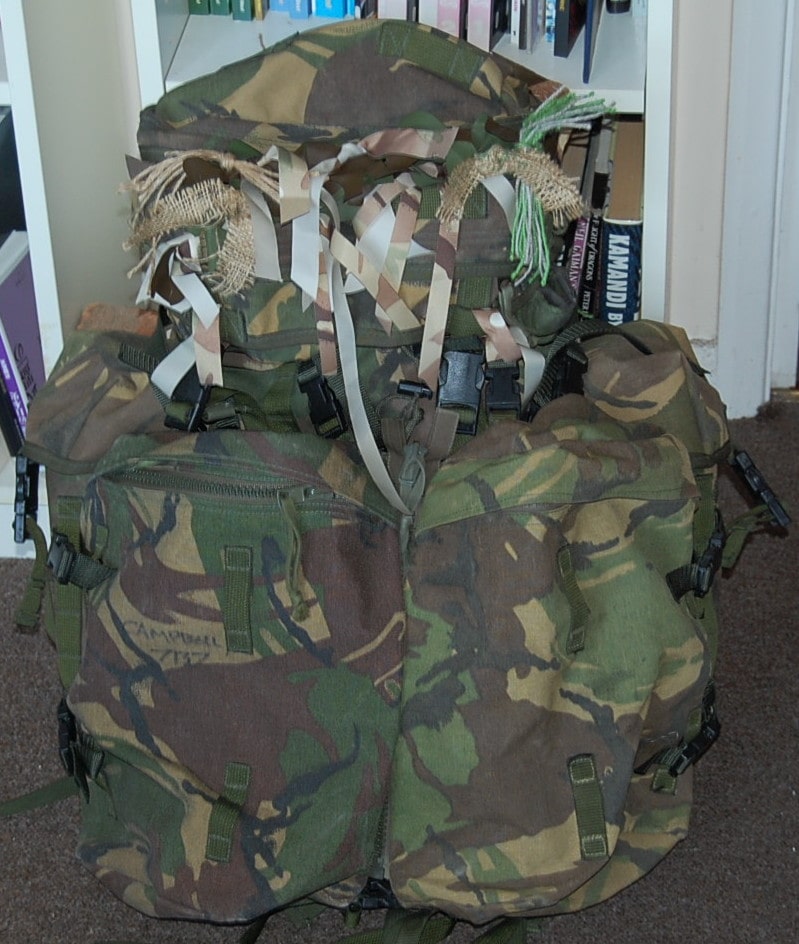
Patrol Pack with Extra Side Pouches

Putting It Together

The above is the “how” of “how to carry items”.
The “where” is based on frequency/urgency of need and on the bulk/mass of the item(s).

Popular High or Outward

Items that are frequently needed, or may be needed in a hurry, are placed where they are most accessible. Such items are often carried in the external pouches and/or lid pocket of a large rucksack.
Smaller items, that might be hard to locate within the main compartment, also tend to get carried in external pockets.
Most large rucksacks would be considerably improved by more external pockets, and more smaller pockets and/or interior divisions to better organize gear!
My favourite hostelling and hotel rucksack has six large external pouches. I knew the water bottle would be in the bottom-left side pouch, my wash kit and towel in the bottom right-side, and my journal and medical kit in the top, front.
I could even send someone else to fetch the medical kit by being able to unambiguously describe its location.
Items that are not so frequently used, or only carried as spares, tend to be placed toward the bottom of the main compartment. You will only need to unpack your sleeping bag once a day, for example, and not until your tent or shelter is erected. The sleeping bag is thus at the bottom of the main compartment.
You do not need your sleeping clothes until your sleeping system is set up, so this clothing will probably be stored under the sleeping bag.
Some packs have the main compartment divided into two sections, often with a removable partition and separate access to the lower section. The lower part is used for your sleeping bag and related items.

Hard Up, Soft Down

A sleeping bag is soft and compressible, which is another reason it is carried toward the bottom of the bag.
Denser items, such as spare water bottles, canned food and cooking vessels are held towards the top of the pack, so their weight helps compress the items below. These items may be needed more than once a day.
Conventional wisdom is that heavier items should be carried towards the top of a pack, and close to the back.
I have seen an alternate view that ammunition should be carried with the sleeping bag in the lower compartment to avoid the pack becoming excessively top heavy. This rather depends on just how much you are carrying.
In general, I would keep the dense items “high and to the back”, but keep in mind the option of redistributing some items if the pack becomes excessively top-heavy. Better still, have a rethink of what you are taking!
I have previously written about what to carry in a daysack, so will not repeat that information here, although some of those concepts will also apply to what items and how you carry them in a “big pack”.
In a previous blog, I explained my use of a soft-core pack, which allowed me to easily transfer a number of useful items between different packs.
In a follow-up, I suggest a similar range of items packed into the detachable side pouch of a military rucksack. This pouch would be worn as a pack when the large pack was not, but when a soldier might still have need of items such as googles, extra water, protective gloves, dry socks, or rain poncho.
The other side pouch would carry CBRN items, and also be carried if such threats were anticipated.
Many modern soldiers carry lots of items on their webbing that are not immediately combat relevant and would be more efficiently carried in a light pack.
A Daysack
On many of my trips, I have ensured there was room at the top of my main pack to carry a daysack. This was packed with most of the items that I might need to hand for a day sightseeing. Many of these items were things it was always handy to have at the top of a main pack, such as a rain jacket, toilet roll and sun hat. Effectively, when the daysack was in my large pack it served as extra pockets.
I could dump my main bag at my accommodation, grab the daysack, transfer across my water bottle and journal, and I was set to see the town.
Some soldiers advocate carrying a “grab bag” of “mission essentials” at the top of their pack. This will contain relatively dense items such as ammunition and communication gear. The idea is that if the main pack needs to be abandoned, the grab bag and its contents go with the soldier.
An extension of this idea is that under the grab bag there should be a bag of “personal admin” gear that may be taken with the grab bag if possible.
Some soldiers already carry an unpacked daysack within or strapped to the outside of their large pack.
It seems to me that the above ideas may be combined with the creation of a daysack that fits into the upper part of an army large pack. The daysack would have an upper section optimized for carrying dense “mission essentials”, and a lower section for “life support” such as 24 to 36 hours of rations, a brew kit, a stove and mess kit/canteen cup.
This “assault pack” would have a compartment for a water bladder and provision to attach the side-pockets of the large pack, holding the contents suggested above.
Which “personal admin” items belong in the small pack and which should remain in the large pack will probably be hotly debated in certain circles and forums!
As is so often the case, I digress! Back to the topic of rucksack packing.
For convenience, I will divide the contents of a large pack into seven generic categories:
• Clothing
• Cooking
• Food
• Water
• Sleeping
• Shelter
• Miscellaneous/Any Other Business.

Clothing

You will probably have several bags of clothing, based on form or function.
Some clothing items may be needed at short notice, other items less often than your sleeping bag. This will influence where in the rucksack you carry these items.
Most of your clothing will be packed into waterproof plastic bags. Several small bags may utilize the available volume better than on larger bag.
“Dirty laundry” I tend to keep in a stuff sack, so that it may air.
Recently washed items such as socks may be tied to the outside of the pack, or held in a mesh bag pinned to the rim of the pack flap. This lets them air dry, and they may be easily slipped under the flap should it rain. Some rucksacks have external mesh pockets which are useful for drying your laundry.
Rain clothing is carried in stuff sacks. My rain poncho will be with my soft-core bag or side-pouch, along with some cordage and light pegs so that it may be used for a shelter.
A rain jacket and trousers, if carried, will be in a readily accessible area such as a side pocket, lid compartment or top of the main compartment. If the storm clouds are gathering, these items may be placed directly under the top flap, above the snow‑lock for immediate access.
Rain items tend to migrate, depending on if they are wet or dry.
If wet, they are generally left unbagged and slipped under the pack flap or strapped to the outside of the pack to dry.
You will probably have a plastic bag for your socks in the main compartment. It is also prudent to have at least one smaller Ziploc bag holding a single pair of socks in a more accessible location. If away from your pack, have a bagged spare pair on your person.
If conditions are bad, change into dry(er) socks whenever you can. Let the wetter pair air dry, bag them if they get dry.
With most clothing, I usually reckon on “wash, wear and spare” unless carrying a lot of other gear, or a very short trip, in which case it is “wear and a spare”.
Expect an unexpected dunking or downpour. Have a drier change of clothing you can change into while your other dries. Wear one set of clothes during the day, then change into the other set for sleeping, letting the day set dry.
Socks are an exception, and it is not a bad thing to have a few extra pairs.
Underwear may be bagged with your socks, or separately. If you are packing an emergency or bug-out bag, you may have several different types of underwear to suit different seasons and conditions. Bag these separately, according to type.
Spare shirts and trousers are carried in the main compartment.
If you carry a spare uniform or set of clothes for sleeping in, bag these separately and stow at the bottom of your bag under the sleeping bag.
You will need a warm jacket or jumper should the weather be colder than expected, and to prevent you from chilling once you cease a hard activity. This should be bagged individually and carried in the main compartment, but above the spare and unused clothing so it is relatively easy to access.
Hats, gloves, scarves and bandannas, if not already being worn, some, at least, should be readily available in a side or lid compartment.
You may need several different types of gloves available.
It is prudent to carry spares of hats, gloves, neck gaiters and the like. These may be bagged in the main compartment if space is needed for other items in the outer pockets.
Most clothing items take up least space if rolled. There will be exceptions to this general rule of thumb, so experiment!

Cooking

Cooking is treated as a separate category to food.
On many of my “city-breaks” I have not carried any form of stove or cooking vessel.
Some backpackers take to the wilds only carrying food that will be eaten cold.
In general, you should have some means by which you are able to heat-treat water.
For general camping, I carry a pair of billies and a frying pan with a folding handle.
For more basic cooking, a canteen cup will serve, but a European mess kit is better.
The use of cooking fires is not permitted in many areas, and an unmodified canteen cup and many camping cook sets are not particularly suited to such heat sources. You will need to carry some form of stove, and an adequate supply of fuel for it.
Being relatively dense items, your cooking vessels, fuel and stove should ride high up in the main compartment, helping compress the clothing and sleeping bag below.
You will eat or brew‑up more frequently than you change clothes, so these items also sit high for ease of access.
Stuff sacks are suitable for many of these items. Fuel containers that could leak should be placed in plastic bags and packed so that they stay upright. Fuel in general should be kept dry, so pack it in plastic bags. This also reduces any odours the fuel may produce.
Brew‑kit items will also be vulnerable to water and should be in a plastic bag.
Canteen cups, and British and European mess kits are of a shape that allows them to fit in a relatively narrow pouch. Some types of stove are also very compact.
Some travellers like to carry these in the side pocket of a large pack. There is usually room also for some fuel, a brew‑kit and about a day’s worth of food and snacks. This makes these items very accessible, and is particularly useful if you tend to stop to brew‑up every 90 minutes. Additional fuel will probably need to be carried in the main compartment.
The downside of using a side pocket for your cooking kit is that you might need this side pocket space for something with a higher priority. Another problem is that your stove and other items will be rather vulnerable in this position. If anyone else is likely to handle your bag, expect it to be knocked over, manhandled and possibly tossed off the back of a trailer. If you have to trust your large pack to airline baggage handling, I suggest you repack the stove and other vulnerable items to the main compartment.

Food

Most of your food will be in the main compartment, above your clothes. You should be eating more often than you change your clothes, and the mass of the food helps compress clothing and sleeping bag.
Most of the food will be in plastic bags. For many things such as rice or flour, double bagging is a good idea. Yes, I have travelled carrying and using flour. I have read Kephart and James Austin Wilder.
I once saw a backpacker’s guidebook advocate carrying dried rice in a plastic ice cream container. I still have no idea why the author thought that was necessary.
Many packaged foods are already in a form suitable for carrying in a rucksack. You might throw them in a bag just to keep them together. Canned goods are also generally “good to go” right off the shop shelf.
Some fresh foods, such as fruit, cheese and bread may be better kept in their paper bags. Pack fruit carefully so it does not get smushed.
In the past, I have carried some spices and condiments in 15 ml centrifuge tubes. Essentially, screw-capped plastic test tubes. More often used items were in 50 ml tubes. Curry powder, chilli powder, cayenne, cumin, salt, sugar, powdered garlic, Tabasco sauce, soy sauce and Worcestershire sauce can add welcome variety to meals. In hindsight, many of these could have been carried in small Ziplock bags, with the tubes only being used for the liquids.
Snacks, trail-mix and food for that day may be carried in external pouches for easy access. Some of these items end up in jacket pockets if you tend to “graze as you go”
In bear country, you will need a line and net to cache your food and other items..

Water

Water is quite heavy, so ideally rides near the top of your pack, near your back.
Many more modern rucksack designs include a compartment designed to carry a hydration bladder. Those that I am most familiar with are against the back and high up, so are the most efficient position to carry a large volume of water.
I suggest you get the largest hydration bladder that you can afford that is compatible with your pack, so a significant part of your water is carried where its mass is best dealt with.
Another advantage of such a hydration bladder is it lets you drink any time you want, or at least any time while you are wearing your pack.
Hydration bladders designed to attach to the outside of packs should be mounted as close to the top and back as practical. These may be better off carried within the main compartment for protection.
More conventional bottles are best carried in the main compartment, close to the top and the back.
If you do not have a hydration bladder, you will want to carry one bottle where it is readily accessible, such as in your daysack or an external pocket.

Sleeping

I once met a young Dutch backpacker who was rather offended that I was carrying my sleeping bag inside my rucksack.
“You are supposed to strap it to the outside!” he protested.
“But it fits inside! I have plenty of room.” I argued. Just to compound his annoyance, I was camping, so was also carrying a tent, stove, cooking kit and my daysack in my bag, while he was hostelling and had his pack so filled he had to carry his sleeping bag outside.
Admittedly, my Alaskan Packboard is a roomy beast, and I was using tricks such as wearing silk shirts. And my sleeping bag was my little Merlin Softee, which has a packed size about that of a rugby ball, without needing compression straps!
There are several approaches as to how to carry sleeping bags.
Firstly, use the right bag for the season and expected conditions. If you are hostelling in the Mediterranean in summer, you do not need your heavy, bulky extreme Arctic-rated bag!
On other pages I have given advice on what sleeping bags to acquire.
If you have to carry a sleeping bag on the outside of a rucksack, be aware that your bag is not protected against abrasion nor water. The stuff sack or compression sack you use with your sleeping bag is generally lightweight nylon.
Our ancestors knew to roll their blankets in a ground-cloth, tent section or gum blanket for protection. This never seems to occur to many modern travellers.
Don't use your only waterproof item to wrap your sleeping bag or pack! You will have trouble donning it when the heavens open.
It may be prudent to find a sports bag or similar that can fully enclose your sleeping bag. If necessary modify the sports bag with attachment points to keep it more securely attached to your pack.
Inside the sports bag, have a plastic bag big enough to hold the packed sleeping bag. Generally you want your sleeping bag to dry out from any moisture it may have absorbed in use. If the heavens are about to open, or you plan to ford a river, put your sleeping bag in a plastic sack to prevent it getting any wetter.
Where to carry the strapped sleeping bag? Possibly the most common solution is to carry it on the bottom of the pack. This is not so bad when walking, but can get in the way if you try to sit with your pack on.
Top of the pack is generally not so practical. I have seen soldiers try this, then discover they cannot raise their heads to fire when they have gone prone. Even if you keep on your feet, you may feel that your pack seems top-heavy.
A sleeping bag strapped to one side of your pack can get interesting if you try to navigate narrow doors or use crowded public transport. It may also throw off your centre of gravity. I have sprained an ankle carrying too much weight on one side (I had a sports bag instead of a rucksack). Similarly, a bag strapped to the front of the rucksack, projecting behind you, can cause problems, assaulting strangers and demolishing scenery.
As you will have gathered from previous sections, a sleeping bag can be carried in the main compartment of a large pack, and should be placed close to the bottom. You only need to unpack your sleeping bag once a day, and it can be compressed by the mass of other items above.
First time you put a bag in your large pack, it can be a shock! Some bags will appear to take 50 to 75% of the volume. How will you be able to carry all the other stuff you have?
Generally, sleeping bags are an item you do not roll to pack.
Your new sleeping bag probably came nicely rolled up in a stuff sack or compression sack. You can drive yourself mad trying to get it back inside in the same configuration.
The best way to pack a sleeping bag is to insert the foot part into the sack, then grab handfuls and cram them in, pushing them down as far as possible and into any empty space you feel. Takes a fraction of the time and is probably better for your bag.
If you have compression straps, first “foot and cram” as described. The best method I have found is to then sit on the sack and incrementally tighten alternate pairs of straps.
It is worth repeating that for long-term storage, sleeping bags should not be kept in stuff/compression sacks. Mine are loose in large plastic bags to keep the dust off. My down bag is in a roomy cotton sack the manufacturer thoughtfully provided.
If you want your bug-out bag ready to go at a moment's notice, your sleeping bag poses a problem. One solution is to have two bags, one stuffed and ready for action, the other lying fallow. Swap them over every few months. A variation is to alternate between a spring/summer and autumn/winter bag.
One of the problems of a bag in a stuff sack or compression sack is that it is fairly dense and will not compress much more. It may not be the best shape to efficiently use the interior volume of your rucksack.
An alternate approach is to just not use a stuff/compression sack!
“Foot and cram” your bag directly into the bottom of your rucksack. This allows the bag to “flow” into any available space. An interesting variation of this is to use a bivi-bag as the waterproof liner you cram the bag into. A nice example of making one item serve more than one role.
Not using a stuff sack is a relatively new idea to me, so I have not had time to try this “in the field”.
As an experiment, I placed a bivi-bag in the bottom of a British Army large bergen. Into this I crammed my Merlin Softee and a -15°C three/four season bag (A Eurohike “Backpacker Micro III” I have lying around. Amazing what people leave behind and never return for!)
The results were promising. The bergen is still 50% empty, not including the volume enclosed by the snow‑lock. That is impressive for two sleeping bags and a bivi-bag. I expect the bags will compress further once some mass is placed above them.
Unpacking the bags seems quicker than if they were in stuff sacks. More importantly, they may be packed up very quickly, which is useful if you have to vacate the area quickly.
An objection to this technique is that other items on top of the bag may damage the bag. This sounds like a problem with how the traveller is packing the rest of their gear!
Even if your rucksack does not have a separate sleeping bag compartment, I recommend keeping your sleeping system in its own liner/bivi-bag outside the liner with all the other items.
Kip mats are another sleeping item that is often strapped to the outside of a pack. While bulky, they are less massive than sleeping bags so cause less problems with the balance of your pack.
Rolled kip mats are a regular, single coloured shape. If you need to not be seen, make a camouflaged stuff-sack for your mat. Attach some textilage to the outside to further break up the shape.
Items tied to the outsides of packs may not fare well through baggage handling. Wrapping the pack in a dozen or so metres of plastic may only be a partial solution.
Some mats may be folded and will fit inside the main compartment. These may be carried outside the liner, and are usually placed close to the wearer’s back to provide extra cushioning.
A poncho liner or blanket may be called on to act as clothing during the day. It may need to be stored somewhere more accessible than your other sleeping gear.

Shelter

I was taught that your tent was to be carried inside your main compartment, but outside the waterproof liner. A tent will often be packed up while still wet, so the logic of this approach is clear. Outside the liner, the tent components have a chance to dry‑off while you are in transit.
Most modern tents come in a nice bag, probably fitted with carrying handles. You will want to re-purpose this. Chances are you will never get the contents back in this bag as neatly as they came from the shop.
Separate the tent inner and fly and place them in separate stuff-sacks.
Tent poles are usually carried down the corners of the main compartment, near your back. If your main compartment has a partition, it should have cut-outs at the rear corners to accommodate tent poles. If you are buying a rucksack with a partition, make sure it has this feature.
When packing your poles and tent bags, be careful that you do not damage the waterproof liner(s).
Your bag of tent pegs should be stored with the tent fly, unless you are so unfortunate to have an “inner pitches first” tent!
Tent pegs can be in a plastic bag or a small stuff sack. A clear plastic bag lets you see the contents, but won’t let the pegs dry so readily. Galvanized tent pegs should not corrode, but if you brought them from a budget source, they may not be quite what they claim.
It is a good idea to have an additional bag of spare and special purpose tent pegs. Store these in an outer pocket where they are readily accessible.
If the tent fly or inner got a good soaking, lightly fold it and carry it without its stuff sack, under the pack flap, over the snow‑lock. This will let it air and drain.
If you use a basha or tarp rather than a tent, packing instructions are effectively the same: Inside the bag but outside the liner.
Some individuals have squeezed a basha and associated items into the top pocket of a rucksack. There is not really much room for anything else, and getting it in and out may take several minutes and a black-belt in origami, which is not the best situation if you need to pack-up fast and get somewhere else.
Carrying a basha in the top compartment may increase the rain resistance of the rest of the bag. The same effect may be achieved by carrying the basha or tent fly just beneath the snow‑lock, although this may hinder accessing the main compartment for other items. Carrying your waterproof jacket and trousers at the top of the bag may produce the same protection but be more practical.
Some companies that customize rucksacks offer external poncho/basha pouches. Typically these are high on the front of the rucksack, just below the edge of the lid when it is closed. There are various ways to rig something similar, either as a pouch, or a square of tough material the shelter may be rolled up in. If going for the former, make sure there are drainage holes that let the contents dry.

Miscellaneous/Any Other Business

The above six categories include most of the items that will occupy most of the volume of your large rucksack.
This last category includes a variety of other items, some of which are very important, others less so.

Medical

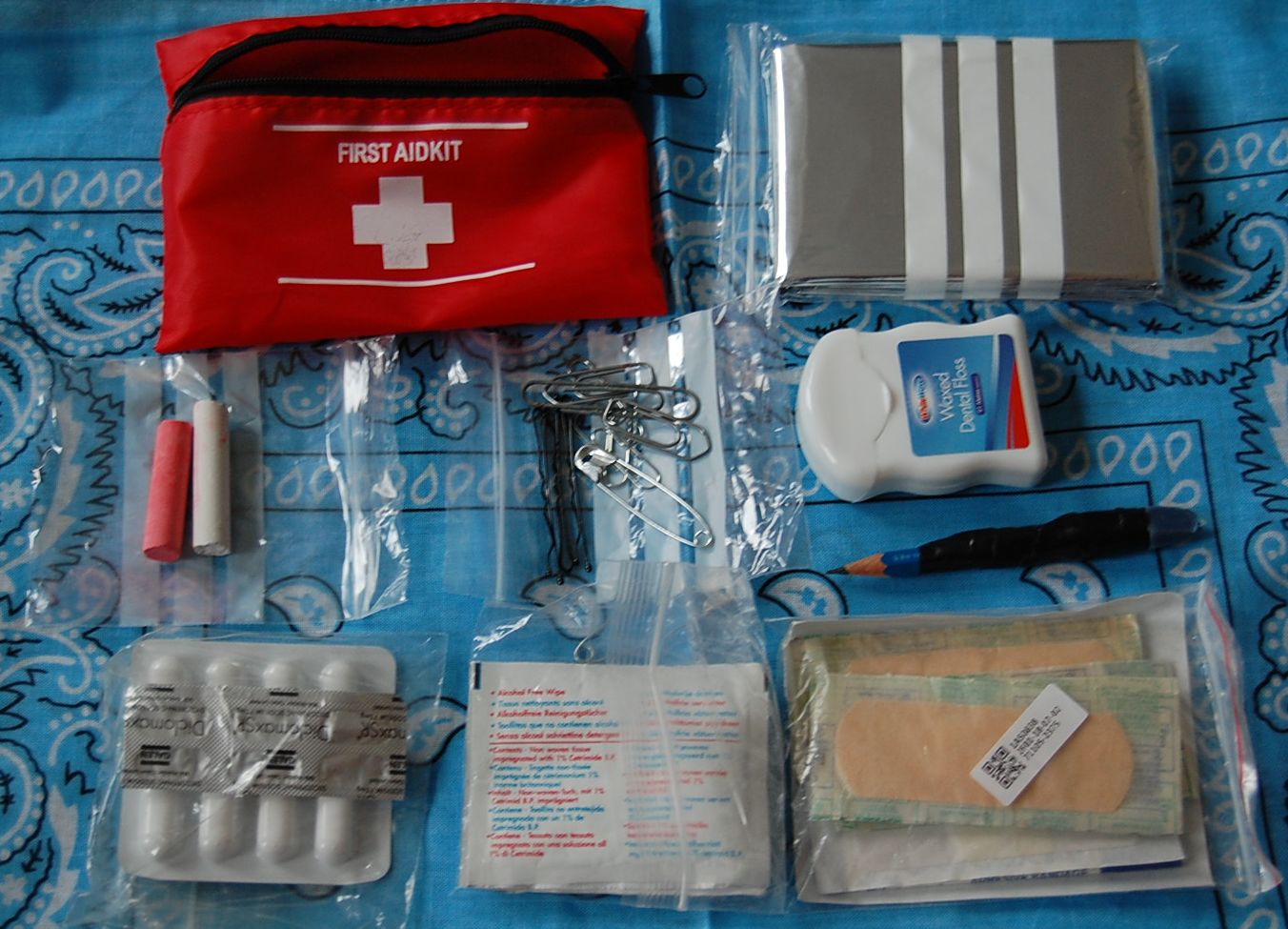
My EDC includes a number of first aid items. There is a more extensive kit in my large rucksack. An intermediate level kit may be found in my daysack/soft-core pack. I have described the contents of these kits on other pages. Many of the contents of these kits are individually in plastic bags to protect them from water. The larger pouches are within clear, sealable waterproof bags.
Your medical kits should be readily accessible, so an external pocket is preferred. It should also be obvious what it is.
You may have to send someone else to fetch your medical kit. They should be able to find it with simple directions such as “My pack. Top, front pocket. Green pouch with a white cross.”

Washing

Wash kits are another item that I have described in other blog posts. It is convenient to have them in an external pocket so they may be easily accessed when wanted. Some items of a wash kit inevitably get wet, and an external pocket gives them more opportunity to dry. The wash-kit is a large pack item. It would be a rare circumstance when I would want to carry this in my daysack.

Lights

My girlfriend: “Flashlight!”
I rummage through a specific pocket in my bag and produce a flashlight.
“How did you know I had a flashlight?” I challenged.
“You have everything!”
A flashlight lives in my daysack, or other readily accessible pocket. I have other sources of illumination on my person. My soft-core pack has a hand-crank flashlight from a pound store. It is 100% waterproof if I keep it in a Ziplock bag.
Some campers carry lanterns. I have had little use for them myself. I am more likely to go to bed than curse the darkness. My only lantern is made from a soda can and a candle.

Maps and Compass

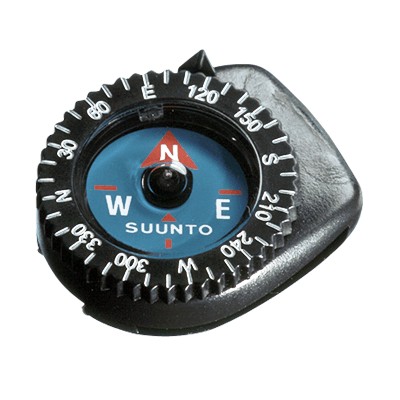
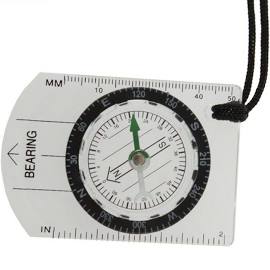
I have a Suunto Clipper compass as part of my EDC. If heading to the wilds, I will have a larger compass either on my belt or in a coat pocket. A mirror sighting compass lives permanently in my German desert parka.
It is not a bad idea to have a spare compass in your daysack or large pack. Pack it so that it is well protected from damage and moisture.
Maps in current use should be carried somewhere accessible, such as the daysack or top pocket of a large pack. Maps not in current use should be bagged against water and may be carried elsewhere where there is room.

Emergency Items

Emergency items such as flares, smoke bombs, space blankets and similar should obviously be in an easily accessible location. Bear in mind that the emergency may begin with you being separated from your large pack.

Repairs and Spares

Your repair kit should be relatively compact. A few buckles, a minimal sewing kit, some bladder patches, tube of superglue and some tape. This is described elsewhere. I carry a single ladder-lock buckle and a side-release buckle, both 25mm and black. My packs have more 25mm buckles than other types, and these are more likely to break than the larger ones. Most of my packs have black buckles.
A length of wool or yarn to darn your socks, if you know how.
Decide if you really need whole rolls of tape or just a few metres. Shorter lengths can be wrapped around pencils or pieces of plastic.
A small Zip-lpck bag will probably hold most of the kit.
Despite its low bulk and mass, the repair kit is a large pack item. Tucked into the corner of a lid pocket is probably a good location.

Cordage

Various sizes of cordage will prove useful.
It should be easy to find and access. In addition what I carry on my person, the soft-core pack contains several kinds.

Books and Notepads

I like to keep a journal when travelling, so carry a notepad. Also good for recording anything interesting, or drawing pictures when there is a language barrier.
Not surprisingly, the notepad is in a plastic bag. It lives in the external pocket of my daysack, or an external pocket of my large pack, depending on what I am carrying.
Guidebooks and novels currently in use migrate between the daysack and external pockets of the large pack. Guidebooks for previous areas or areas yet to be visited ride in the main compartment where their mass compresses whatever is beneath.

Electronic Gadgets

I never carried electronic items on my major adventures. Even my beloved iPOD stayed at home. I preferred to experience rather than to photograph and record. I know this approach will be alien and probably incomprehensible to younger readers.
Rationalize the electronic gadgets and accessories you intend to carry in your pack. A couple of USB adaptors will remove the need to carry half a dozen or more different cables. A hand-crank flashlight that also works as a charger and radio is a better choice than a more expensive and heavier power bank.

Miscellaneous Bag

Tucked away in the main compartment of my large rucksack I have often carried a “miscellaneous bag”. This might be an old pencil case or a Ziploc bag. It contained anything I might need in the future, but not at present: My home house keys, travel card to get me home from the airport, money that I could not use in the present country, presents for people at home, and so on.

Other Paperwork

It is amazing how many packing lists never mention toilet roll! This needs to be reasonably accessible and kept dry. My soft-core pack includes a roll in a Ziplock bag with a 100 ml bottle of alcohol hand sanitizer.

Ammunition

If you are armed, a realistic quantity of ammunition should be on your person. Spare ammunition may be carried in your pack. Since ammunition is dense, and may be needed in a hurry, it obviously rides near the top of your pack, and close to the back.

Final Thoughts

If your pack is totally full, you should probably rethink.
You will need some free room for unexpected contingencies. And free space lets you move stuff around when looking for something. You do not want to unpack your pack every time you want something lower down.
Categories
Phillosoph

Knots to Save Your Glasses

The other day I had to escort an engineer.
He managed to set off the alarm he was servicing, and was unable to get it to stop.
He had forgotten to bring the handle for his screwdriver bits.Girl in Sunglasses
Such farces are actually not that uncommon at this institution.
As the minutes rolled by and I sat there in the noise, it occurred to me I had some ear plugs on me. Actually the noise was not too bad, and using hearing protection to ignore an emergency alarm is probably setting a bad example!
Eventually the alarm was silenced by using the end of the nail file on my Swiss Army Classic. I have better screwdrivers on my tools, but the Classic on my keyring was most readily to hand.
The engineer was also having trouble with his spectacles. The rubber loops on the retaining cord he was using kept slipping off, and he was cursing the well known website he had brought them from.
All this reminded me of a topic I was thinking about when I was writing about ear plugs.
Ear plugs are a simple thing that can make all the difference if you have them with you.
Obviously, my penknives may be included in this.

Tweezers

Tweezers are another item I thought of, possibly because at the time I had been reviewing how to deal with biting ticks.
I carry a Swiss Army Ranger and a Classic, and each has a pair of tweezers slotted into a grip panel.
One pair has been ground to a point, as shown in this video.

If, for some bizarre reason, you do not carry a Swiss Army Knife (!), the tweezers may be brought separately.
So small and so cheap there is not really any good reason not to have a pair. Your main problem may be finding a good place to carry them so you can find them when needed!

Don't Forget Your Toothbrush

Personally, I do not have a toothbrush in my EDC. If I was heading to the wilds, I might rethink this.
If your lifestyle often finds you sleeping at someone else's house, platonically or otherwise, you may find it handy to have a toothbrush with you.
There are guards you may fit over the bristles, and two-part brushes, some of which have room for a tiny tube of paste.

Glasses Save Eyes!

The next “simple thing” did not immediately occur to me since I wear spectacles, and mine have photochromic lenses.
My girlfriend mentioned a Christmas she spent in Scotland. The snow made everything so bright she wore sunglasses whenever outside.
If you do not wear photochromic glasses, a pair of sunglasses is a worthy addition to your EDC or bug-out bag.
Excessive sun glare may occur in any season. See the “Too Bright” section of Greenbank's “The Survival Handbook”.
Protecting Eyes from Glare
Glasses also protect your eyes from branches when moving through the woods, and other threats. That, incidentally, is one of the reasons I do not switch to contacts.
My glasses have saved my eyes from injury several times.
Spectacles or sunglasses are important and useful. When climbing, biking or during other activities there is an increased risk that you and your lenses may part company.
Which brings us back to the engineer and his malfunctioning retention cord.

Retaining Glasses

My left hip pocket contains a lighter, bandana and a collection of cordage.
Included in the latter is a retention cord I may use with my spectacles.
I literally found this lying in the street, the irony that something to prevent loss was lost not lost on me.
I have not had cause to use this retention cord yet, but it seems well suited for purpose.
The cord is tubular and fits over the arms of my spectacles, giving a long contact area. A sliding piece of plastic allows the cord to be drawn snug against the back of the head.
An effective retaining cord is a prudent thing to carry with you if you wear glasses or have sunglasses, even if, like me, you only fit it when the chance or consequence of losing your glasses is serious.
Suppose you do not have a retaining cord, or have lost it.
If you have been visiting this blog, you will probably have some paracord or other cordage available. A draw cord from your anorak could be used.
Here are two suggestions on how to improvise a retention cord for your glasses:

Instructables Glasses Lanyard

Comments

Both of these methods use slip knots to attach the cord to the arms.
One method uses a double overhand to form the slip knot, the other uses an extra couple of turns to form the overhand knot portion.
The video uses a double fisherman's knot to tighten and loosen the cord. A single fisherman's knot would be easier to adjust when needed. Perhaps he wanted all the knotted sections to match?
A slip bend would be a good knot for this application. This could be made with double overhands if desired.
How to tie aSlip-Bend
The “cobra knot” used in the Instructables' method is actually multiple overhands tied in the centre of a second piece of cord. This would have been clearer if a different coloured piece of cord was used for demonstrating this part.
The simplest way to adjust a retaining cord is probably to tie a lapped overhand loop in the doubled cord. This is probably one of the few knots that may be easily adjusted when your hands are behind your head.
The other methods may be more secure, however.
All this talk of knots brings me to my final topic.
I have rewritten Scrapboard Knots, adding more content, more knots and tweaking the format to use less paper.
All of the knots mentioned in this blog may be learnt from this booklet.
Scrapboard Knots is free, but donations and tips are welcome, and much needed at the moment.


Categories
Phillosoph

Lock Picks for Everyday Carry (EDC)

When you start a new hobby, it is highly likely that you will buy a number of items that ultimately are seldom used.
This is certainly true of lock picking. One of the first purchases most beginners make is a cheap set of picks, often Chinese made.
I was no exception to this, although I had already decided I wanted a set of Bogota rakes too.
Such cheap kits are actually a useful step on your learning curve. These kits have a wide variety of designs. and give you a chance to experiment and discover what kind of picks and turning tools you like.
As I have gained better and more suitable collections of tools, that Chinese kit has seldom been used.
Like others, in my early days I also acquired a number of items that I have seldom, if ever, found an actual use for.
Lock Picking Legend recently posted a video on comb picks.
I won’t bother to explain how comb picks work, since the following two videos clearly explain this, as do many other videos and pages.

I have a set of comb picks. Comb picks top my list of lock picking gear I have never needed.
Even the perspex practice locks are immune to comb picking.
As Lock Picking Legend notes, unless you frequently encounter very old, low quality locks, your comb picks are going to sit unused. Comb pick sets often come with a high price tag, so save your money and put it towards some Bogotas, or one of my books.
If comb picks are one of the things I would not buy if I had my time again, what would I get?
I have talked about my Serenity Plus collection and the Polaris Rakes elsewhere.
Today, I am going to share a look at what I think of as my “EDC kit”. These are the items I am most likely to have with me if I encounter a lock that requires opening.
As part of my usual duties I sometimes encounter items that have been locked that should not be, or more commonly, locks for which the key has been misplaced.
I do this, however, with caution. Some colleagues are likely to shift the blame for the lock not opening to myself.
EDC lock pick collection
Central to my EDC collection are a pair of Bogota Rakes, shown beside their home-made carrying sleeve (far left). This latter item may be pinned to clothing if I want to keep the picks handy.
The set consists of a single hump Bogota and a triple hump, both with handles designed to also function as turning tools. I recommend you get the “euro-twist” versions so the handles point away from each other when you use both to open a lock.
The handles of these Bogotas have been “bowed” so they can be used as turning tools in a wider variety of keyway widths.
Sometime in their history, the handles got bent at ninety degrees and shortened from about 27mm to 15mm. I have been able to bend them back to close to the original angle of 60 degrees. In hindsight, I should have left them alone, since a longer 60 degree turning tool might be handy for recessed locks and tulip knobs.
Most locks I have been called upon to open in real life have succumbed to raking using the Bogotas.
Often the key (pun intended) to picking a lock is how you apply the turning tool. My kit therefore includes a couple of turning tools in addition to the Bogota handles.
This article suggests creating a tapered thickness turning tool of 0.7 to 1.5mm thickness. I do not currently have the materials for this, being mainly limited to wiper blade inserts of about 0.4mm thickness.
That said, the turning tool I have used most is the one on the far right of the photo, which was made from wiper-blade insert. It has proved to be both useful and versatile.
The longer (13 to 14mm) nose is bent at ninety degrees to the shank and slightly bowed. The corners have been rounded off. It is approximately 2.7mm wide. With the ends bent, it is a little over 60mm long.
Ends of home-made turing tool
Since I tend to favour raking, I tend to primarily use bottom of the keyway (BOK) applied turning tools.
The shorter (6 to 6.4mm) end is also rounded off. The width has also been reduced to just under 2mm, the shank starting to be reduced just before the bend.
This shorter hook may be used as a TOK turning tool or a BOK for small padlocks.
I should probably add a SERE pin to this kit, since it may also be used as a turning tool for very small locks. I have a SERE pin elsewhere in my EDC, but another in this kit would be handy
The other turning tool at the bottom of the main photo is taken from a cheap Chinese set, and is a round 1.5mm section rod with flattened 2.9 to 3mm ends, 0.7mm thick. This is a handy tool for wider keyways.
The Bogota rake is usually the first tool I reach for when attempting to pick a lock. In most cases so far, this has been all that is needed.
Many of the locks I have encountered that have resisted the Bogota have opened with a snake pick. Not surprisingly, I like to have a snake pick in my kits, and my EDC kit is no exception.
This particular snake pick was taken from a “James Bond Credit Card” set. These kits also include a city rake. When they work, city rakes work very fast, so I decided to include the city rake too.
As I have noted elsewhere, the credit card kits vary a lot in quality. The first I brought was very nice, while the second had much thicker picks, with a poorer finish. Some grinding, filing and sanding made them more useful.
Drilling a hole in them, however, proved surprisingly problematic. Turned out these “poor quality” picks were made from very tough steel! It took at least an hour using a low-rpm carbide bit and oil.
Having read Christine Holler’s lock pick recommendations in this article, I wanted to add a cycloid and sinusoid rake to my kit. Luckily, UKBumpkeys has started selling individual Polaris rakes. I decided on the No.4, four-hump cycloid, and the No.7, five-hump sinusoid.
I shortened the handles so the tools were all about 75mm long.
I then went about adding a hole. I had little doubt the Polaris are made from high quality material. Given the trouble I had had drilling the snake and city rake, I tried a different approach.
Since these picks had thinner handles, I was able to hole them using a punch and hammer. These holes were then enlarged using the conical grinding stone of a Dremel Tool. This took a fraction of the time that drilling the others had taken!
My local hardware store had no idea what a tubular rivet was. Fortunately, I remembered some brass tubing I had. I cut a short length and a few minutes work with a ball-peen hammer rivetted the four picks together.
Lock picking requires a light touch, so it is not unusual to drop tools when working in the field. To counter this I have added cord loops to a couple of tools.
The two turning tools are supposed to be joined, but the wiper blade tool usually works itself loose. I have left them apart since it makes a clearer photo.
Categories
Phillosoph

Never Travel without Your Ear Plugs

Sometimes it is the little details that can make all the difference!
In my travelling kit I have an item I jokingly refer to as my “bedside table”.
My Bedside Table when Travelling
This is a small cloth pouch with a ribbon attached, The pouch holds my glasses when I sleep. The ribbon lets me tie the pouch onto a bedframe or tent pole.
Sewn to the outside are two pockets. The larger holds my travel alarm clock. There is room for the battery, since I take it out when I am not using the clock.
The smaller pocket holds a small plastic container containing a pair of foam ear plugs. Actually, it now contains two pairs since I seem to have acquired another set somewhere during my adventures.
If memory serves correctly, (which I cannot take for granted these days), I brought my first pair in Holland. This is why one of the few Dutch phrases I can recall is “oordoppen” and why the container is labelled “Herrie Stoppers”.
Ear plugs really are the traveller’s friend! They weigh virtually nothing, cost very little but can make all the difference between a great trip and an ordeal.
Someone else in the hostel room snoring? Idiots in the next tent playing loud bland pop music into the night? Screaming baby on the overnight flight? Local dustmen decide the middle of the night is when to collect the bins? All have had me reaching for the container of ear plugs in the pocket of my “bedside table”.
Are ear plugs a “survival item”? Not really, but they can be the difference between being well rested and being tired, irritable and unfocused, which can lead to all sorts of trouble!
I have even been known to use the ear plugs in my own home when a noisy party or the sounds of city life just get too intrusive.
I was watching something on TV recently, and it occurred to me that a protagonist would not have the problems they had if they had a simple set of ear plugs. Always willing to learn from the mistakes of others, I decided to add some ear plugs to my EDC.
I have a small belt pouch I use for money and cards. One compartment holds my Suunto Clipper compass and a small magnifier that I use when the small print on labels proves just too small for my aging eyes. A container of ear plugs would fit easily in the remaining space.
I probably have some more foam ear plugs somewhere around the place. I brought a pack of them for my girlfriend when she was having to make long overnight coach-trips.
Polymer Ear Plugs
For variety, I brought some polymer ear plugs, although admittedly a factor was that these came in a little plastic case well suited to where I intended to carry them.
Actually I got a set of ten pairs for a very reasonable price.
I am sure some time in the future my girlfriend or her son will need some.
A colleague saw me looking at options on ebay, and insisted on bringing me three pairs of foam ear plugs from the ten pairs he had at home. It is not just me that bulk buys on things like this!
There is just room inside the case of the polymer ear plugs to squeeze in a pair of these foam plugs too. Why carry two pairs? The foam may be better than the polymer for some noises. Although the more likely reason is my girlfriend may need a set at the same time that I do.
As with so many things, prices for ear plugs range from very reasonable to incredibly high.
Matador Ear Pluga
The Matador set are at the higher end of reasonable, and come with a nice container that can be fitted to a keyring. My keys probably have enough gadgets already, however, and I got ten sets of polymer ear plugs for less than half the money!
I know from considerable experience that the low cost ear plugs work fine. Price is so low that there really is no reason not to own some. Often they are sold as multiple pairs, and having some spares is no bad thing.
Military or civilian, traveller or stay-at-home, all would be prudent to have a few ear plugs within easy reach. Even if you don’t carry them in your EDC, they should have a place in your travel kit, handbag, bug-out bag or bedside drawer.


Categories
Phillosoph

Some Thoughts on Possessions and Minimalism

Today I would like to throw out some ideas about minimalism.
This is more a collection of thoughts and ideas rather than a coherent article. I hope some of it will be of use or interest to you.You may have too much stuff
My blogs have touched on this or related topics several times already.
Creating a capsule wardrobe in neutral and natural colours is an example of minimalism.
My friend Sam had the concept of “Sam’s Van”: that one should not have more than could be moved in a single vanload, an example of quantity-limited minimalism.
In all honesty, I cannot call myself a minimalist. My girlfriend is probably having a hearty laugh at the very notion!
I have, however, attempted to make use of some of its techniques.

Don’t Count!

A very useful piece of advice I came across was “Don’t Count!”
“I only own n number of things” makes for a great blog title, but if many of us try to apply this in practice it can lead to unhealthy obsessiveness, or goal-post shifting.
Well done to those who have reduced their belongings to just n-items, but bear in mind a more productive application of the exercise is to reduce your belongings to only the things you need, rather than an arbitrary number.
Some possessions naturally begat others. I have knives and other edged tools for my kitchen, hobbies, toolbox, camping and EDC. It would be very foolish for me not to own at least one other possession to keep them sharp, for example.
Sometimes a simple single addition may make a lot of difference.
I carry my keys on a carabiner. Not all of my trousers have loops in the best position for this.
I brought myself a robust key-hanger that fits on my belt. The hanger even has a couple of stout press-studs so I am able to place it on my belt without needing to unthread it. Now the keys always hang directly over the pocket. An additional possession well worth having.

Clear the Decks

Another good tip I have encountered is to “clear the decks”.
Ideally, nothing should be on your floor except your furniture.
Once you have relocated or discarded the stuff that was taking up your floor-space, move on to the other horizontal surfaces and declutter them.
How little do you really need?

Minimalism for Preppers

Applying minimalist techniques can be a very useful exercise, especially for preppers.
You can apply them just to your backpacking or bug-out outfit, or to your life in general.
I come across a lot of lists of equipment. Many of the “essentials” are actually only conveniences or “nice to haves”.
I have read a minimalist list where the person owned one bowl, one plate, one mug and one glass. Presumably their mates never came around for a cuppa or a drink. Or perhaps their mates were all minimalists too and were expected to bring their own cups!
The same list included a set of measuring cups for cooking. Perhaps a single measuring jug is more minimalist than a set of cups? Perhaps they could drink out of the measuring jug! I was rather pleased to see someone offering a graduated drinking glass!
Graduated Drinking Glass

Kitchenware

If you are on the move, your minimalist cooking kit is a spork and  canteen cup or mess tin. Many canteen cups now have non-stick coating, so use a non-metallic spork.
For a more leisurely camping kit, have a frying-pan, pair of billies, spork, spatula and a piece of plastic flexible cutting board. The latter is cut to size and shape to fit in your frying-pan. This is not a bad basis for your minimalist home kitchen.
Stephane Reynaud wrote a cookbook called “One Knife, One Pot, One Dish”. Not as minimalist as some would want, since the “pot” in different recipes may be a casserole, frying-pan, saucepan, baking dish, bain-marie or even a food processor.
If you want a very minimalist cooking outfit for home, a frying pan/skillet and a flameproof casserole is not a bad option.
Since you will be spending less money on kitchenware overall, you can probably afford quality examples of what you do select.
The casserole should be of the sort that you can use on either the hob or in the oven. If you use a halogen oven, you will obviously need a casserole that can fit inside of it and when filled is not too heavy for you to lift out.
An oven-baking dish is a useful supplement to the casserole. If you have a halogen oven, make sure your dish is of a size and shape that fits it. Most halogen ovens include a suitable baking dish with their accessories.
Select a spatula that can serve as a turner, server and a stirrer.
I like to cook and get a little creative in the kitchen, so I do not think it is too great a disaster if I have a couple of extra pots and spatulas.
A small saucepan will probably see lots of use. You will probably find you do not need more than two or three of varying size. Two frying pans of different sizes is sometimes convenient, although I use my wok and frying pans a lot less since I got the halogen oven.
If you do use a halogen oven, you will know that tongs are pretty useful for removing or turning hot food. You could use a pair of spatulas, I guess, but chances are your halogen oven came with a set of tongs, so why not keep these?.
You will need a chopping board and/or a set of flexible cutting board sheets for use with your knife.
I would opt for a Chinese cleaver, but you may then need a small knife for those rare jobs the cleaver is not good for. You should also have a serrated knife for cutting bread and fruit.
It is useful to have scissors and a spare penknife in the kitchen. Then again, my kitchen also has a buck-axe and Mora-knife!
I quite like the sets of measuring cups and spoons I have hanging up in the kitchen. I try to use them to stop over-serving myself portions. The minimum is probably a measuring jug.
Have at least one mixing bowl. Perhaps invest in an ovenproof one that may be used in the microwave or halogen oven.
Usually I drain food using the pot lid. A sieve, strainer or colander may sometimes be needed. The perforated steamer and mesh dishes from my halogen oven may substitute.
I could probably use a larger selection of storage boxes for the fridge, and make the ones I have more accessible.
For each person, there should be a bowl, plate, mug and drinking glass.
If you are a big tea drinker, you will want your mug made from glass. A glass mug is a good all-rounder for all kinds of hot or cold drinks.
For cold drinks you may want something taller with more volume and room for ice.
Ideally, have two sets of tableware for each person. You will need to wash-up less frequently and you can accommodate guests. If there are more than two of you, the extra plates and bowls are useful for serving. Bowls also get used for mixing, marinating and microwaving.
For each person, a set of utensils: knife, fork, spoon. All-metal, single-piece sets are more durable. The knife should be of a form that can cut cooked food and spread butter. Have a couple of spare sets for guests.
You may want a steak/cutting knife and teaspoon for each person or guest too. Personally, I like to have at least half a dozen additional teaspoons. A teaspoon is far better for spreading jam or marmalade than a knife, incidentally.
Adopt my methods of quick, economical washing-up and you will find it easy to maintain a stock of clean cutlery and dishes.
I have a dish-drying cloth, but seldom use it since letting washing-up drain and air-dry is cleaner and more convenient. It gets used more often to swat flies. Drying my hands is more common, and this only needs a small hand-towel. Same hand-towel is useful for handling hot dishes and pots.

What Do You Really Need?

It is foolish to think what applies to yourself is true for everyone else. That is quite a useful thing to remember in everyday life. Keep this in mind when you read minimalist lists.
Sometimes I find that I do not need some of the items on minimalist’s lists. Having a good penknife does away with the need for many other implements.
My girlfriend recently tidied-up a bedroom that had been used for storage.
“Transformed” is probably a better term. It was hard to believe it was the same room!
I was looking around for a rug with a two-metre high pile of junk swept under it.
One of the few items she declared surplus to requirements was a desk-lamp. She had absolutely no use for this, she declared. Neither had I, I realized.
My room has never looked quite this bad
I have two desk-lamps, both fitted with daylight bulbs. I only ever use them when I am photographing something.
I mention this, since several minimalist lists of belongings include desk-lamps or floor-lamps as essentials. Perhaps their home is considerably darker than mine and they do actually need them.
Most of us do our writing and reading on computers these days, so I would venture that many of us do not need a separate desk-lamp. I certainly do not need a lamp to “create mood”.
Sometime ago I got rid of a freestanding lamp since I never used it.
I think television shows create a false impression here. Often on the box, we see an interior with multiple lamps, all of them lit in the middle of the day!
Don’t use lights you do not need, and reduce your energy bill. Sell or donate lamps you never use.
Another item that is surprisingly common on minimalist lists of “necessities” is bathroom scales. Personally, I have never owned a set of bathroom scales. I do not need a set to tell me I am carrying extra weight, I can see it! Similarly, weight-loss that the scale claims has no value. What matters is that which I and others perceive.
Wastebaskets? I have certain in-laws that cannot grasp not to use a bin without a liner. My rubbish for recycling goes into a repurposed plastic bag. This usually hangs from one corner of a kitchen chair, so I need no bin.
Foodstuff that might attract flies goes into a bag in the freezer until it is thrown out into the bins outside.
Not that I get many flies, since I fitted all the windows I might open for ventilation with insect mesh! Simple addition: big change!
Something I don’t see on many lists is a dressing gown. I spend most of my time at home wearing little else! One of the pleasures of a nice shower is drying off in a snuggly dressing gown!
My older dressing gown has fallen to bits, so I may replace it with a longer, hooded fleece gown for the colder months, and to wear when the other fleece gown is being washed.
The dressing gown is supplemented by a fleece blanket in the lounge. I spend most of my time alone, so heating the whole house if it is a little chilly is stupid. I often watch television or play video games with a blanket thrown over me. If it gets colder, I throw a poncho-liner over this too.

Constructive Minimalism

In an apparent paradox, if I have been reading a minimal list of belongings, it is more usual for me to think about buying something rather than discarding something.
This illustrates how minimalist lists can be a useful tool for making you concentrate on what are your essentials and highlighting where you might make improvements.
I have, however, taken to practicing a self-imposed “cool-down” period. I wait at least 24 hours before I click “buy”. I may miss the occasional bargain, but generally I save more money by avoiding spending it on stuff I can manage without.
Thinking of your possessions as “collections” or “kits” can be productive in rationalizing what you have.

Bedding

Considering bedding, it occurred to me my life would be a lot easier if I had two brand-new sets of sheets and duvet covers. Some of my older stuff did not quite fit the mattress I now have.
Two sets give me one new set on the bed while the other is in the wash.
I have an extra duvet and pillow, so I can use my older stuff for these, again giving a set in use and one in the wash.

Stationery

If I consider the topic of “stationery”, what do I actually need, compared to what I have?
Most writing is now done on the computer, so pens and paper are seldom used.
I have blank A4 paper for the printer (although the printer seldom behaves well enough to print anything! The device is mainly used for scanning.). That blank A4 paper can be used for various other things. A pad of lined paper and/or a notepad or two. Pad of post-it notes. Stick of paper glue.
You may have uses for a highlighter, stapler or some paper-clips.
Seldom do I need envelopes these days. If I do need one, I can fold a piece of paper into one. I do occasionally send packages, so some tape is useful.
I have plenty of knives, so I could do without a pencil sharpener, although there is little point in discarding the couple that I have.
I have some super glue and blu tac, although these reside in my modelling supplies.
Erasers, pens, pencils, of course.
Go through your pens and discard refills or disposable pens that no longer work.
Some forms require you to fill them in in black ink, so make sure that some of your pens are black.
Recently I had to send a parcel and was unable to find a thick pen to write the address with. So I bought a pair of black Sharpies, adding one to my EDC and keeping the other for home use.
Sometimes it is a matter of organization.
I had lots of pens and pencils, but distributed in various diverse locations. Pool most of your erasers, pencils and pens into a box or a large pencil case. You can still have a pen and/or pencil in places you are likely to need them, but if you do need something you only have to look in one place.
I have a pen and pencil in a box in the lounge, a pen and pencil in a kitchen drawer, and everything else in a large pencil case in my room. A handful of paper-clips form the zip-pull.
Ruler, protractor and a pair of compasses can be handy at times, and also serve in the “tools/DIY” category.

DIY Tools

The DIY tools I probably use the most are a tape measure and a drill. There are often screw-hooks that need putting up.
A awl, gimlet or bradawl is useful for beginning drill holes. The reamer on a penknife is good for many jobs, but the T-handle location means it is awkward in restricted spaces.
Many jobs I have used a drill for actually only need a gimlet. If just starting out, invest in a set of gimlets. Only buy or borrow a drill when you encounter a job that really needs one.
A penknife reamer makes a pilot hole large enough for the screw-section of a gimlet and reduces the chance of splitting the grain.
To start accurately drilling metal, a centrepunch and hammer is useful. A nail or scriber may substitute for a centrepunch for some applications.
On the back of my tool cupboard door hangs a tape measure, small spirit level, a Stanley knife and a hand-crank flashlight. The flashlight is mainly used for exploring the depths of the cupboard, but may be used for other household applications.
With the abundance of small electronic devices in modern life, a set of fine screwdrivers will prove useful. Add tweezers and magnet(s) as suggested. You may wish to add a spudger. One screwdriver should be large enough for rewiring plugs (3 mm slot). If this is not the case, buy a small electrician's screwdriver.
You will probably need some pliers. Needle-nose and chunky, possibly curved too. Your hobbies may require additional smaller examples.
Eastwood's character in “Grand Torino” opinions that all you really need is duct tape and mole grips. A related witticism “If it rattles and shouldn't, duct tape it. If it doesn't rattle and should, use WD40”.

Scan It and Toss It

As mentioned, my printer is also a scanner. It can feed-in and scan whole stacks of papers automatically. Or at least, it did until Epson discontinued the software needed to do this for my model!
A scanner may be very useful for decluttering your life.
When I moved in with my girlfriend, I scanned scores of folders of documents, magazine articles and old papers. This allowed me to throw out several sacks of the old papers and makes it easier to find the information I want when I want it.

Bag and Box

Bag or box stuff when you can. You will save yourself time if these bags and boxes are transparent or mesh.
For example, stick all of your pairs of gloves that are not in jacket pockets in a mesh bag in a drawer or on a wardrobe shelf. When you need gloves, just one place to look, and no hunting for a glove hiding in with the socks.
Things that are wanted but seldom used may be tucked away on a high shelf or bottom of a wardrobe. Conversely, some things that you might make more use of may currently be hidden out of sight and out of mind.
Put your teaspoons in a small jar on the countertop rather than hidden in the bottom of a crowded drawer. Makes them much easier to find.
My final advice is to understand that decluttering is likely to be a “work-in-progress”.
Many times you will think that you are nearly done, but are not! Changing one thing will put other things in a new context.
Scanning the last of my old papers got me thinking about the various plastic and card folders they had been in.
I have lots of books and DVDs. While I like to call the exercise “decluttering”, there is no way my home will ever look uncluttered.
It might be argued that much of my minimalism is “below the surface”.
There is now less in the cupboards and drawers. What is in there is now more logically organized and more easily found.
It is quite probable that no-one will notice the difference except myself.
Psychologically, the place feels calmer.
Categories
Phillosoph

Tools in the Office

A friend of mine asked me for suggestions for the contents of a small repair/utility kit to place in a locker at his office. In his own words, he wants to be “the handy guy”.
Every time I have moved office, I have virtuously left my tool collection for my successor, (not that I had much choice in the matter last time!) Each time I have regretted this, as over the next few months I have needed tools I no longer have.
What to have in such a kit will depend on the office, and the sort of equipment likely to be encountered.
I once returned to my office to find a pair of colleagues attempting to help someone remove a finger-ring. I quickly confiscated the hacksaw(!) and demonstrated that a needle-file was the correct tool for the job.
A dearly missed friend of mine was a craftsman of the old school. He brought the best tools he could and they served him well for his entire lifetime. Good job he was cremated, since he would turn in his grave at my next suggestion!
Bear in mind the likely frequency of use of your office tool kit. For items that are only likely to be used occasionally, it may be warranted to acquire some of these items from “budget” sources.
Images are for illustration only! No recommendation of particular brands or models should be inferred.

Office Folders

My starting point for an office tool kit would be to find a penknife and/or multi-tool.
Swiss Army Champion
If you are a regular visitor to these pages, chances are you already carry a number of useful items as part of your EDC.
It is also possible that you have a couple of older items that you have replaced with something better and more suited to your needs. You may have brought yourself a full-sized multi-tool, only to decide it is too heavy for constant carry and your needs are better served by something such as a Swiss Army knife and a mini-Leatherman Squirt.
In my kitchen drawer I have a couple of penknives donated from lost property. One is large and bulky and includes a set of pliers. Both penknives hang on a hook in the drawer and are useful for tasks such as tightening cooking pot handles.
If you have a surplus penknife and/or multi-tool, make this the starting point of your office tool kit.

Screwing in the Office

The next addition would be some “proper” screwdrivers.
There are some places that the screwdrivers on a penknife or multi-tool cannot reach, or are too big for. If you have to remove a number of screws, or they are hard to remove, conventionally handled screwdrivers may be more comfortable and effective.
Items such as phones or laptops tend to use quite small screws. You may encounter cross/Phillips/posidriv or Torx-headed screws.
Have a set of several small screwdrivers of approximately 3 to 5mm width for the flat heads, and the other types of similar size, such as PH/PZ 0 to 2.
Small Screwdrivers and Spudger
Some items have very small screws! A set of precision/“jeweller’s” screwdrivers is worth having. This will also make you popular with spectacles wearers.
Precision Screwdriver set
As an aside, the very small screwdriver that fits in the corkscrew of a Swiss Army knife is worth acquiring for your EDC. I once saw someone’s glasses fall to bits while they were talking to me in a pub. I repaired them there on the spot.
Very Small Swiss Army Knife Screwdriver
You should also have at least one fairly hefty large slot screwdriver.
Recently an important keycard was left in a cabinet and the key-holder was absent with Corvid. I was told to get into the desk by any means possible. Unable to pick it with the tools I had, I used a large screwdriver as a wedge and prybar and opened the drawer with negligible damage.
Having a crowbar at work might raise eyebrows. A large screwdriver or two is more acceptable and in many respects more versatile.

Pinching in the Office

Next I would add a set of pliers. By “set” I mean a kit containing several pairs of different forms, for example fine, long-nose, curved, broad and side-cutters.
These are for all the jobs the pliers on a penknife or multitool are not ideal for.
Insulated handles are nice to have, although you should not be working on anything with live electricity.
A number of times I have been called on to repair colleagues’ jewellery.
Set of Small PLiers
I have a nice little set of five tools, each about four to five inches long. I picked these up in a model-railway shop.
These are backed up by a pair of heavier duty long-nose and standard pliers of about six to seven inches long.
○ Precision screwdrivers and fine pliers would be among the first tools I acquire for an office tool kit.

Nuts Loose in the Office

It is probably not your job to fix the sink. Even if you do actually know what you are doing, there are numerous good reasons why this should be left to someone paid to do the job.
You may, however, come across loose nuts on furniture in an office environment.
Your tool kit should have a set of Mole grips or an adjustable wrench for such contingencies.

Cuts in the Workplace

In this day and age, the sight of a penknife blade may cause some of your colleagues to soil their underwear.
A Stanley knife/box-cutter may be a more acceptable tool should you need to cut open packaging.
More assaults are probably committed with Stanley knives and box-cutters than penknives, but hoplophobia is not rational.

Tape It!

Final component of the basic kit would be a roll of duct tape and a roll of electrician’s insulating tape.

Additional Items

• Reorganizing is a popular distraction in offices. Will the desk fit? I am often asked if I have a tape-measure.
• Sometimes items using Allen screws are encountered, so a small set of Allen/hex keys might be handy.
There is a joke that Mole grips or duct tape are for things that move that shouldn’t, and that WD40 is for what won’t move but should!
• WD40 is handy for a number of things in the office. As well as being a lubricant, it can be used for cleaning.
• Modifying your office environment with a hammer will probably be frowned on. It may prove tempting next time the printer or photocopier plays up!
As a starting point for your office tool kit, you may have used a pre-made home kit, such as the one shown below, which includes a hammer. A claw hammer does make a useful substitute for a prybar.
Home Tool KIt
• A magnifying glass may be useful for dealing with those tiny screws.
• A magnet is good for finding any screws you drop or keeping removed screws going astray.
• If working with small parts, tweezers may be handy. So too might a plastic “spudger”. You can probably carve the latter from the less-brittle examples of plastic cutlery.
• A small sewing kit may also prove handy.
• I am inclined to suggest a small flashlight might be a handy addition. My step-son will probably just point out that most people have phones with lights.
Whatever you decide upon, keep your tool kit under lock and key. Useful things like tools have a habit of getting borrowed and not returned.

Other Utility Items for the Office

My friend said tool/utility, so what else might he want in his locker? His EDC should cover most of his needs.
No idea about my friend’s current lifestyle. He may still enjoy a wild night out on the tiles. He might want a toothbrush, toothpaste, a razor and deodorant in his locker.
Female readers may wish to keep a supply of hygiene items.
Your place of work should have a stock of medical items, but you may maintain a supply of personal medication, and other items such as your preference in painkillers and anti-histamine, for example.
Spare clothing, such as clean underwear, warm hat, bandana, scarf, gloves, jumper and a poncho/rain-proof. A spare lighter and a space blanket is always prudent.
This is venturing into the topic of “get home” bags. That is a topic for another day.
Categories
Phillosoph

Daysac Backpacks

Recently I have been jotting down some thoughts on minimalism. I will share some of these observations in a future blog.
This is quite a useful exercise, since often it identifies deficiencies in what I have. It also inspired me to organize my current possessions more logically.

A Room of Rucksacs

One field I started thinking about was that of bags.
Part of my bedroom floorspace is taken up by several rucksacs, and more lurk on top of the wardrobe or in a nearby trunk.
Different models for different purposes: The Alaskan Packboard I built that I used to tour Germany, Holland and Austria. The internal-framed pack I acquired for Iceland, since I did not trust airline baggage handling with my packboard. The DPM Northern Ireland Patrol Pack and large Bergen that I treated myself to. The most travelled pack is one that converts into a soft suitcase and has six large external pockets.

Daysacs

A large rucksac is a useful thing to own, and like me, you may own several, each suited for different purposes.
A smaller bag, such as a daysac, is likely to see more use, however. It may be used weekly, or even daily. I notice many women carry small rucksacs in lieu of a handbag.
Smaller packs are less well represented in my collection. The one I have used most recently is rather small, and somewhat tatty. I acquired this from lost property at work (yes, it is amazing what people leave and never come back for). It only has one external pocket and I have had to repair the shoulder strap junction at least twice.
Elsewhere, I have told the story of why my beloved North Face daysac is no longer with me. The multi-pocked pack I brought to replace it proved to be far too small for my trip to Kos.
Given the use it will get, it makes sense to invest in a good quality daysac. Sadly, I have very little budget for such things these days. I have spent several days web-searching for a new daysac, only to find what I did not want or could not afford.
Following my recent article, I wanted something neutral and natural in colour rather than the ubiquitous black. A search for khaki backpacks turned up an item on ebay. Price had dropped and was within my budget. For that money, I would risk it.

The Sunrise Khaki Backpack

The bag arrived several days ago, and I am pleasantly surprised.

Compass and Mil-Tec Daysacs

It is a little bigger than I expected. Dimensions quoted on websites can often be misleading.
Quoted dimensions were 47 x 31 x 21 cm, and size was quoted as 31 litres. That latter figure seems to be external volume rather than internal capacity.
The bag is probably ideal size for a general-purpose daysac. When I am travelling my daysac serves as my cabin baggage or carries the items I may need when sightseeing. This bag is of a size that most airlines will permit as cabin baggage. When moving between locations the daysac needs to be small enough to fit inside my larger rucksac, so I have only one bag to carry and watch.
Colour is a nice khaki-coyote brown shade, not so light that it will show up dirt. The inside is lined with a black nylon/polyester[?], so better finished than I was expecting. This, however, is my single, very minor gripe with this bag. A black interior makes things more difficult to located within a bag. More manufactures should utilize lighter materials such as the bright lime green used inside my girlfriend's theft-resistant bags.
Unlike my old North Face, the main compartment has a padded pocket that can take a laptop computer. I could have used this a few months ago while I was hot-desking!
Interior is large enough to take my soft-core pack with plenty of room left for other items.
The main external pocket is quite large. The interior seems rather bare. This could use some internal pockets for smaller items. One can only expect so much for this price, however. Interior pocket is something I may add when I have time.
On each side is an open-topped, elasticated pocket suitable for carrying a waterbottle or collapsible umbrella.
Very little needed to be done to bring this pack “up to speed”.
The shoulder straps each have a plastic D-ring, so adding a snap-link to the left one took an instant.
The zippers needed pull-tails, and short length of “desert-camo” paracord I had proved to be ideal length and colour. The main compartment zipper is two-way, that of the exterior compartment one-way.
The other addition I made was to coil a wallet chain around the grab-handle. This is a trick I have borrowed from my girlfriend's theft-resistant bags. When stationary, feed the chain around a chair or table leg to deter sneak thieves. Obviously, this precaution does not mean you can wander off to the toilets and leave your bag unattended! Even if you added a lock, a thief could cut through part of a bag if left unwatched.
This is not the highest quality bag you can find. You can easily spend ten times as much on a daysac. Whether or not you will get ten-times the bag is for you to decide.
This is all I can afford at the moment, and nicely demonstrates some of the features you might look for in a bag, and some of the modifications you might consider.
This particular bag is has the brand “Compass, Sunrise Bags” and model number “BPC108-KK”.

Mil-Tec MOLLE Multi-Pocket Backpack

While I was researching this blog, I discovered something new about my small black multi-pocket daysac. Other than its small size, this really is a nice bag, well-made with lots of nice features.
Mil-Tec 20 litre MOLLE backpack
The bag is made by “Mil-Tec” in Germany. I discovered the same design is produced in two different capacities, 20 litres (“small”) and 36 litres (“large”). There is also a 14 litre kid's pack.
A number of sellers offer copies/knock-offs of the Mil-Tec design, many claiming to be “30 litres” The dimensions claimed for some of these suggest that even the exterior volume of the bag is less than 30 litres.
I suspect that I in fact brought the 20 litre version of the Mil-Tec, assuming it was the same as the “30 litre” bags being offered elsewhere.
The genuine 36 litre Mil-Tec can be found for quite a reasonable price, although out of my current budget, sadly. Based on my examination of the 20 litre version, the 36 litre may be a very good choice for anyone looking for a slightly larger daysac or patrol sack.